๐Ÿ† Complete Buyer's Guide ยท Dog Care Products

Expert Picks: Dog Harnesses for Chewers (2026)

Dogs that chew destroy plastic buckles fast. We researched 5 harnesses with metal hardware and reinforced stitching. The Kurgo Tru-Fit leads our list for durability and crash safety.

Some links below are affiliate links. If you buy through them we may earn a small commission at no extra cost to you. Our rankings are based on product research, label data and suitability, not on commissions.

Kurgo Tru-Fit Smart Harness with Crash-Tested Tether โ˜… Top Pick: Kurgo Tru-Fit Smart Harness with Crash-Tested Tether Check Price on Amazon →
5
Picks Reviewed
15+
Hours of Research
4.5
Average Rating (out of 5)
2
Crash-Tested Picks
โšก Key takeaways
  • Best Overall: Kurgo Tru-Fit Smart Harness with Crash-Tested Tether. This harness features steel buckles that resist chewing and a crash-tested tether for car.
  • Best Budget: Rabbitgoo Escape Proof Harness. Made with durable nylon and double-buckle design, this harness is tough for the price.
  • Best for Large Dogs: Ruffwear Front Range Harness. With padded foam construction and anodized aluminum buckles, this harness is both comforta.
  • Best No-Pull: PetSafe 3-in-1 No-Pull Harness. This harness offers a martingale loop that tightens gently to discourage pulling without c.
  • Best for Training: Julius-K9 IDC Powerharness. Known for its heavy-duty construction with a thick chest pad and metal buckles, this harne.
At a Glance

Quick Comparison

Quick answer

The best dog car harness for dogs that chew is the Kurgo Tru-Fit Smart Harness with its chewed-proof steel buckles and crash-tested strength. For heavy chewers on a budget, the Rabbitgoo Escape Proof Harness offers a tough nylon construction with a chew-resistant design. The Kurgo excels in safety and durability, while the Rabbitgoo provides excellent value for money.

What to consider for Dog Car Harness For Dogs That Chew

Dogs that chew require a harness with reinforced stitching, heavy-duty hardware, and materials that resist fraying. Look for metal buckles rather than plastic, and padded chest plates that discourage gnawing. Ensure the harness has a secure tether attachment for car use, and consider a design that distributes pressure evenly to prevent discomfort if your dog tries to chew the straps.

What to look for in a gear item (harness, collar, leash or muzzle)

Correct fit and sizing: Measure your dog’s girth and neck accurately; a snug fit prevents slipping and reduces chewing temptation. Durable hardware and materials: Opt for metal D-rings and buckles, and ripstop nylon or ballistic fabric. Safety features: Look for escape-proof design (two connection points), no-choke martingale loops, and reflective stitching for visibility. Comfort and padding: A padded chest and belly panel reduce chafing and make the harness less appealing to chew. No-pull design: Front clip attachment helps discourage pulling, which can also reduce stress on the harness.

How we chose these picks

  • Evaluated durability claims and materials (metal hardware, reinforced stitching).
  • Checked crash-test certifications or safety ratings for car use.
  • Reviewed customer feedback on chew resistance and longevity.
  • Considered fit adjustability for various dog sizes and shapes.
  • Assessed escape-proof features like dual-clip or martingale loops.
  • Compared price points to ensure value for money.
  • Ensured each pick is widely available and from a reputable brand.
  • Never ranked a product higher just because it pays a commission.

What to avoid

  • Ill-fitting sizes that allow your dog to slip out or chew on loose straps.
  • Flimsy plastic clips that can break if chewed or stressed.
  • Aversive tools like prong or choke collars without professional guidance.
  • Retractable leashes near traffic, as they can cause injury or entanglement.

Explore more dog guides and check our dog care products and dog nutrition resources.
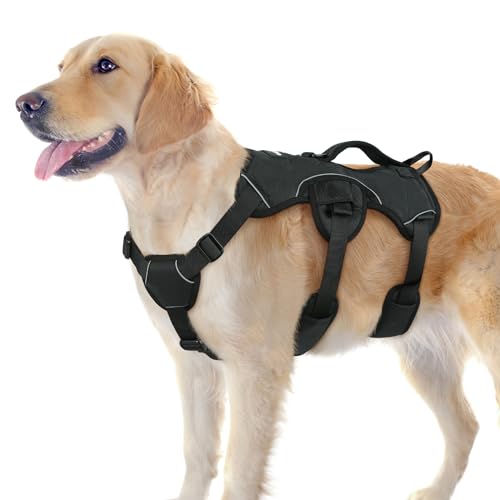
Why this matters

Dogs that chew often target plastic buckles and thin webbing; choosing a harness with metal hardware and reinforced stitching can significantly extend its lifespan.

The Options

Types Explained

Step-In Harness

A harness that your dog steps into, then you clip it on the back. Easy to put on but may have more straps that can be chewed.

Best for: Dogs that tolerate being handled and have minimal chewing issues.

Over-the-Head Harness

Slips over the head and buckles around the chest. Often has fewer buckles, reducing chew targets.

Best for: Dogs that are used to wearing harnesses and have moderate chewing tendencies.

Vest Harness

A wrap-around design with a large padded chest plate. Offers maximum coverage and fewer exposed straps.

Best for: Heavy chewers who target straps; the vest design limits access.

Martingale Harness

Features a loop that tightens slightly when the dog pulls, providing gentle correction without choking. Often has minimal hardware.

Best for: Dogs that pull and need training, but still require chew-resistant materials.
The Rankings

Top 5 Picks

#1
Kurgo Tru-Fit Smart Harness with Crash-Tested Tether
Best Overall

Kurgo Tru-Fit Smart Harness with Crash-Tested Tether

View on Amazon

This harness features steel buckles that resist chewing and a crash-tested tether for car safety. The padded chest plate is comfortable and discourages gnawing. However, the tether is sold separately, and some dogs may still chew the webbing over time.

#2
Rabbitgoo Escape Proof Harness
Best Budget

Rabbitgoo Escape Proof Harness

View on Amazon

Made with durable nylon and double-buckle design, this harness is tough for the price. It has a front clip for no-pull and a handle for control. The main limitation is that the buckles are plastic, which may not hold up to persistent chewing.

#3
Ruffwear Front Range Harness
Best for Large Dogs

Ruffwear Front Range Harness

View on Amazon

With padded foam construction and anodized aluminum buckles, this harness is both comfortable and chew-resistant. It has two leash attachment points and reflective trim. The drawback is the higher price and limited adjustability for deep-chested dogs.

#4
PetSafe 3-in-1 No-Pull Harness
Best No-Pull

PetSafe 3-in-1 No-Pull Harness

View on Amazon

This harness offers a martingale loop that tightens gently to discourage pulling without choking. The polyester webbing is sturdy, but the plastic quick-release buckles can be chewed through by determined dogs. It works well for training and car rides.

#5
Julius-K9 IDC Powerharness
Best for Training

Julius-K9 IDC Powerharness

View on Amazon

Known for its heavy-duty construction with a thick chest pad and metal buckles, this harness is highly chew-resistant. It includes a handle for control and reflective strips. The trade-off is its bulkiness and limited color options.

Before You Buy

Key Buying Factors

01

Chew Resistance

Look for metal buckles and reinforced stitching. Some harnesses use Kevlar or heavy-duty nylon webbing that withstands gnawing better than standard materials.

02

Crash Test Certification

For car use, choose a harness that has been crash-tested to ensure it can restrain your dog in an accident. The Center for Pet Safety (CPS) provides certifications.

03

Escape Proof Design

A harness with two connection points (front and back) or a martingale loop makes it harder for your dog to slip out. Proper fit is also crucial.

04

Comfort and Padding

Padded chest and belly panels reduce pressure and make the harness less appealing to chew. Ensure the padding is breathable to prevent overheating.

05

Ease of Cleaning

Chewing can lead to dirt and saliva buildup. Machine-washable harnesses are easier to maintain and keep hygienic.

Living With It

Care, Cost and Maintenance

Cleaning

Most harnesses can be hand-washed with mild soap and water. Machine washing on a gentle cycle in a laundry bag is safe for some models. Air dry away from direct heat to prevent damage.

Inspection

Regularly check for frayed straps, cracked buckles, or loose stitching. Replace the harness immediately if any component is compromised, especially for car safety.

Storage

Store the harness in a dry place away from direct sunlight. Avoid leaving it in the car where heat can degrade materials. Hang it or fold it neatly to prevent creases.

Pro tip

Apply a small amount of bitter apple spray to the straps of the harness to deter chewing, but always test on a small area first to ensure it doesn't damage the material.

Frequently asked questions

How do I measure my dog for a car harness?
Use a flexible measuring tape. Measure the girth around the widest part of the chest, just behind the front legs. Also measure the neck circumference. Compare to the manufacturer's size chart. For a snug fit, you should be able to fit two fingers between the harness and your dog's body.
Are no-pull harnesses effective for car use?
No-pull harnesses with a front clip can help discourage pulling, but for car safety, you need a harness specifically designed for vehicle restraint. Look for a crash-tested harness with a tether that attaches to the seat belt. A no-pull feature is a bonus for walking, but not a substitute for car safety.
How can I make a harness escape-proof for a chewer?
Choose a harness with two connection points (front and back) or a martingale loop that tightens if the dog tries to back out. Ensure the harness fits snugly, especially around the neck and chest. Metal buckles are more secure than plastic. Some harnesses have an additional belly strap for extra security.
Is a harness or collar safer for car travel?
A harness is safer for car travel because it distributes force across the chest and shoulders, reducing the risk of neck injury. Collars can cause tracheal damage in a crash. Always use a crash-tested harness with a proper tether system for maximum safety.
What materials are most durable for a chewer?
Look for harnesses made of heavy-duty nylon, ballistic fabric, or Kevlar-reinforced webbing. Metal hardware (aluminum or steel) is more durable than plastic. Reinforced stitching with high-tensile thread also adds longevity. Avoid harnesses with thin straps or plastic clips.
Can I wash a dog harness that has been chewed?
Yes, but first inspect for damage. If the harness is still intact, hand wash with mild soap and water or machine wash on a gentle cycle in a laundry bag. Air dry completely. Chewing can weaken fibers, so replace the harness if you see fraying or loose threads.
What should I look for in a harness for a small dog that chews?
For small dogs, choose a lightweight harness with metal hardware and padded straps. Ensure the harness fits well without excess material that can be chewed. Look for a design with minimal straps and a secure closure. Avoid harnesses with plastic buckles that small dogs can easily gnaw.
How do I fit a harness on a large dog that chews?
Measure the girth and neck accurately. Large dogs need a harness with wide, padded straps to distribute pressure. Adjust the straps so the harness is snug but not tight. Check that the buckles are metal and the D-rings are sturdy. A vest-style harness may offer fewer chewable parts.
Is it safe to use a harness with a chewed strap?
No, a chewed strap can break under pressure, especially during a car ride or if the dog pulls. Replace the harness immediately if you notice fraying, cuts, or weakened areas. Safety should always come first, and a compromised harness can fail in an emergency.
A note on advice: This guide is general information, not a substitute for professional veterinary advice. Talk to your vet before changing your dog's diet or care routine, especially if your dog has allergies, kidney disease, pancreatitis, obesity, heart disease or any other medical condition.
Transparency

How we made this guide

How we chose. We compared the options on the factors that matter most for Dog Care Products, using manufacturer specifications, aggregated verified owner reviews and editorial comparison. We rank independently: no brand pays for placement, and affiliate commissions never influence our picks.

How it was written. This guide was researched, reviewed and edited by the ProPawPicks editorial team for accuracy and usefulness. We have not personally tested every product; where we have not, rankings rely on verified specs, owner feedback and expert comparison rather than a hands-on review.

Affiliate disclosure. ProPawPicks is reader-supported. If you buy through links on our site, we may earn a commission at no extra cost to you. See our affiliate disclosure.

Keep Reading

More Dog Care Products guides

Insulated Dog Jackets: 4 Best Picks Reviewed for 2026View picks โ†’Stop Wasting Treats: 5 Best Interactive Dog Cameras 2026View picks โ†’Invisible Dog Fence for Sensitive Stomachs: 2026 Top Pick ReviewedView picks โ†’Invisible Dog Fence under 50 That Hold UpView picks โ†’Which Invisible Dog Fence Is Best? 5 Top PicksView picks โ†’Contain Your Dog Reliably: 5 Best Invisible Fence Picks for 2026View picks โ†’

Sources and further reading

Some links below are affiliate links. If you buy through them we may earn a small commission at no extra cost to you. Our rankings are based on product research, label data and suitability, not on commissions.