Quick answer
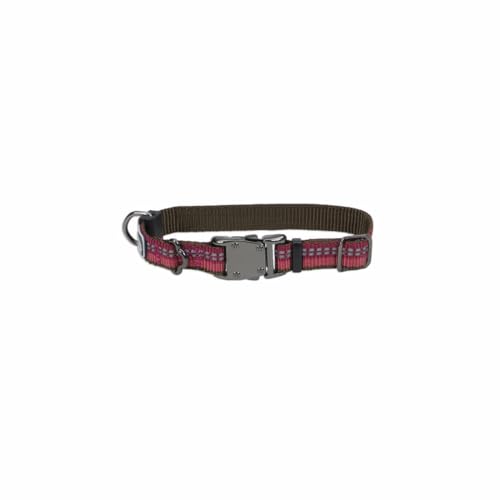
For a German Shepherd, choose a wide flat collar 1.5 to 2 inches across with strong metal hardware, sized to the measured neck with two fingers of room. Our everyday pick is the Blueberry Pet Essentials collar, the PetSafe Martingale suits a dog that backs out of a collar, and the Coastal Pet K9 Explorer adds reflective safety. Use a collar for ID and daily wear, and pair a front-clip harness for pulling.
What collar fits a German Shepherd
German Shepherds are large, powerful working dogs, usually 50 to 90 pounds, with a thick double coat and a neck that often measures 20 to 26 inches. That build calls for a wide collar that spreads pressure so nothing digs in when the dog leans or lunges. A padded or neoprene-lined band sits kindly under the dense coat, while a martingale, or limited-slip, collar helps a dog that can slip its head free. Because the double coat changes with the seasons, recheck the fit as the undercoat thickens or sheds. Always measure the actual neck rather than trusting a size label, since two Shepherds of the same weight can need different collars.
What to look for
Width matters most, and 1.5 to 2 inches keeps force off the windpipe on a dog that can throw real weight into a leash. Hardware comes next, so favor a heavy-duty metal buckle and a welded steel or brass D-ring over plastic that can crack under a lunge. Durable nylon is light and easy to clean, while thick leather molds to the neck over time and resists chewing. Look for smooth edges and lined seams that will not mat the coat, generous adjustment range for seasonal coat changes, and reflective stitching or an LED for a big dog walked early or late.
How we chose
We focused on collars built for strength, comfort, and honest daily use rather than force or correction. We compared width, hardware, coat-friendly padding, and adjustability across everyday flat, padded, martingale, and reflective styles, and we favored picks that hold up to a powerful adult while staying gentle on the skin. Our everyday value pick is the Blueberry Pet Essentials collar, the PetSafe Martingale earns a place for dogs that back out, and the Coastal Pet K9 Explorer covers reflective safety. Every option here leaves room for two fingers and works alongside a separate harness for training.
What to avoid
Do not rely on a collar to stop pulling, and steer clear of choke or prong-style correction. Constant pressure on the throat can strain the trachea, so control a strong puller with a front-clip harness like the Kurgo Tru-Fit and reward loose-leash walking instead. Skip thin collars that concentrate force into a narrow band, and skip plastic hardware that can fail at the worst moment. Never leave a snug training collar on unsupervised, and keep the everyday fit snug but never tight, checking the two-finger gap whenever the coat changes.