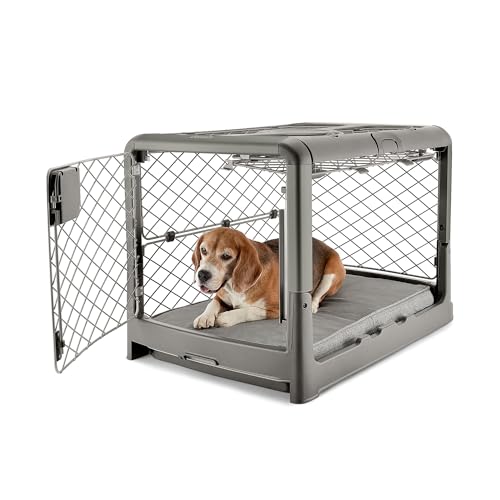
Anxious dogs need a den-like crate. We compared 5 options including the MidWest iCrate, focusing on darkness, crash safety, and sizing for lower cortisol levels.
Some links below are affiliate links. If you buy through them we may earn a small commission at no extra cost to you. Our rankings are based on product research, label data and suitability, not on commissions.
of dog owners report reduced anxiety with a properly sized crate
3 to 4
hours maximum continuous crating for adult dogs during the day
12 to 16
common wire gauge thickness for durable crates
40+
pounds minimum weight capacity for car crash-tested crates
⚡ Key takeaways
Best Overall: MidWest Homes iCrate Fold & Carry Single Door Dog Crate. This crate offers a sturdy build with a secure slide-bolt latch and dual doors for easy ac.
Best for Car Travel: Gunner G1 Intermediate Crate. The Gunner G1 is rotomolded with a patented interlocking design, making it incredibly stro.
Best for Airline: Sherpa Ultimate Airline-Approved Dog Carrier. This soft-sided carrier is designed to fit under most airline seats and has a spring-wire.
Best Budget: Frisco Fold & Carry Single Door Dog Crate. The Frisco Fold & Carry offers a solid wire construction at a very affordable price.
Best for Large Dogs: Diggs Revol Dog Crate. The Diggs Revol is a modern, escape-proof crate with a double-door design and a unique loc.
For most anxious dogs, the MidWest Homes iCrate Fold & Carry Single Door is our top pick. Its sturdy construction, dual-door access, and included divider panel make it easy to create a cozy den. If you travel by car often, the Gunner G1 Intermediate offers crash-tested safety. For budget-conscious owners, the Frisco Fold & Carry provides reliable value.
What to consider for Dog Crate For Anxious Dogs
Anxious dogs need a crate that feels safe and secure. Look for a design that minimizes noise and has a solid floor or tray. Escape-proof features like reinforced latches and sturdy wire gauge are essential. Consider a crate with a removable divider to adjust space as the dog grows or to prevent pacing. Soft-sided carriers can be calming but are less secure for chewers. Crash-tested crates are vital for car travel to protect your dog during sudden stops.
What to look for in a travel or containment product (crate, carrier, gate or car seat)
Choose the correct size: the dog should be able to stand, turn around, and lie down comfortably. Good ventilation is crucial, especially in warm weather. For car travel, select a crash-tested crate or carrier that can be secured with a seatbelt. Easy cleaning is important; look for removable trays or washable liners. Portability matters if you travel frequently; folding crates or carriers with handles are convenient.
How we chose these picks
Evaluated product specifications and safety certifications from manufacturers.
Reviewed customer feedback for durability, ease of use, and dog satisfaction.
Prioritized products with escape-resistant features like reinforced doors and latches.
Considered products that reduce anxiety through design (e.g., darker interiors, quiet operation).
Checked for compliance with airline and car safety standards where applicable.
Focused on products from reputable brands with good return policies.
Never ranked a product higher just because it pays a commission.
What to avoid
A crate or carrier too small for the dog to stand, turn, or lie down comfortably.
Unsecured carriers in a moving car; always use a seatbelt or crate anchor.
Flimsy gates a determined dog can push through or climb over.
Over-long crating without breaks; adult dogs should not be crated more than 8 hours at a time.
Anxious dogs often benefit from crates that offer a darker, enclosed space, which mimics a den and can lower cortisol levels. Crash-tested crates add safety during travel, but proper sizing and positive training are equally important for reducing anxiety.
The Options
Types Explained
Wire Crates
Made of metal wire panels, these crates offer good ventilation and visibility. They often fold flat for storage and include a removable tray. Ideal for home use and training.
Best for: Dogs that need a secure den with airflow and owners who want a collapsible option.
Plastic Carriers
Hard-sided carriers with a door and ventilation slots. They provide a darker, more den-like environment that can calm anxious dogs. Some are airline-approved.
Best for: Air travel and dogs that prefer a cozy, enclosed space.
Soft-Sided Carriers
Fabric carriers with mesh panels for ventilation. They are lightweight and often include shoulder straps. Suitable for calm, small to medium dogs.
Best for: Short trips, vet visits, and airline cabin travel for small dogs.
Heavy-Duty Crates
Reinforced crates made from thick metal or rotomolded plastic. They are escape-proof and often crash-tested. The most secure option for anxious or powerful dogs.
Best for: Car travel, high-anxiety dogs, and owners who prioritize maximum security.
The Rankings
Top 5 Picks
#1
Best Overall
MidWest Homes iCrate Fold & Carry Single Door Dog Crate
View on Amazon
This crate offers a sturdy build with a secure slide-bolt latch and dual doors for easy access. The included divider panel helps size the crate as your puppy grows, reducing anxiety from too much space. The floor pan is leak-proof and easy to clean. However, the wire construction can be noisy if the dog bumps against it, and it may not be the most portable option for frequent travel.
The Gunner G1 is rotomolded with a patented interlocking design, making it incredibly strong and crash-tested for safety. It features a low-profile interior that calms anxious dogs, and the side handles make it easy to carry. It is also airline-approved for shipping. The main drawback is the high price, and it is heavy, so it is best for owners who prioritize safety over portability.
This soft-sided carrier is designed to fit under most airline seats and has a spring-wire frame that allows it to be collapsed for storage. The plush interior and locking zipper tabs help keep anxious dogs secure. It also has a seatbelt loop for car travel. However, it is not suitable for strong chewers or very large dogs, and the fabric may not hold up well to heavy use.
The Frisco Fold & Carry offers a solid wire construction at a very affordable price. It folds flat for storage and includes a composite plastic pan that is easy to clean. The single-door design is simple and secure. On the downside, the latch is basic and may not be escape-proof for determined dogs. It also lacks a divider panel, so sizing must be estimated carefully.
The Diggs Revol is a modern, escape-proof crate with a double-door design and a unique locking mechanism that is quiet to operate. It has a sleek look and a removable, washable floor mat. The crate is made from heavy-duty steel and is easy to assemble. However, it is expensive, and the rounded corners may take up more floor space than traditional crates.
Measure your dog's height and length while standing. The crate should be tall enough for your dog to stand without ear contact and long enough to lie down fully. A divider panel helps adjust as puppies grow.
02
Construction Material
Wire crates offer visibility and airflow but can be noisy. Plastic crates are quieter and more den-like but may have less ventilation. Soft-sided carriers are lightweight but not chew-proof.
03
Escape-Proof Features
Look for reinforced latches, sturdy hinges, and no weak points. Some crates have locking mechanisms that are difficult for dogs to manipulate. Double-door designs add security.
04
Portability and Storage
If you travel, consider folding crates or carriers with handles. Some crates collapse flat for storage. Weight is a factor; heavy crates are secure but hard to move.
05
Safety Certifications
For car travel, choose crates certified by the Center for Pet Safety (CPS). For air travel, ensure the carrier meets airline size and ventilation requirements.
Living With It
Care, Cost and Maintenance
Cleaning
Remove the tray or pad and wash with mild soap and water weekly. For wire crates, wipe down the bars with a pet-safe disinfectant. Soft carriers can often be spot-cleaned or machine-washed according to the label. Regular cleaning prevents odors and bacteria buildup.
Maintenance
Check latches, hinges, and screws monthly for wear. Tighten any loose hardware. For plastic carriers, inspect for cracks that could weaken the structure. Replace any damaged parts promptly to maintain safety.
Storage
When not in use, fold wire crates flat and store in a dry area. Plastic carriers should be kept away from direct sunlight to prevent fading or warping. Soft carriers can be stored in a breathable bag to avoid mildew.
Pro tip
Place a worn t-shirt or blanket with your scent inside the crate to comfort your dog. Covering three sides of a wire crate with a breathable fabric can also create a more secure, den-like environment.
Frequently asked questions
How do I size a crate for my anxious dog?
Measure your dog's length from nose to tail base and height from floor to top of head while sitting. Add 2 to 4 inches to each measurement for comfort. The dog should be able to stand, turn around, and lie down without hitting the sides. For puppies, use a divider to adjust the space as they grow. An overly large crate can increase anxiety by allowing too much room to pace.
Is it safe to use a crate in the car?
Yes, but only if the crate is crash-tested or properly secured. Loose crates can become projectiles in an accident. Use a crate that is certified by the Center for Pet Safety (CPS) or secure a regular crate with a seatbelt or cargo tie-downs. Never place a soft-sided carrier on a seat without securing it. The crate should be placed in the back seat or cargo area, not the front seat where airbags can be dangerous.
What airline rules apply to dog carriers?
Each airline has specific size and weight limits for in-cabin carriers. Typically, the carrier must fit under the seat in front of you and be well-ventilated. Soft-sided carriers are often preferred because they can compress. The dog must be able to stand and turn inside. Check the airline's pet policy before booking, as some restrict certain breeds or require health certificates. For cargo travel, use a hard-sided carrier that meets IATA standards.
How long can I leave my dog in a crate?
Puppies can only hold their bladder for one hour per month of age, up to about 4 hours. Adult dogs should not be crated for more than 8 hours during the day, and that should be the exception, not the rule. Anxious dogs may need shorter durations. Provide breaks for exercise, bathroom, and water. Over-crating can lead to physical and mental health issues. If you must be away longer, consider a dog sitter or daycare.
What ventilation is best for an anxious dog?
Good airflow is essential to prevent overheating and reduce stress. Wire crates offer the best ventilation. Plastic carriers should have ventilation slots on at least three sides. Soft-sided carriers need large mesh panels. Avoid covering the crate completely with blankets, as this can restrict airflow. Instead, drape a lightweight cover over part of the crate to create a den-like feel while leaving some mesh exposed for ventilation.
How can I make a crate escape-proof?
Choose a crate with reinforced latches and double-door mechanisms. Some dogs can learn to slide simple bolts, so opt for carabiner clips or padlocks for extra security. Ensure the door hinges are sturdy and that the crate is assembled correctly. For wire crates, check that the panels are flush and cannot be bent apart. For plastic carriers, the door should lock securely. Supervise your dog initially to test for escape attempts.
Should I use a soft-sided or hard carrier for an anxious dog?
It depends on the dog's temperament and the situation. Soft-sided carriers are lightweight and can be more comfortable for short trips, but they are not chew-proof and can be escaped more easily. Hard plastic carriers provide a darker, den-like environment that many anxious dogs find calming. They are also more secure and durable. For dogs that tend to chew or push against walls, a hard carrier is safer. For calm dogs that travel only occasionally, soft-sided may suffice.
Can a crate worsen my dog's anxiety?
If used improperly, yes. Crate training should be gradual and positive. Never use the crate as punishment. Forcing an anxious dog into a crate without proper introduction can increase fear. Ensure the crate is comfortable with a soft bed and familiar toys. If your dog shows extreme distress, consult a certified trainer or veterinarian. In some cases, medication or alternative calming strategies may be needed alongside crate training.
What safety concerns should I consider with a dog crate?
Always remove collars and tags before crating, as they can get caught on bars. Ensure the crate is placed in a temperature-controlled area, away from direct sunlight or drafts. Never leave a dog in a crate with a broken latch or damaged structure. For puppies, avoid crates with large gaps where paws could get stuck. Regularly inspect for sharp edges or protruding screws. Follow the manufacturer's weight and size recommendations.
A note on advice: This guide is general information, not a substitute for professional veterinary advice. Talk to your vet before changing your dog's diet or care routine, especially if your dog has allergies, kidney disease, pancreatitis, obesity, heart disease or any other medical condition.
Transparency
How we made this guide
How we chose. We compared the options on the factors that matter most for Dog Care Products, using manufacturer specifications, aggregated verified owner reviews and editorial comparison. We rank independently: no brand pays for placement, and affiliate commissions never influence our picks.
How it was written. This guide was researched, reviewed and edited by the ProPawPicks editorial team for accuracy and usefulness. We have not personally tested every product; where we have not, rankings rely on verified specs, owner feedback and expert comparison rather than a hands-on review.
Affiliate disclosure. ProPawPicks is reader-supported. If you buy through links on our site, we may earn a commission at no extra cost to you. See our affiliate disclosure.
Some links below are affiliate links. If you buy through them we may earn a small commission at no extra cost to you. Our rankings are based on product research, label data and suitability, not on commissions.