Quick answer
Most Staffies do best in a heavy duty 36 inch wire crate with a divider, secure slide bolt or drop pin latches, and good airflow. A Staffordshire Bull Terrier is a strong, muscular medium dog, so a flimsy crate can be bent, chewed, or escaped, especially by an anxious dog. Buy a tough crate, size it with the stand, turn, and lie down rule, and build it into a positive den through proper crate training rather than long isolation.
What size crate a Staffy needs
A Staffordshire Bull Terrier usually weighs around 24 to 38 pounds, while a larger American Staffordshire can reach 40 to 70 pounds. For the common Staffy, a 36 inch crate is the right length. A big Am Staff often needs a 42 inch model. Measure your dog from nose to base of tail and from floor to the top of the head, then add a few inches. Your Staffy should be able to stand fully, turn around, and lie down flat. For a puppy, use a divider so the space grows with the dog and does not encourage soiling.
What to look for
Staffies are powerful and can be determined chewers or escape artists when stressed, so strength comes first. Choose heavy gauge welded steel with reinforced corners and secure latches that a clever dog cannot nose open. Airflow matters for this active, muscular breed, so wire crates with open sides help keep your dog cool. Add a tough, chew resistant pad for comfort. Because Staffies are very people oriented and prone to separation anxiety, the crate should feel like a safe den, never a place of punishment.
How we chose
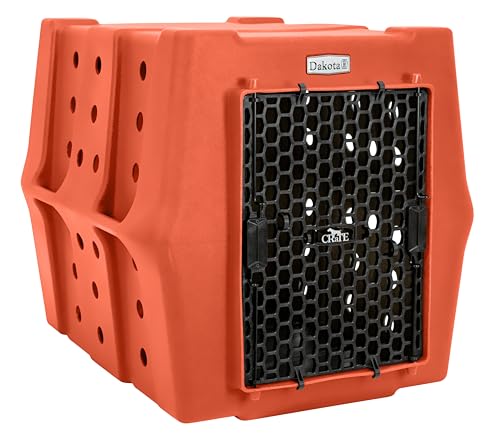
We focused on build quality, latch security, correct sizing for the breed, ventilation, and how well each crate suits a strong, affectionate dog. Picks like the MidWest Homes wire crate with a divider cover everyday needs and grow with a puppy, while the ProSelect Empire in 11 gauge welded steel with drop pin locks suits the strongest chewers and escape artists. For owners on the road, hard sided plastic and vehicle crates add protection, though they trade some airflow for strength. Soft and travel options are included only for calm, non destructive dogs under supervision, since most Staffies can tear through mesh. Across every pick we weighted secure latches and a tough frame most heavily, because a strong Staffy needs a crate that holds.
What to avoid
Avoid thin wire crates that bend, weak twist latches, and any soft crate for a chewer or anxious dog. Skip crates that are too large for a puppy without a divider, since the extra room invites soiling. Most of all, avoid relying on the crate to fix boredom or fear. A Staffy crated too long can panic and injure itself trying to break out. Confinement is not a substitute for training or exercise. Build positive associations, keep crating sessions reasonable, give your dog plenty of company and activity, and address separation anxiety directly so the crate stays a comfort, not a trap.