๐Ÿ† Complete Buyer's Guide ยท Dog Food

3 Poodle Sizes, 3 Kibble Needs: Best Dog Foods

Toy, Miniature, and Standard Poodles need different kibble sizes and calorie levels. Our guide compares top picks by size, from Royal Canin Poodle Adult to variety-tailored options.

Some links below are affiliate links. If you buy through them we may earn a small commission at no extra cost to you. Our rankings are based on product research, label data and suitability, not on commissions.

๐ŸพNew to the breed? Read our full Standard Poodle breed guide for temperament, care, health and lifespan. Royal Canin Poodle Adult Dry Dog Food โ˜… Top Pick: Royal Canin Poodle Adult Dry Dog Food Check Price on Amazon →
3 sizes
Toy, Miniature, and Standard varieties
4 to 70 lb
Adult weight range across Poodle sizes
22 to 28%
Practical adult protein starting range
12 to 15 yr
Typical Poodle lifespan
โšก Key takeaways
  • Best Overall: Royal Canin Poodle Adult Dry Dog Food. This breed-specific formula is built around skin and coat support with nutrients aimed at.
  • Best for Sensitive Stomach: Hill's Science Diet Adult Sensitive Stomach and Skin Small Bites. Many Poodles have reactive skin or a touchy stomach, and this small-bite recipe pairs easy.
  • Best for Standard Poodles: Purina Pro Plan Large Breed Adult Chicken and Rice Formula. Standard Poodles carry more joint load, and this large-breed formula includes glucosamine.
  • Best Budget: Diamond Naturals Small Breed Adult Chicken and Rice Formula. This is a strong value option for Toy and Miniature Poodles, with real chicken first, a sm.
  • Best for Puppies: Royal Canin Poodle Puppy Dry Dog Food. Poodle puppies, especially the smaller varieties, do well on a breed-specific puppy formul.
At a Glance

Quick Comparison

Quick answer

For most Poodles, our top overall pick is Royal Canin Poodle Adult Dry Dog Food, a breed-specific small to medium formula built around skin and coat support with a kibble shape designed for the Poodle muzzle. It is a grain-inclusive recipe, which we treat as the safer default. If your Poodle has a touchy stomach, Hill’s Science Diet Sensitive Stomach and Skin Small Bites is the better fit. For a Standard Poodle, lean toward Purina Pro Plan Large Breed for its joint-supporting profile and larger frame calorie balance. Budget-focused owners should look at Diamond Naturals Small Breed Adult, and Poodle puppies are served well by Royal Canin Poodle Puppy.

Why Poodles need the right food

The Poodle is really three dogs in one breed standard. Toy Poodles weigh roughly 4 to 6 pounds, Miniatures around 10 to 15 pounds, and Standards often 40 to 70 pounds, so size class is the first thing to get right. Small and Toy Poodles burn a lot of energy relative to body mass and can be prone to low blood sugar if meals are skipped, while Standards carry more joint load and benefit from controlled growth and weight.

Poodles are intelligent and athletic with moderate to high energy, so calorie density matters. The breed’s dense, curly, low-shedding coat depends on adequate protein and balanced omega-3 and omega-6 fatty acids to stay soft and healthy, and skin sensitivity is a common owner complaint. Poodles can also be predisposed to certain issues that vets see frequently, including progressive retinal atrophy, patellar luxation and hip concerns, Addison’s disease, bloat in Standards, and dental tartar in the Toy and Miniature sizes because of crowded small jaws. Food cannot prevent genetic disease, but appropriate kibble size, steady calories, and coat-supporting nutrients all help the day to day.

What to look for in a Poodle food

Start with a named animal protein as the first ingredient and an AAFCO statement confirming the food is complete and balanced for your Poodle’s life stage. For adult Poodles, protein in the range of roughly 22 to 28 percent and moderate fat is a practical starting point, though activity and body condition matter more than one fixed number. Look for omega fatty acid sources such as fish oil or flaxseed to support skin and the curly coat. For Toy and Miniature Poodles, choose a small-breed or small-bite kibble that is easier to chew and may help reduce tartar. For Standard Poodles, a large-breed formula with controlled calcium and joint support ingredients like glucosamine is sensible. We treat grain-inclusive diets as the safer default unless your vet advises otherwise.

Find the right food for your dog’s needs

The picks above suit a healthy adult Poodle. For a specific life stage or health need, use these focused guides.

Which food type is best?

Dry, wet, fresh, raw and dehydrated foods can all work for a Poodle. The right one depends on your budget, your dog’s preferences and any health needs.

  • Dry: most economical and convenient, and the crunch helps clean teeth.
  • Wet: higher moisture and often more palatable, useful for fussy eaters or as a topper.
  • Fresh and gently cooked: minimally processed with recognisable ingredients, at a higher cost.
  • Raw and freeze-dried raw: high protein and minimally processed; handle safely and ask your vet first.

Getting the best value

The cheapest bag is not always the best value. A quality food that keeps your Poodle lean, with a healthy coat and firm stools, often means fewer vet visits. Feed to a healthy body condition rather than the bag maximum, and choose a recipe built around quality animal protein.

How we chose these foods

  • We compared publicly available ingredient lists and guaranteed analysis panels rather than relying on marketing claims.
  • We confirmed each food carries an AAFCO complete and balanced statement for the relevant life stage.
  • We matched kibble size and calorie density to Poodle size classes, from Toy through Standard.
  • We favored named animal proteins in the first ingredient slot and clear omega fatty acid sources for skin and coat.
  • We checked each brand against the FDA animal food recall database for major unresolved safety issues.
  • We prioritized grain-inclusive recipes as a default and flagged grain-free options with the current FDA DCM context.
  • We weighed real owner-reported trade-offs, such as palatability or price, alongside the nutrition data.
  • Never ranked a food higher just because it pays a commission.

Foods to avoid or feed with care

  • Grain-free or legume-heavy formulas fed as the sole diet without veterinary guidance. The FDA has investigated reports of canine DCM in dogs eating certain diets, especially some grain-free or legume-heavy formulas, and is still gathering information; we treat grain-inclusive diets as the safer default unless your vet advises otherwise.
  • Foods with vague unnamed meat sources or no AAFCO complete and balanced statement.
  • Large dense kibble for Toy and Miniature Poodles, which can be hard to chew and may discourage eating.
  • Calorie-dense free-feeding for less active Poodles, since the breed gains weight easily and excess weight strains joints.
  • Frequent abrupt diet switches, which can upset a Poodle’s sometimes sensitive stomach. Transition over about a week.
  • Generic adult food for fast-growing Standard Poodle puppies, which benefit from a large-breed puppy or controlled-calcium formula.

For more breed and feeding help, browse our dog food guides, our dog nutrition library, and our dog health articles.

Why this matters

The Poodle is not one size but three (Toy, Miniature, and Standard), so the single most important food decision is matching kibble size and calorie density to your dog's variety, since the right food for a 5-pound Toy is the wrong food for a 60-pound Standard.

The Options

Types Explained

Breed-specific dry food

Formulas like the Royal Canin Poodle line tailor kibble shape and coat-support nutrients to the breed. They are grain-inclusive and aimed at small to medium Poodles.

Best for: Toy and Miniature Poodle owners who want a coat-focused, breed-matched dry food and do not mind a premium price.

Sensitive stomach and skin formulas

Recipes built around easily digestible ingredients plus added omega-6 and vitamin E for skin, often in small bites that suit smaller Poodles.

Best for: Poodles with reactive skin, loose stools, or a history of food intolerance, pending veterinary input on any true allergy.

Large-breed adult food

Formulas with controlled calcium and joint support such as glucosamine, sized and balanced for bigger frames and higher joint load.

Best for: Standard Poodles and Standard Poodle puppies who need joint support and frame-appropriate calorie balance.

Small-breed budget food

Value-tier recipes with a named protein first, small kibble, and added omegas and probiotics at a lower cost per pound.

Best for: Toy and Miniature Poodle owners on a budget who still want a complete and balanced everyday diet.
The Rankings

Top 5 Picks

#1
Royal Canin Poodle Adult Dry Dog Food
Best Overall

Royal Canin Poodle Adult Dry Dog Food

View on Amazon

This breed-specific formula is built around skin and coat support with nutrients aimed at the Poodle's dense curly coat, plus a kibble shaped for the breed's muzzle so it is easier to pick up and chew. It is grain-inclusive and AAFCO complete and balanced for adult maintenance, which we treat as the safer default. The honest trade-off is price, since breed-specific Royal Canin sits at a premium tier and is sized for small to medium Poodles, not Standards.

#2
Hill's Science Diet Adult Sensitive Stomach and Skin Small Bites
Best for Sensitive Stomach

Hill's Science Diet Adult Sensitive Stomach and Skin Small Bites

View on Amazon

Many Poodles have reactive skin or a touchy stomach, and this small-bite recipe pairs easy-to-digest ingredients with added vitamin E and omega-6 for coat condition. It is AAFCO complete and balanced and grain-inclusive, and the small bites suit Toy and Miniature mouths. The trade-off is that chicken is the main protein, so it will not help a Poodle with a confirmed chicken sensitivity, and some owners find palatability hit or miss at first.

#3
Purina Pro Plan Large Breed Adult Chicken and Rice Formula
Best for Standard Poodles

Purina Pro Plan Large Breed Adult Chicken and Rice Formula

View on Amazon

Standard Poodles carry more joint load, and this large-breed formula includes glucosamine and an omega-rich profile with real chicken as the first ingredient, plus live probiotics for digestion. It is grain-inclusive and AAFCO complete and balanced for adult maintenance. The honest con is that the standard-size kibble is too large and calorie dense for Toy or Miniature Poodles, so it is the wrong pick for the smaller varieties of the breed.

#4
Diamond Naturals Small Breed Adult Chicken and Rice Formula
Best Budget

Diamond Naturals Small Breed Adult Chicken and Rice Formula

View on Amazon

This is a strong value option for Toy and Miniature Poodles, with real chicken first, a small kibble size, and added omega fatty acids and probiotics at a noticeably lower cost per pound than premium rivals. It is grain-inclusive and AAFCO complete and balanced. The trade-off is that Diamond has had product recalls in its history, so we suggest checking current FDA recall status before buying, and quality control consistency is the main reason it is not our overall winner.

#5
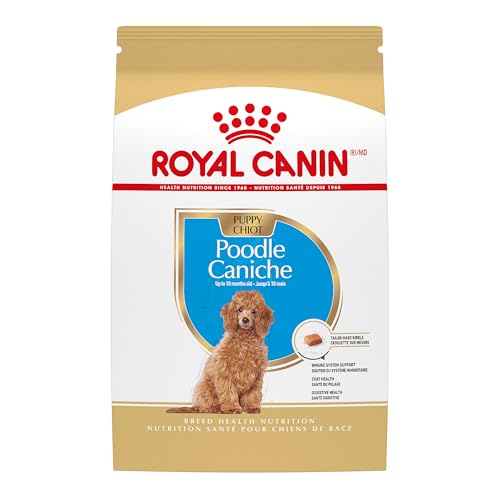
Royal Canin Poodle Puppy Dry Dog Food
Best for Puppies

Royal Canin Poodle Puppy Dry Dog Food

View on Amazon

Poodle puppies, especially the smaller varieties, do well on a breed-specific puppy formula with the energy density and nutrients growing dogs need, in a kibble shaped for tiny Poodle mouths. It is AAFCO complete and balanced for growth and grain-inclusive. The trade-offs are the premium price and that it is formulated for Toy and Miniature Poodle puppies, so a fast-growing Standard Poodle puppy is usually better served by a large-breed puppy food with controlled calcium.

Before You Buy

Key Buying Factors

01

Match the size class

Choose a small-breed or small-bite kibble for Toy and Miniature Poodles and a large-breed formula for Standards. Kibble size affects chewing, and calorie density should fit the dog's frame and activity rather than one universal number.

02

Coat and skin support

The Poodle's curly low-shedding coat relies on quality protein and balanced omega-3 and omega-6 fatty acids. Look for fish oil or flaxseed on the label, since skin sensitivity is a frequent owner complaint in this breed.

03

AAFCO statement and named protein

Confirm the bag carries an AAFCO complete and balanced statement for your Poodle's life stage and lists a named animal protein first. Avoid vague unnamed meat sources or foods with no AAFCO statement at all.

04

Grain-inclusive by default

The FDA has investigated reports of canine DCM in dogs eating certain diets, especially some grain-free or legume-heavy formulas, and is still gathering information. We treat grain-inclusive diets as the safer default unless your vet advises otherwise.

05

Weight and dental considerations

Poodles gain weight easily, and the Toy and Miniature sizes are prone to dental tartar in their crowded small jaws. Controlled portions and an appropriately sized kibble both help, alongside regular dental care.

Living With It

Care, Cost and Maintenance

How much to feed

Follow the bag's chart for your Poodle's size and weight as a practical starting point, then adjust to keep a visible waist and easily felt ribs. Activity and body condition matter more than one fixed number. Toy Poodles often eat in two or three small meals to help steady blood sugar, while Standards typically do well on two meals a day.

Transition slowly

Poodles can have sensitive stomachs, so switch foods over about seven days. Mix roughly 25 percent new food for two days, then about half and half, then mostly new, finishing on all new food. If you see loose stools or reduced appetite, slow the pace and check with your vet if it persists.

Support coat and teeth

Pair the diet with regular grooming for the curly coat and a dental routine, since Toy and Miniature Poodles are prone to tartar in their small crowded jaws. An appropriately sized kibble can help, but it is not a substitute for tooth brushing or veterinary dental care.

Pro tip

Feed your Poodle to a lean body condition where you can easily feel the ribs and see a waist, and treat the bag's portion chart as a practical starting point you adjust over a few weeks, because Poodles gain weight easily and excess pounds strain their joints.

Frequently asked questions

How much should I feed a Poodle each day?
It depends heavily on which Poodle you have. A 5-pound Toy Poodle may need only a fraction of a cup, while a 60-pound Standard can eat several cups a day. Use the feeding chart on your chosen food as a practical starting point, matched to your dog's weight and life stage, then adjust so you can easily feel the ribs and see a waist. Activity and body condition matter more than one fixed number. Toy and Miniature Poodles often do better split across two or three small meals to help keep blood sugar steady, and your vet can fine tune the amount.
How many calories does a Poodle need?
Calorie needs scale with size and activity, so there is no single figure for the breed. A small, lightly active Toy Poodle might need only a few hundred calories a day, while an active Standard Poodle can need well over a thousand. Treat any calculator number as a practical starting point rather than a rule, because activity level and body condition matter more than one fixed number. The simplest approach is to feed to maintain a lean body, where ribs are easily felt and a waist is visible, and to adjust portions up or down based on how your individual Poodle looks and moves over a few weeks.
Is grain-free food good for Poodles?
We treat grain-inclusive diets as the safer default for Poodles unless your vet advises otherwise. The FDA has investigated reports of canine DCM in dogs eating certain diets, especially some grain-free or legume-heavy formulas, and is still gathering information. Grains like rice and oats are digestible energy sources for most dogs, and a true grain allergy is uncommon. If your Poodle needs to avoid grains for a confirmed reason, work with your veterinarian to choose a formula and monitor heart health. For the typical healthy Poodle, a complete and balanced grain-inclusive food is a sensible, lower-risk choice.
What should I feed a Poodle puppy?
Feed a food labeled complete and balanced for growth, ideally one sized for your puppy's adult frame. Toy and Miniature Poodle puppies do well on a small-breed or breed-specific puppy formula with small kibble and the higher energy density growing dogs need. Standard Poodle puppies are usually better on a large-breed puppy food with controlled calcium to support steady, not rushed, growth. Puppies typically eat three to four small meals a day when very young, tapering to two as they mature. Confirm the AAFCO growth statement on the bag, and ask your vet when to transition to adult food, often around 10 to 12 months.
My Poodle is overweight. What food helps?
Poodles gain weight easily, and excess weight strains joints and worsens many health issues. Start by confirming you are measuring portions rather than free-feeding, and cut back treats, which add up fast in small dogs. A food with moderate fat and good protein helps your Poodle feel full while losing weight, and some owners use a weight-management formula under veterinary guidance. Aim for slow, steady loss rather than crash dieting. Because rapid weight loss can be unsafe, especially in small dogs, have your vet set a target body condition and weekly loss goal, and recheck progress so you can adjust portions sensibly.
What is the best food for a senior Poodle?
Senior Poodles often need fewer calories as they slow down, plus easily digestible protein to maintain muscle and ongoing support for joints, teeth, and coat. A senior or mature adult formula with moderate calories and added omega fatty acids is a reasonable choice, and joint ingredients like glucosamine can help older Standards. Because seniors are more likely to have kidney, heart, or dental issues, a vet check is worthwhile before changing diets, since some conditions call for specific therapeutic foods. Keep meals appropriately sized, watch weight closely, and choose a small kibble for older Toy and Miniature Poodles who may have dental wear or tooth loss.
Do small-breed and large-breed formulas matter for Poodles?
Yes, because the Poodle spans such a wide size range. Toy and Miniature Poodles benefit from small-breed or small-bite kibble that is easier to chew, with calorie density suited to their fast metabolisms. Standard Poodles do better on large-breed formulas with controlled calcium and joint support for their heavier frames, and Standard puppies especially benefit from controlled growth. Feeding a large dense kibble to a Toy Poodle can discourage eating, while feeding a tiny calorie-rich small-breed food to a Standard may not fit its needs. Match the formula to your specific Poodle's size class rather than treating the breed as one type.
Is dry or wet food better for a Poodle?
Both can work if they are complete and balanced. Dry kibble is convenient, more affordable per serving, and the chewing action may offer mild help with tartar, which matters for the dental-prone Toy and Miniature sizes. Wet food has higher moisture and is often more palatable, which can help picky eaters or seniors with dental issues, but it tends to cost more and does little for teeth. Many Poodle owners feed dry as the base and add a spoon of wet for flavor. Whichever you choose, confirm the AAFCO complete and balanced statement, mind the calories, and keep a dental routine going regardless of food type.
Can food help my Poodle's coat and skin?
Diet plays a real supporting role. The Poodle's dense curly coat and sometimes sensitive skin depend on adequate quality protein and a good balance of omega-3 and omega-6 fatty acids, so look for fish oil or flaxseed on the label and a named animal protein first. A complete and balanced food provides the vitamins and minerals that keep skin healthy too. That said, food alone will not fix every coat or skin problem. Persistent itching, flaking, or hair changes can signal allergies, parasites, or medical issues, so see your vet rather than assuming a food switch will solve it, and pair good nutrition with regular grooming.
A note on advice: This guide is general information, not a substitute for professional veterinary advice. Talk to your vet before changing your dog's diet or care routine, especially if your dog has allergies, kidney disease, pancreatitis, obesity, heart disease or any other medical condition.
Transparency

How we made this guide

How we chose. We compared the options on the factors that matter most for Dog Food, using manufacturer specifications, aggregated verified owner reviews and editorial comparison. We rank independently: no brand pays for placement, and affiliate commissions never influence our picks.

How it was written. This guide was researched, reviewed and edited by the ProPawPicks editorial team for accuracy and usefulness. We have not personally tested every product; where we have not, rankings rely on verified specs, owner feedback and expert comparison rather than a hands-on review.

Affiliate disclosure. ProPawPicks is reader-supported. If you buy through links on our site, we may earn a commission at no extra cost to you. See our affiliate disclosure.

Keep Reading

More Dog Food guides

Insulated Dog Jackets: 4 Best Picks Reviewed for 2026View picks โ†’Interactive Dog Toys for Boredom: Our ShortlistView picks โ†’Picking Invisible Dog Fence for AllergiesView picks โ†’2026 Puppy Fence Guide: 5 Top Invisible Dog Fences ReviewedView picks โ†’Invisible Dog Fence under 50 That Hold UpView picks โ†’Which Invisible Dog Fence Is Best? 5 Top Picks (2026)View picks โ†’

Sources and further reading

Some links below are affiliate links. If you buy through them we may earn a small commission at no extra cost to you. Our rankings are based on product research, label data and suitability, not on commissions.