๐Ÿ† Complete Buyer's Guide ยท Dog Care Products

2026 Guide: Best Dog Harness for Arthritis (5 Gentle Picks)

For arthritic dogs, the on-off motion hurts more than the walk. See 5 step-in harnesses like the Ruffwear Web Master that avoid leg-lifting and head-pulling for low-stress support.

Some links below are affiliate links. If you buy through them we may earn a small commission at no extra cost to you. Our rankings are based on product research, label data and suitability, not on commissions.

Ruffwear Web Master Harness โ˜… Top Pick: Ruffwear Web Master Harness Check Price on Amazon →
2-finger
Gap to check under every strap for correct fit
3 to 5
Adjustment points that help fit muscle-wasted seniors
Step-in
On-off style that avoids twisting stiff joints
Front + back
Leash clip options on the most flexible picks
โšก Key takeaways
  • Best Overall: Ruffwear Web Master Harness. A secure three-strap design with padded chest and belly panels that spread pressure across.
  • Easiest On: Rabbitgoo Step-In Dog Harness. This step-in style lets your dog place its front paws into two openings while the harness.
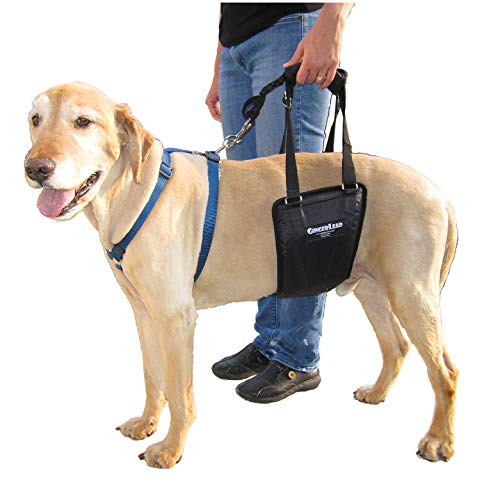
  • Best for Lift Support: GingerLead Dog Support and Rehabilitation Harness. A padded rear support sling with a tall handle made specifically for dogs with hind-end we.
  • Best for Car and Walks: PetSafe 3 in 1 Dog Harness. A padded harness that doubles as a walking harness and a vehicle restraint when paired wit.
  • Best Budget: Kurgo Tru-Fit Smart Harness. An affordable padded harness with five adjustment points, a steel front leash ring for gen.
At a Glance

Quick Comparison

Quick answer

For most dogs with arthritis, our top pick is the Ruffwear Web Master Harness. Its padded chest and belly panels spread pressure away from sore joints, and the sturdy top handle lets you gently steady or assist your dog over thresholds, stairs, and into the car without grabbing a collar or pulling on a stiff leg. If your dog struggles most with the act of putting the harness on, the step-in Rabbitgoo Step-In Harness avoids lifting legs over the head. For larger or rear-end-weak dogs that need real lifting help, a dedicated lift harness such as the GingerLead style support sling fits better. The PetSafe 3 in 1 suits owners who want one padded harness for both walking and occasional car restraint, and the Kurgo Tru-Fit is the value choice for everyday padded support.

What to consider for Dog Harness For Dogs With Arthritis

Arthritis changes what a good harness looks like. The single biggest factor is how the harness goes on and off. Many standard harnesses require lifting a paw up and through a loop or pulling the harness over the head, which forces a stiff, painful dog to bear weight on a sore joint or twist a tender shoulder. Step-in and fully unbuckling designs that you lay under the dog and clip on the back are far kinder.

The second factor is load distribution. Arthritic dogs often have pain in the hips, elbows, shoulders, or spine. A harness with a wide, padded chest plate and a belly panel spreads any leash or steadying force across a large area instead of concentrating it on the neck or a single sore point. Avoid thin straps that dig in.

Third is handled support. A rigid, well-placed top handle (ideally over the dog’s center of gravity) lets you offer a gentle boost up steps or into a vehicle, which is often where arthritic dogs need the most help. For dogs with significant hind-end weakness, a rear or full-body support sling is more appropriate than a walking harness alone. Always introduce any assistance slowly, and if your dog shows pain, stiffness, or reluctance to move, talk to your veterinarian about a pain-management and mobility plan before relying on gear.

What to look for in a gear item (harness, collar, leash or muzzle)

Correct fit and sizing. Measure your dog’s chest girth at the widest point behind the front legs and the neck base, then match to the brand’s size chart rather than guessing by weight. You should be able to slide two fingers under any strap. A snug, even fit prevents both chafing and escape, and matters more for thin senior dogs whose muscle has wasted around the joints.

Durable hardware and materials. Look for metal load-bearing rings, reinforced stitching, and abrasion-resistant webbing. For a dog you may need to steady or partially support, the buckle and handle stitching are doing real work, so flimsy plastic side-release clips on a strong dog are a weak point.

Safety features. Escape resistance matters for anxious seniors, so a three-strap or multi-point design backs out far less easily than a simple loop. A chest-based or no-choke front design keeps pressure off the trachea, which is important for any dog and especially flat-faced or tracheally sensitive breeds. Reflective trim adds visibility on slow early-morning or evening walks.

Comfort and padding. Wide, soft, breathable padding across the chest and belly is the difference between a harness an arthritic dog tolerates and one it resents. Padding also stops thin straps from pressing into bony, low-muscle areas.

No-pull design where relevant. Many arthritic dogs walk slowly and pull little, so a no-pull front clip may be less critical than comfort. But if your dog still lunges, a front-clip option reduces sudden jolts through sore joints. A no-pull harness is a management tool, not a training substitute, so pair it with reward-based training from a certified trainer.

How we chose these picks

  • We focused on designs that reduce joint stress when putting the harness on, prioritizing step-in and fully unbuckling styles over pull-over-the-head loops.
  • We compared padded chest and belly panels and load distribution using each manufacturer’s published materials and specifications.
  • We checked for a usable, well-positioned support handle for steadying dogs over stairs and into vehicles.
  • We assessed hardware quality from product specs, including metal load rings, buckle type, and reinforced stitching.
  • We read patterns in publicly available owner reviews to surface recurring real-world cons, not just praise.
  • We confirmed each product is currently sold and available in a range of sizes from small to large dogs.
  • We weighed escape resistance and no-choke chest positioning, which matter for anxious or tracheally sensitive seniors.
  • Never ranked a product higher just because it pays a commission.

What to avoid

  • Ill-fitting sizes. A harness chosen by weight alone can sit loose on a muscle-wasted senior, causing chafing or letting the dog back out. Always measure girth and check the size chart.
  • Flimsy clips that fail on strong dogs. Lightweight plastic side-release buckles can crack or pop open under sudden load, which is dangerous if you are also using the harness to steady your dog.
  • Aversive tools used without professional guidance. Avoid choke, prong, or shock collars on arthritic dogs, as added neck or body stress can worsen pain. Work with a certified trainer instead.
  • Retractable leashes near traffic. The thin cord and sudden jerks offer poor control and can yank a stiff, slow-reacting senior, which is unsafe near roads.

For more breed-by-breed and need-by-need advice, browse our dog guides, our dog health resources for senior and mobility topics, and our dog care products roundups for everyday gear.

Why this matters

For an arthritic dog, the on-and-off motion of the harness often causes more pain than the walk itself, which is why step-in and fully unbuckling designs that avoid lifting a leg through a loop or pulling fabric over the head are usually kinder than standard pull-over harnesses.

The Options

Types Explained

Step-in padded harness

Lies flat so the dog places front paws into openings, then clips on the back, avoiding any lifting of legs over the head.

Best for: Dogs whose main difficulty is the act of putting the harness on without twisting stiff joints.

Multi-strap handled harness

A three to five point design with padded panels and a top handle for steadying and gentle boosts.

Best for: Arthritic dogs that still walk but need help over stairs, thresholds, and into the car.

Rear or full-body support sling

A padded belly and hip cradle with a tall handle that lets you take weight off weak back legs.

Best for: Dogs with significant hip arthritis or hind-end weakness who need real lifting assistance.

3 in 1 walk and car harness

A padded harness that also works with a seat-belt loop for everyday vehicle rides to appointments.

Best for: Arthritic dogs that travel often for vet visits or therapy and need one comfortable, versatile harness.
The Rankings

Top 5 Picks

#1
Ruffwear Web Master Harness
Best Overall

Ruffwear Web Master Harness

View on Amazon

A secure three-strap design with padded chest and belly panels that spread pressure across a wide area, keeping force off sore joints. The reinforced top handle sits near the dog's center of gravity, so you can gently steady or boost an arthritic dog over thresholds and into the car. The five adjustment points help fit muscle-wasted seniors. The trade-off is a premium price, and the snug fit takes a few uses to dial in.

#2
Rabbitgoo Step-In Dog Harness
Easiest On

Rabbitgoo Step-In Dog Harness

View on Amazon

This step-in style lets your dog place its front paws into two openings while the harness lies flat, so there is no lifting a leg through a loop or pulling fabric over a stiff neck. Soft padding and a no-choke chest design suit slow walkers. It comes in a wide size range. The trade-off is that it has no support handle for lifting, so it helps with putting it on but not with assisting mobility.

#3
GingerLead Dog Support and Rehabilitation Harness
Best for Lift Support

GingerLead Dog Support and Rehabilitation Harness

View on Amazon

A padded rear support sling with a tall handle made specifically for dogs with hind-end weakness, hip arthritis, or recovery needs. It cradles the belly and hips so you can take weight off the back legs on stairs or grass. Sizing is gender and length specific for comfort. The trade-off is that it is a mobility aid rather than an everyday walking harness, so most owners pair it with a separate front harness for full control.

#4
PetSafe 3 in 1 Dog Harness
Best for Car and Walks

PetSafe 3 in 1 Dog Harness

View on Amazon

A padded harness that doubles as a walking harness and a vehicle restraint when paired with a seat-belt loop, useful for arthritic dogs that ride to the vet or therapy often. It has front and back leash points and reflective stitching for low-light walks. The padding eases pressure on tender areas. The trade-off is that it is not a crash-tested travel restraint, so use it for everyday rides, not as certified crash protection.

#5
Kurgo Tru-Fit Smart Harness
Best Budget

Kurgo Tru-Fit Smart Harness

View on Amazon

An affordable padded harness with five adjustment points, a steel front leash ring for gentle no-pull redirection, and a chest pad that cushions bony, low-muscle areas common in senior dogs. The wide size range fits small to large breeds. It is a solid everyday value. The trade-off is that the back handle is short and low, so it is better for quick steadying than for sustained lifting of a heavier dog.

Before You Buy

Key Buying Factors

01

Easy on, easy off

Step-in or fully unbuckling designs let you clip the harness on the dog's back without lifting paws through loops or pulling fabric over a stiff head and neck, which is the biggest comfort win for an arthritic dog.

02

Wide padded panels

A broad, cushioned chest and belly area spreads any leash or steadying force across a large surface, keeping pressure off sore hips, elbows, shoulders, and spine instead of concentrating it on one point.

03

Support handle placement

A rigid handle positioned over the dog's center of gravity lets you offer a gentle boost up stairs or into a vehicle. For hind-end weakness, choose a rear or full-body sling rather than a walking harness alone.

04

Correct measured fit

Measure chest girth and neck base and match the brand's size chart, not weight. Thin seniors with muscle loss need a snug, even fit so the harness neither chafes nor lets the dog back out.

05

Strong, no-choke hardware

Metal load rings, reinforced stitching, and a chest-based design keep pressure off the trachea and hold up under steadying force. Avoid thin straps and flimsy plastic clips on strong dogs.

Living With It

Care, Cost and Maintenance

Fit it right and recheck often

Measure chest girth behind the front legs and aim for a two-finger gap under each strap. Recheck the fit every few weeks, since arthritic seniors can lose muscle or change shape, which loosens straps and raises escape risk.

Introduce the harness slowly

Let your dog sniff the harness and pair it with treats before the first wear. Move stiff joints gently when putting it on, and watch for flinching or reluctance, which can signal pain worth raising with your veterinarian.

Keep it clean and inspect hardware

Hand wash or gently machine wash padded harnesses and air dry to protect the foam and webbing. Before each support-assisted outing, check stitching, buckles, and load rings for wear so nothing fails when you are steadying your dog.

Pro tip

Lay the unbuckled harness flat on the floor, gently walk or guide your dog over it, then bring the straps up and clip on the back. This avoids twisting stiff shoulders and hips, and pairing it with a treat each time helps your dog look forward to the routine.

Frequently asked questions

How do I measure and size a harness for an arthritic dog?
Use a soft tape to measure the chest girth at the widest point just behind the front legs, then measure the base of the neck where a collar sits. Match those numbers to the brand's size chart rather than choosing by weight, because arthritic seniors often lose muscle and weigh less than their frame suggests. Aim for a snug fit where you can slide two fingers under any strap. If your dog falls between sizes, the adjustment points on a multi-strap harness usually let you fine-tune. A correctly measured fit prevents both chafing on bony areas and the dog backing out.
Do no-pull harnesses work for dogs with arthritis?
A no-pull front clip redirects a dog's forward momentum to the side, which can reduce sudden jolts through sore joints if your dog still lunges. That said, many arthritic dogs walk slowly and pull little, so comfort and padding often matter more than pulling control. Treat any no-pull harness as a management tool, not a training fix. If pulling is a real issue, pair the harness with reward-based training guided by a certified trainer. Avoid yanking or corrections, since added stress on already painful joints can make your dog more reluctant to walk and may worsen discomfort over time.
How do I make a harness more escape-proof for a senior dog?
Anxious or muscle-wasted seniors back out of harnesses more easily, so choose a three-strap or multi-point design rather than a simple loop, since the extra strap behind the ribcage blocks reversing out. Fit it snugly using the two-finger rule and recheck often, as a loose harness is the main escape cause. Some harnesses add a second belly strap or a martingale loop for extra security. No harness is fully escape-proof for a determined dog, so supervise near roads and keep the leash short in busy areas. If your dog panics in the harness, a certified trainer can help with calm desensitization.
Is a harness or a collar better for a dog with arthritis?
A harness is usually the better choice for an arthritic dog because it spreads pressure across the chest and body rather than concentrating force on the neck and trachea. This is especially important for flat-faced or tracheally sensitive breeds and for any dog that still pulls. A harness also gives you a handle to steady or boost your dog, which a collar cannot. Keep a collar for ID tags, but attach the leash to the harness for walks. Avoid choke, prong, or shock collars entirely, since the added stress can aggravate joint and neck pain. When in doubt, ask your veterinarian about the safest setup for your dog.
What materials and durability features matter most?
Look for abrasion-resistant webbing such as nylon or polyester, wide breathable padding across the chest and belly, and reinforced stitching at stress points. Load-bearing components like the leash ring and any support handle should be metal rather than thin plastic, because they carry real force when you steady or assist a stiff dog. Breathable mesh padding helps in warm weather but can wear faster than dense foam, so check owner reports on longevity. For dogs you may partially support, the handle and its stitching are doing serious work, so prioritize harnesses that publish reinforced construction. Inspect all hardware regularly and retire any harness with frayed webbing or a cracked buckle.
How do I wash a padded arthritis harness?
Most padded harnesses do best with hand washing in cool water with a mild, fragrance-free soap, then air drying away from direct heat, which protects the foam padding and webbing from breaking down. Some are machine washable on a gentle cycle inside a mesh laundry bag, but always check the manufacturer's label first. Avoid harsh detergents and bleach, which can irritate sensitive senior skin and degrade stitching. Make sure the harness is fully dry before putting it back on, since damp padding against thin-coated bony areas can cause chafing. Washing every couple of weeks keeps it hygienic, and it is a good moment to inspect buckles and stitching for wear.
How does fit differ for a small versus a large arthritic dog?
Small dogs need lightweight, narrow padding and an easy step-in design, since pulling fabric over a tiny stiff neck is awkward and a heavy harness can feel cumbersome on a frail frame. Large dogs need wider load-bearing straps, stronger metal hardware, and a sturdy handle, because steadying or boosting a heavy dog puts real force on the harness. A short, low back handle is fine for quick steadying of a small dog but inadequate for lifting a large one, where a dedicated support sling works better. In both cases, measure girth and follow the size chart, and confirm the chosen size covers your dog's exact weight and chest range.
Is it safe to lift my arthritic dog with a harness handle?
A handle is meant for gentle steadying and short boosts over stairs or into a car, not for hoisting a dog's full weight by a single point, which can strain the spine or chest. For dogs that need real lifting, especially with hind-end weakness, use a rear or full-body support sling designed to cradle the belly and hips. Move slowly, support the body evenly, and stop if your dog flinches or resists. Persistent difficulty rising or walking is a medical sign, so consult your veterinarian about pain management and a mobility plan. Never use a harness handle as a substitute for proper veterinary care of the underlying arthritis.
Can I leave the harness on my arthritic dog all day?
Most trainers and manufacturers recommend removing the harness when your dog is not walking or being assisted, because constant wear can mat fur, trap moisture, and irritate skin, which is a bigger concern for thin-coated or low-muscle seniors with bony pressure points. Leaving a harness on also means you cannot inspect the skin underneath for redness or chafing. Take it off during rest and overnight, and check the skin when you remove it. If your dog needs frequent quick support, a lightweight harness you can put on with minimal joint movement is more practical than leaving gear on all day. When in doubt about skin sensitivity, ask your veterinarian.
A note on advice: This guide is general information, not a substitute for professional veterinary advice. Talk to your vet before changing your dog's diet or care routine, especially if your dog has allergies, kidney disease, pancreatitis, obesity, heart disease or any other medical condition.
Transparency

How we made this guide

How we chose. We compared the options on the factors that matter most for Dog Care Products, using manufacturer specifications, aggregated verified owner reviews and editorial comparison. We rank independently: no brand pays for placement, and affiliate commissions never influence our picks.

How it was written. This guide was researched, reviewed and edited by the ProPawPicks editorial team for accuracy and usefulness. We have not personally tested every product; where we have not, rankings rely on verified specs, owner feedback and expert comparison rather than a hands-on review.

Affiliate disclosure. ProPawPicks is reader-supported. If you buy through links on our site, we may earn a commission at no extra cost to you. See our affiliate disclosure.

Keep Reading

More Dog Care Products guides

Stop Wasting Treats: 5 Best Interactive Dog Cameras 2026View picks โ†’Picking Invisible Dog Fence for AllergiesView picks โ†’Invisible Dog Fence for Sensitive Stomachs: 2026 Top Pick ReviewedView picks โ†’Expert Picks: Best Invisible Dog Fence for the Money 2026View picks โ†’Invisible Dog Fence under 50 That Hold UpView picks โ†’Which Invisible Dog Fence Is Best? 5 Top PicksView picks โ†’

Sources and further reading

Some links below are affiliate links. If you buy through them we may earn a small commission at no extra cost to you. Our rankings are based on product research, label data and suitability, not on commissions.