Quick answer
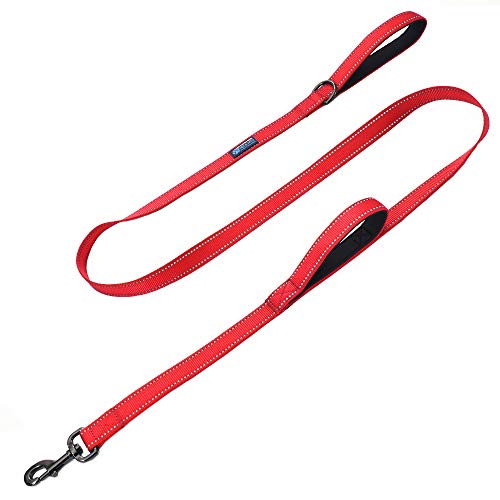
For a strong, energetic Labrador, pick a sturdy fixed leash 4 to 6 feet long with reinforced stitching, a solid metal clasp, and a padded handle. The Kurgo Quantum 6 in 1 and the Max and Neo Double Handle Traffic Leash both give you close control when your Lab lunges, while a biothane or leather lead shrugs off mud, water, and daily wear. Skip retractable leashes for a powerful puller and pair the leash with a well fitted harness or flat collar.
What makes a good Lab leash
A Labrador is powerful and often pulls, so the leash has to survive real force. The stitching and the clasp are the two parts that fail first. Bar tack stitching and a heavy, spring loaded metal clip will hold a 70 to 80 pound dog that suddenly bolts after a squirrel. A padded handle matters just as much, because a bare nylon strap can burn or bruise your hand when your Lab hits the end of the line. Reflective trim is a useful bonus for early morning and evening walks.
What to look for
Choose a standard 4 to 6 foot length for everyday walking and training, since it gives the best control without letting your dog wander into traffic. For material, durable nylon is affordable and strong, biothane is waterproof and wipes clean for a Lab that swims and rolls in mud, and leather softens over time and is gentle on the hands. A width of about 1 inch spreads pressure and resists fraying better than a thin strap. A traffic handle near the clip lets you shorten the leash instantly in crowds or near roads, and a hands free waist leash suits owners who jog with their dog. The Ruffwear KnotaLeash and the Coastal Pet Circle T leather lead are two examples that pair strong hardware with a comfortable grip.
How we chose
We focused on leashes built for large, strong dogs, weighing stitching, clasp strength, handle comfort, and material durability. We favored fixed leashes in the 4 to 6 foot range from makers with a track record for big dog hardware, including Ruffwear, Max and Neo, Kurgo, and Coastal Pet. We also considered leather and biothane options for owners who want easy cleaning or a softer grip, and a long training line for recall practice in open spaces.
What to avoid
Most trainers advise against retractable leashes for a strong Lab. They keep constant tension on the line, which teaches your dog to pull, and they give you poor control at the exact moment you need it. The thin cord can snap, recoil, or cause burns and cuts, and the plastic housing can crack under load. Skip thin webbing and flimsy bolt snaps too, and be wary of a leash that is too long for busy sidewalks. Pair a solid fixed leash with a well fitted harness or flat collar, reward loose leash walking, and stop moving whenever the line goes tight so your Lab learns that pulling ends the walk. That simple routine, plus the right gear, keeps walks calm and safe.