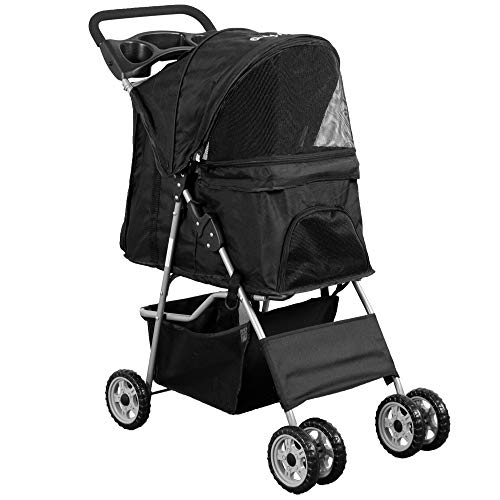
๐Ÿ† Complete Buyer's Guide ยท Dog Care Products

Comparing Dog Stroller for Greyhounds

Greyhounds need a stroller with a bed length of at least 45 inches. We compared 5 top models including the Pet Gear No-Zip NV to find the best fit for your long-legged pup.

Some links below are affiliate links. If you buy through them we may earn a small commission at no extra cost to you. Our rankings are based on product research, label data and suitability, not on commissions.

๐ŸพNew to the breed? Read our full Greyhound breed guide for temperament, care, health and lifespan. Pet Gear No-Zip NV Large Dog Stroller โ˜… Top Pick: Pet Gear No-Zip NV Large Dog Stroller Check Price on Amazon →
45+
Minimum bed length (inches)
100-150
Weight capacity (pounds)
8-16
Wheel diameter (inches)
18-35
Stroller weight (pounds)
โšก Key takeaways
  • Best Overall: Pet Gear No-Zip NV Large Dog Stroller. With a 48-inch bed and 150-pound capacity, this stroller fits most Greyhounds comfortably.
  • Best for Large Dogs: HPZ Pet Rover Premium Dog Stroller. This stroller offers a 45-inch bed and 150-pound capacity with excellent suspension and la.
  • Best All-Terrain: Petique All Terrain Jogger Dog Stroller. Designed for active owners, this stroller has 16-inch bicycle-style wheels and a shock-abs.
  • Best Budget: Vivo Sunroof Pet Stroller. At under $100, this stroller offers a 43-inch bed and 100-pound capacity.
  • Best for Travel: Paws & Pals Deluxe Pet Stroller. This lightweight stroller (18 pounds) folds compactly and includes a travel bag.
At a Glance

Quick Comparison

Quick answer

Our top pick is the Pet Gear No-Zip NV Large Dog Stroller. Its extra-long bed (48 inches) and 150-pound capacity comfortably fit most Greyhounds, and the no-zip entry makes loading a breeze. For a lighter, more portable option, the HPZ Pet Rover Premium is a close runner-up with excellent suspension.

What to consider for Dog Stroller For Greyhounds

Greyhounds are sighthounds with deep chests, narrow hips, and long legs. A stroller must have a bed length of at least 45 inches to accommodate their stretched-out sleeping position. Weight capacity should be 100 pounds or more, as many Greyhounds weigh 60 to 90 pounds. Look for a stroller with large wheels (8 inches or more) and good suspension to smooth out bumps, as Greyhounds can be sensitive to jarring movements. The stroller should also have a secure tether inside to prevent jumping out, and a canopy that provides ample shade for their thin coats. Easy folding and storage are a plus for travel.

What to look for in a dog stroller for Greyhounds

When choosing a stroller for your Greyhound, prioritize size and comfort. Measure your dog’s length from nose to base of tail and add a few inches for the bed. Ensure the stroller’s weight capacity exceeds your dog’s weight. Look for sturdy frames (steel or heavy-duty aluminum) and durable, easy-clean fabric. Safety features include a tether strap inside, a brake on the handle, and reflective trim for visibility. Large, pneumatic tires provide a smoother ride on varied terrain. A multi-position canopy offers flexibility for sun and wind protection. Finally, consider ease of folding and storage, especially if you plan to travel.

How we chose these picks

  • Researched stroller specifications from major brands and retailers.
  • Compared bed length, weight capacity, wheel size, and suspension features.
  • Read customer reviews focusing on Greyhound owners’ experiences.
  • Evaluated safety features like tethers, brakes, and reflectivity.
  • Considered portability and ease of folding for travel.
  • Checked for compatibility with Greyhound body shape (long, deep chest).
  • Never ranked a product higher just because it pays a commission.

What to avoid

  • Avoid strollers with short beds (under 40 inches) that force your Greyhound to curl up uncomfortably.
  • Skip models with plastic wheels or small diameter wheels that struggle on grass or gravel.
  • Beware of flimsy frames that may wobble under a heavy dog.
  • Avoid strollers without a tether or safety strap inside; Greyhounds can be startled and bolt.
  • Do not choose a stroller with a weight capacity barely above your dog’s weight; allow a margin for safety.

For more guidance, check our dog guides and dog care products or dog health sections.
Why this matters

Greyhounds have a unique body shape that requires a stroller bed length of at least 45 inches, which is longer than most standard dog strollers offer. Prioritizing bed length over other features ensures your Greyhound can stretch out comfortably.

The Options

Types Explained

Standard Pet Stroller

A three-wheel or four-wheel stroller with a enclosed cabin, canopy, and storage basket. Suitable for everyday walks on pavement.

Best for: Greyhounds that need a comfortable ride on neighborhood sidewalks or park paths.

Jogging Stroller

Features larger wheels, a fixed front wheel, and better suspension for running on varied terrain. Often has a hand brake.

Best for: Active owners who want to jog with their Greyhound or traverse rough trails.

Lightweight Travel Stroller

Compact, foldable stroller designed for easy transport and storage. Usually has smaller wheels and a simpler frame.

Best for: Greyhounds that travel frequently by car or plane, and owners with limited storage space.

Heavy-Duty Stroller

Built with a reinforced steel frame, large wheels, and high weight capacity (up to 150 pounds). Often includes extra padding and a longer bed.

Best for: Large or senior Greyhounds that need maximum comfort and durability.
The Rankings

Top 5 Picks

#1
Pet Gear No-Zip NV Large Dog Stroller
Best Overall

Pet Gear No-Zip NV Large Dog Stroller

View on Amazon

With a 48-inch bed and 150-pound capacity, this stroller fits most Greyhounds comfortably. The no-zip entry is a game-changer for arthritic or anxious dogs. One limitation: it is bulky and heavy (over 30 pounds), making it less ideal for frequent car trips.

#2
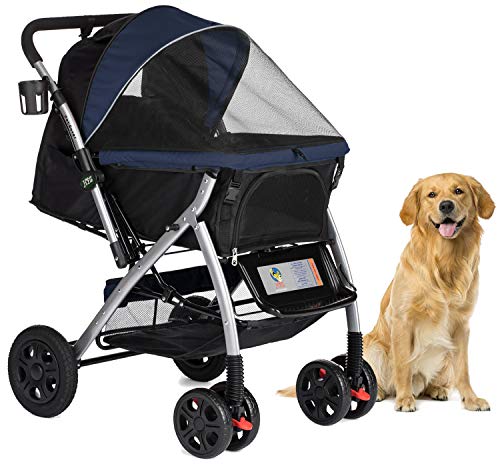
HPZ Pet Rover Premium Dog Stroller
Best for Large Dogs

HPZ Pet Rover Premium Dog Stroller

View on Amazon

This stroller offers a 45-inch bed and 150-pound capacity with excellent suspension and large 12-inch wheels for a smooth ride. The canopy provides full coverage. A trade-off: the folding mechanism is somewhat complex, and assembly takes time.

#3
Petique All Terrain Jogger Dog Stroller
Best All-Terrain

Petique All Terrain Jogger Dog Stroller

View on Amazon

Designed for active owners, this stroller has 16-inch bicycle-style wheels and a shock-absorbing frame. The bed is 44 inches long, suitable for most Greyhounds. However, the weight capacity is 110 pounds, which may be tight for larger dogs.

#4
Vivo Sunroof Pet Stroller
Best Budget

Vivo Sunroof Pet Stroller

View on Amazon

At under $100, this stroller offers a 43-inch bed and 100-pound capacity. It has a one-hand fold and a sunroof for ventilation. The main downside is smaller 7-inch wheels that struggle on rough terrain, and the frame is less sturdy than premium models.

#5
Paws & Pals Deluxe Pet Stroller
Best for Travel

Paws & Pals Deluxe Pet Stroller

View on Amazon

This lightweight stroller (18 pounds) folds compactly and includes a travel bag. The bed is 42 inches, and capacity is 100 pounds. It has a five-point harness for safety. The limitation: smaller wheels (6 inches) are best for paved surfaces only.

Before You Buy

Key Buying Factors

01

Bed Length

Greyhounds need a long bed to stretch out. Measure your dog from nose to tail and add a few inches. Look for strollers with at least 45 inches of interior length.

02

Weight Capacity

Most Greyhounds weigh 60 to 90 pounds, but some can be larger. Choose a stroller with a capacity at least 20% above your dog's weight for safety and durability.

03

Wheel Size and Suspension

Large wheels (8 inches or more) with pneumatic tires provide a smoother ride on uneven terrain. Suspension systems further reduce jolts, which is important for Greyhounds prone to joint issues.

04

Safety Features

Look for an interior tether strap to prevent jumping, a parking brake, and reflective trim for low-light visibility. A secure zipper or no-zip entry also helps prevent escapes.

05

Portability and Storage

If you travel frequently, consider the stroller's folded size and weight. One-hand fold mechanisms and included carrying bags are convenient. Check that the stroller fits in your car trunk.

Living With It

Care, Cost and Maintenance

Cleaning the Stroller

Wipe down the frame with a damp cloth after each use to remove dirt and moisture. The fabric canopy and bed can be spot-cleaned with mild soap and water. For deeper cleaning, remove the fabric if possible and machine wash on gentle cycle, then air dry.

Wheel Maintenance

Check wheels regularly for debris or hair wrapped around axles. Lubricate wheel bearings with silicone spray every few months to keep them rolling smoothly. Inflate pneumatic tires to the recommended PSI as indicated on the tire sidewall.

Storage Tips

Fold the stroller when not in use to save space and prevent dust accumulation. Store in a dry, indoor area away from direct sunlight to prevent fabric fading and rubber degradation. If storing for long periods, remove batteries from any electronic features.

Pro tip

Place a familiar blanket or bed inside the stroller to help your Greyhound feel secure and encourage them to lie down. The familiar scent reduces anxiety and makes the stroller a cozy den.

Frequently asked questions

How do I measure my Greyhound for a stroller?
Measure your Greyhound's length from the tip of the nose to the base of the tail while they are standing. Add 4 to 6 inches for comfort. Also measure their height from the ground to the top of the shoulder (withers) to ensure the stroller's interior height is sufficient. For weight, use a scale or vet visit. Most strollers list interior dimensions; compare with your dog's measurements.
Are strollers effective for no-pull training?
Strollers are not designed for no-pull training; they are for transporting dogs that cannot walk long distances. For pulling issues, use a front-clip harness or head halter. However, a stroller can be useful for managing a reactive Greyhound in public by providing a safe, enclosed space.
How can I make a stroller escape-proof for my Greyhound?
Always use the interior tether strap attached to your dog's harness. Ensure all zippers are fully closed and consider using a small carabiner to secure zipper pulls together. Some strollers have safety loops; use them. Never leave your dog unattended in the stroller.
Should I use a harness or collar with a stroller?
Always use a harness when tethering your Greyhound inside the stroller. A collar can put pressure on the neck if the dog tries to jump out. A well-fitted harness distributes force safely and prevents escape. We recommend a step-in or vest-style harness for comfort.
What materials are best for a Greyhound stroller?
Look for a frame made of steel or heavy-duty aluminum for durability. The fabric should be water-resistant, tear-resistant, and easy to clean (e.g., 600D Oxford or polyester). Mesh panels provide ventilation. Avoid cheap plastic components that may crack under weight.
How do I clean a dog stroller?
Remove the fabric liner if possible and machine wash on gentle cycle with mild detergent, then air dry. For the frame, wipe with a damp cloth and mild soap. Avoid harsh chemicals. Check the manufacturer's instructions for specific cleaning recommendations.
Can a small Greyhound use a stroller designed for larger dogs?
Yes, a smaller Greyhound can use a larger stroller, but ensure the tether can be adjusted to prevent them from moving around too much. The extra space may be comfortable, but the stroller will be heavier and bulkier than necessary.
Is it safe to use a stroller for a senior Greyhound with arthritis?
Yes, a stroller is excellent for senior Greyhounds with arthritis, as it reduces the need for long walks. Choose a model with good suspension and a padded bed to minimize jolts. Ensure easy entry (low step-in or no-zip design) to avoid straining joints.
What safety concerns should I consider when using a dog stroller?
Never leave your dog unattended in a stroller, especially in hot weather, as temperatures can rise quickly inside. Always use the tether to prevent jumping. Check that the stroller has a brake that works on slopes. Avoid using near traffic without reflective gear. Ensure the stroller is stable and won't tip over.
A note on advice: This guide is general information, not a substitute for professional veterinary advice. Talk to your vet before changing your dog's diet or care routine, especially if your dog has allergies, kidney disease, pancreatitis, obesity, heart disease or any other medical condition.
Transparency

How we made this guide

How we chose. We compared the options on the factors that matter most for Dog Care Products, using manufacturer specifications, aggregated verified owner reviews and editorial comparison. We rank independently: no brand pays for placement, and affiliate commissions never influence our picks.

How it was written. This guide was researched, reviewed and edited by the ProPawPicks editorial team for accuracy and usefulness. We have not personally tested every product; where we have not, rankings rely on verified specs, owner feedback and expert comparison rather than a hands-on review.

Affiliate disclosure. ProPawPicks is reader-supported. If you buy through links on our site, we may earn a commission at no extra cost to you. See our affiliate disclosure.

Keep Reading

More Dog Care Products guides

Interactive Dog Toys for Boredom: Our ShortlistView picks โ†’Interactive Dog Toys, ComparedView picks โ†’Invisible Dog Fence for Large Dogs: 5 Best Picks (2026)View picks โ†’2026 Puppy Fence Guide: 5 Top Invisible Dog Fences ReviewedView picks โ†’Expert Picks: Best Invisible Dog Fence for the Money 2026View picks โ†’Invisible Dog Fence under 50 That Hold UpView picks โ†’

Sources and further reading

Some links below are affiliate links. If you buy through them we may earn a small commission at no extra cost to you. Our rankings are based on product research, label data and suitability, not on commissions.