Quick answer
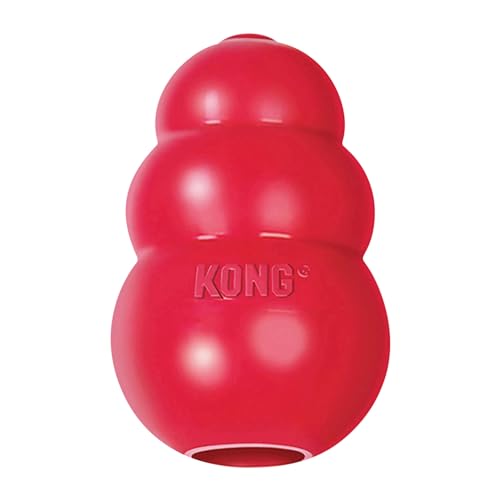
The best dog toys for a Labrador are tough natural-rubber chews you can stuff, buoyant fetch balls and retriever bumpers, treat-dispensing puzzles, and sturdy rope tugs. Labs are strong-jawed power chewers bred to retrieve and swim, so choose durable, correctly sized toys, supervise chewing sessions, and replace anything that starts to break apart before it becomes a swallowing risk. Rotating a small set of tough toys keeps a bright, high-energy Lab interested without leaving destructible toys out unattended.
Why tough toys suit a Labrador
Labradors were bred as retrievers, so they carry things in their mouth, chase almost anything you throw, and happily swim after it. That working drive comes with a powerful bite, which means flimsy toys rarely survive a single afternoon. A Lab that shreds a soft toy can swallow the chunks, and swallowed pieces can cause an intestinal blockage, a genuine veterinary emergency. Tough rubber chews, buoyant fetch toys, and food puzzles channel that energy safely, satisfy the retrieving instinct, and give a highly food-motivated breed a job to focus on instead of your furniture. A tired, mentally occupied Lab is calmer at home, and the right toy does much of that work for you.
What to look for
Start with material. Natural rubber and reinforced chew-proof compounds handle a Labrador’s jaw far better than thin plastic or plush. Size up, because a large Lab can choke on a ball that fits fully in its mouth, so pick balls wider than the throat. Look for buoyancy if your dog swims, since floating toys suit their love of water and are easy to spot. Treat-dispensing and puzzle designs tap into a Lab’s strong food motivation and fight boredom, which is the root of a lot of household destruction. Finally, favor toys you can wash and inspect quickly so wear never goes unnoticed.
How we chose
We focused on toughness first, filtering for toys rated for large, powerful chewers rather than casual mouthers. We weighed material safety and non-toxic construction, correct sizing for a big breed, and how well each toy matched real Labrador behavior: fetching, swimming, chewing, and problem-solving. We looked at how toys held up in long-term owner feedback, whether damaged parts could be swallowed, how a floating design performed for water-loving dogs, and how easy each toy was to clean and refresh through rotation.
What to avoid
Avoid any toy your Lab can bite chunks off and swallow, since those pieces are the ones that cause blockages. Skip balls small enough to lodge in a large throat, and be cautious with standard tennis balls: the abrasive felt wears down teeth over time, and undersized ones are a choking risk. Do not leave a determined chewer alone with a toy that can be destroyed, and throw out anything cracked, frayed, or missing pieces. Rotate a few tough toys instead of leaving everything out at once, so each stays novel and gets a fresh inspection. When a toy no longer passes that check, retiring it early is always cheaper and safer than an emergency vet visit.


