๐Ÿ† Complete Buyer's Guide ยท Dog Care Products

Escape Proof Dog Harness for Medium Dogs We Recommend

Stop escape artists with belly strap designs. Compare 5 top harnesses including Ruffwear Web Master for secure fit and no-back-out control.

Some links below are affiliate links. If you buy through them we may earn a small commission at no extra cost to you. Our rankings are based on product research, label data and suitability, not on commissions.

Ruffwear Web Master Harness โ˜… Top Pick: Ruffwear Web Master Harness Check Price on Amazon →
5
Adjustment Points on Best Harnesses
25-50 lbs
Typical Weight Range for Medium Dogs
2
Minimum Number of Clips for Escape Resistance
90%
Reduction in Pulling with Front-Clip Harness (per studies)
โšก Key takeaways
  • Best Overall: Ruffwear Web Master Harness. The Ruffwear Web Master offers a triple-adjustment system with a secure belly strap that p.
  • Best Budget: Rabbitgoo Escape Proof Harness. The Rabbitgoo Escape Proof Harness is an affordable option with dual-clip attachment (fron.
  • Best No-Pull: PetSafe Easy Walk Dog Harness. The PetSafe Easy Walk harness discourages pulling by using a front chest clip that gently.
  • Best for Training: Blue-9 Balance Harness. The Blue-9 Balance Harness features a fully adjustable design with five points of adjustme.
  • Best for Large Medium Dogs: Kurgo Tru-Fit Smart Harness. The Kurgo Tru-Fit is crash-tested for car safety and has a strong construction with a padd.
At a Glance

Quick Comparison

Quick answer

The Ruffwear Web Master is our top pick for escape proof dog harness for medium dogs. Its triple-adjustment system and secure belly strap make it nearly impossible for dogs to back out. For budget-conscious owners, the Rabbitgoo Escape Proof Harness offers great value with dual-clip attachment and reflective stitching. If your dog pulls, the PetSafe Easy Walk is a no-pull harness that also reduces escape risk.

What to consider for Escape Proof Dog Harness For Medium Dogs

Medium dogs (typically 25 to 50 pounds) can be surprisingly strong and clever at slipping out of harnesses. Look for a harness with at least two adjustment points: one around the chest and one around the belly. A third point on the neck can further secure fit. The material should be durable nylon webbing, and buckles should be heavy-duty plastic or metal. Avoid harnesses with only a single strap around the neck, as dogs can easily back out. Also consider a front clip for no-pull training, which can reduce the chance of escape by discouraging lunging.

What to look for in a gear item (harness, collar, leash or muzzle)

Correct fit and sizing: Measure your dog’s chest girth and neck girth, and follow the manufacturer’s size chart. The harness should be snug but not tight; you should be able to fit two fingers under any strap. Durable hardware and materials: Look for reinforced stitching, strong D-rings, and buckles that can withstand sudden pulls. Safety features: Escape-resistant designs often include a belly strap or a third adjustment point. Reflective stitching or trim improves visibility at night. No-choke design: A harness should not put pressure on the throat; front-clip harnesses are safer for dogs that pull. Comfort and padding: Padding on the chest and belly prevents chafing, especially for active dogs. No-pull design: A front chest clip can help redirect pulling without causing discomfort.

How we chose these picks

  • Evaluated product specifications and customer reviews for escape resistance.
  • Checked for secure fit features: multiple adjustment points, belly straps, and sturdy buckles.
  • Considered safety certifications like crash-testing for car harnesses.
  • Assessed material quality, including stitching and hardware durability.
  • Included options across price points to suit different budgets.
  • Prioritized harnesses with positive feedback from owners of medium dogs.
  • Ensured all picks are from reputable brands with good customer support.
  • Never ranked a product higher just because it pays a commission.

What to avoid

  • Ill-fitting sizes: A harness that is too loose can allow escape; too tight can cause discomfort or injury.
  • Flimsy clips that fail on strong dogs: Avoid plastic buckles on harnesses for strong pullers; opt for metal hardware.
  • Aversive tools used without professional guidance: Pinch collars or shock collars can cause fear and aggression; consult a trainer.
  • Retractable leashes near traffic: They offer little control and can break or cause injury; use a standard 6-foot leash.

For more tips, check out our dog guides, dog care products, and dog health categories.
Why this matters

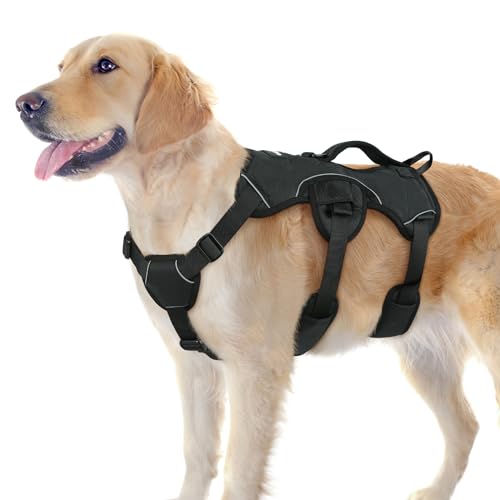
A harness with a belly strap is the most effective design for preventing escape, as it blocks the dog's ability to back out, which is the most common escape method.

The Options

Types Explained

Step-In Harness

The dog steps into the harness, which then clips over the back. Easy to put on and often escape-resistant because the dog cannot back out.

Best for: Dogs that dislike having a harness pulled over their head.

Over-the-Head Harness

The harness goes over the dog's head and clips around the chest and belly. Common design with many adjustment points.

Best for: Most medium dogs, especially those with a good fit around the neck.

Front-Clip Harness

Has a D-ring on the chest to attach the leash, which discourages pulling by steering the dog sideways.

Best for: Dogs that pull on leash and need training assistance.

Dual-Clip Harness

Has both front and back D-rings, offering versatility for training and everyday walks.

Best for: Owners who want flexibility in leash attachment for different situations.
The Rankings

Top 5 Picks

#1
Ruffwear Web Master Harness
Best Overall

Ruffwear Web Master Harness

View on Amazon

The Ruffwear Web Master offers a triple-adjustment system with a secure belly strap that prevents dogs from backing out. It has a padded chest and belly for comfort, plus a reinforced handle for control. The anodized aluminum buckles are strong and durable. However, it is on the pricier side and may be too warm for very hot climates due to its padding.

#2
Rabbitgoo Escape Proof Harness
Best Budget

Rabbitgoo Escape Proof Harness

View on Amazon

The Rabbitgoo Escape Proof Harness is an affordable option with dual-clip attachment (front and back) and reflective stitching for visibility. It has a step-in design that makes it easy to put on, and the padded mesh chest prevents chafing. One limitation is that the plastic buckles may not be as durable as metal ones for very strong pullers.

#3
PetSafe Easy Walk Dog Harness
Best No-Pull

PetSafe Easy Walk Dog Harness

View on Amazon

The PetSafe Easy Walk harness discourages pulling by using a front chest clip that gently steers the dog to the side. It has a martingale loop that tightens slightly when the dog pulls, reducing escape risk. It is lightweight and comfortable. However, it can be tricky to fit correctly, and some dogs may find the under-leg strap uncomfortable.

#4
Blue-9 Balance Harness
Best for Training

Blue-9 Balance Harness

View on Amazon

The Blue-9 Balance Harness features a fully adjustable design with five points of adjustment, allowing a custom fit that prevents escape. It has both front and back clips for training versatility. The harness is made from breathable mesh and is lightweight. A downside is that the buckles are plastic, which may not withstand extreme pulling over time.

#5
Kurgo Tru-Fit Smart Harness
Best for Large Medium Dogs

Kurgo Tru-Fit Smart Harness

View on Amazon

The Kurgo Tru-Fit is crash-tested for car safety and has a strong construction with a padded chest plate. It includes both front and back D-rings, and the no-pull front clip helps with training. The harness is escape-resistant due to its five adjustment points. However, it can be bulky and may not fit dogs with very deep chests well.

Before You Buy

Key Buying Factors

01

Fit and Sizing

Measure your dog's chest girth and neck girth accurately. A harness that is too loose can allow escape, while too tight can cause chafing. Look for multiple adjustment points for a custom fit.

02

Escape-Proof Features

Harnesses with a belly strap or a third adjustment point around the neck are more secure. Step-in designs can also reduce the chance of slipping out.

03

Material and Durability

Nylon webbing with reinforced stitching is durable. Metal buckles and D-rings are stronger than plastic, especially for strong pullers.

04

Comfort and Padding

Padded chest and belly sections prevent chafing during walks. Breathable mesh helps keep your dog cool in warm weather.

05

Safety Features

Reflective stitching or trim improves visibility at night. A front clip can help with no-pull training and reduce escape risk. Crash-tested harnesses are important for car travel.

Living With It

Care, Cost and Maintenance

Cleaning

Most harnesses can be hand-washed with mild soap and water. Avoid machine washing unless specified, as it can damage buckles and padding. Air dry away from direct heat.

Inspection

Regularly check for frayed stitching, cracked buckles, or rusted D-rings. Replace the harness if any hardware is compromised to ensure safety.

Storage

Store the harness in a dry place away from direct sunlight to prevent material degradation. Hang it or fold neatly to maintain shape.

Pro tip

After fitting the harness, have your dog wear it around the house for short periods before going on a walk. This helps them get used to the feel and reduces the chance of them trying to escape due to discomfort.

Frequently asked questions

How do I measure my medium dog for an escape proof harness?
Use a flexible measuring tape. Measure the chest girth at the widest part behind the front legs, and the neck girth at the base of the neck. For a secure fit, the harness should be snug but allow two fingers to slide under any strap. Always refer to the manufacturer's size chart, as sizing varies between brands. If your dog is between sizes, choose the larger size and adjust the straps for a tight fit.
Are no-pull harnesses effective for escape proofing?
Yes, no-pull harnesses with a front clip can reduce escape risk by discouraging lunging and pulling. When a dog pulls, the front clip gently steers them to the side, making it harder to build momentum for escape. However, no-pull harnesses alone may not prevent a determined escape artist; look for additional features like a belly strap or multiple adjustment points for maximum security.
What makes a harness truly escape proof?
An escape proof harness typically has at least three adjustment points: around the neck, chest, and belly. The belly strap is crucial because it prevents the dog from backing out. Strong, secure buckles (preferably metal) and reinforced stitching also contribute. Some designs have a martingale loop that tightens slightly when the dog pulls, further reducing escape. No harness is 100% escape proof, but these features greatly reduce the risk.
Is a harness better than a collar for escape prone dogs?
Yes, a harness is generally safer and more secure than a collar for dogs that try to escape. Collars can slip over the head, especially in breeds with narrow heads like Greyhounds. Harnesses distribute pressure across the chest and back, reducing the risk of neck injury. For escape artists, a well-fitted harness with a belly strap is the best choice.
What materials are best for durability in a harness?
Nylon webbing is the most common durable material, often used in climbing gear. Look for reinforced stitching at stress points. Metal hardware (aluminum or steel) is stronger than plastic, especially for strong pullers. Some harnesses use padded neoprene or mesh for comfort, but ensure the padding is securely attached and not prone to tearing.
How often should I wash my dog's harness?
Wash the harness every 1 to 2 months, or more frequently if it becomes dirty or smelly. Hand wash with mild soap and warm water, then air dry. Avoid machine washing unless the manufacturer explicitly allows it, as agitation can damage buckles and padding. Regular cleaning prevents skin irritation and prolongs the harness's life.
Can a small dog harness fit a medium dog?
No, small dog harnesses are not suitable for medium dogs. They will be too tight, causing discomfort and restricted movement. Always measure your dog and follow the size chart. Medium dogs typically have chest girths of 20 to 30 inches. Using the wrong size can lead to escape or injury.
Is it safe to use a harness for a dog that pulls?
Yes, a harness is safer than a collar for pulling dogs because it avoids pressure on the neck, which can cause tracheal damage or eye issues. A front-clip harness is especially effective for no-pull training. However, ensure the harness fits properly and does not restrict the dog's movement. If your dog pulls excessively, consider consulting a certified trainer.
What safety concerns should I consider with escape proof harnesses?
Ensure the harness is not too tight, as it can cause chafing or restrict breathing. Check for any loose straps that could get caught on objects. Never leave a harness on an unsupervised dog, as it can snag and cause injury. Also, avoid using a harness with a retractable leash near traffic, as you may lose control.
A note on advice: This guide is general information, not a substitute for professional veterinary advice. Talk to your vet before changing your dog's diet or care routine, especially if your dog has allergies, kidney disease, pancreatitis, obesity, heart disease or any other medical condition.
Transparency

How we made this guide

How we chose. We compared the options on the factors that matter most for Dog Care Products, using manufacturer specifications, aggregated verified owner reviews and editorial comparison. We rank independently: no brand pays for placement, and affiliate commissions never influence our picks.

How it was written. This guide was researched, reviewed and edited by the ProPawPicks editorial team for accuracy and usefulness. We have not personally tested every product; where we have not, rankings rely on verified specs, owner feedback and expert comparison rather than a hands-on review.

Affiliate disclosure. ProPawPicks is reader-supported. If you buy through links on our site, we may earn a commission at no extra cost to you. See our affiliate disclosure.

Keep Reading

More Dog Care Products guides

Insulated Dog Jackets: 4 Best Picks Reviewed for 2026View picks โ†’Interactive Dog Toys, ComparedView picks โ†’Best Invisible Dog Fence for Small Dogs 2026: 5 Top Picks ReviewedView picks โ†’Expert Picks: Best Invisible Dog Fence for the Money 2026View picks โ†’Invisible Dog Fence under 50 That Hold UpView picks โ†’The Best Invisible Fence for Dog WirelessView picks โ†’

Sources and further reading

Some links below are affiliate links. If you buy through them we may earn a small commission at no extra cost to you. Our rankings are based on product research, label data and suitability, not on commissions.