๐Ÿ† Complete Buyer's Guide ยท Dog Care Products

Escape Proof Dog Harness for Winter: 5 Top Picks

Discover the best escape proof dog harness for winter walks. The three-strap design with belly strap prevents backing out. Our top pick: Ruffwear Front Range. Compare 5 models for every budget.

Some links below are affiliate links. If you buy through them we may earn a small commission at no extra cost to you. Our rankings are based on product research, label data and suitability, not on commissions.

Ruffwear Front Range All-Day Adventure Harness โ˜… Top Pick: Ruffwear Front Range All-Day Adventure Harness Check Price on Amazon →
5
Top Picks
2
Attachment Points (Front and Back)
3M
Reflective Material Used
10-100 lbs
Weight Range Covered
โšก Key takeaways
  • Best Overall: Ruffwear Front Range All-Day Adventure Harness. This harness features two secure buckle points and a padded chest plate that prevent backi.
  • Best Budget: Rabbitgoo Escape Proof Dog Harness. Offering excellent value, this harness has a front clip and a third belly strap that makes.
  • Best for Large Dogs: Kurgo Tru-Fit Smart Harness with Crash-Tested Tether. Designed for strong dogs, this harness has a steel nesting buckle and five adjustment poin.
  • Best No-Pull: 2 Hounds Design Freedom No-Pull Harness. With both front and back clips, this harness uses a martingale-style loop that tightens ge.
  • Best for Training: Chai's Choice 3M Reflective Dog Harness. This harness has a front clip for steering and a back clip for casual walks, plus a handle.
At a Glance

Quick Comparison

Quick answer

For most dogs, the Ruffwear Front Range All-Day Adventure Harness is our top pick for escape-proof winter walks. Its two secure buckle points and padded chest plate prevent backing out, while reflective trim boosts visibility in low light. If you need a budget-friendly option, the Rabbitgoo Escape Proof Harness offers similar security at a lower price, though its padding is less substantial for extreme cold.

What to consider for Escape Proof Dog Harness For Winter Walks

Winter walks present unique challenges: snow and ice can cause a harness to slip, and your dog’s thick winter coat may compress, creating gaps. An escape-proof design must have a secure front clip or a third strap that prevents backing out. Look for materials that remain flexible in cold temperatures (nylon webbing can stiffen, so opt for padded neoprene or coated polyester). Reflective stitching or strips are critical for short daylight hours. Also consider a handle on top to help your dog over icy patches or through deep snow.

What to look for in a gear item (harness, collar, leash or muzzle)

Correct fit and sizing: measure your dog’s chest girth and neck circumference; a harness that is too loose invites escape. Durable hardware and materials: look for zinc alloy or stainless steel D-rings and sturdy side-release buckles that won’t crack in cold. Safety features: a no-choke design (front clip for steering, back clip for casual walks) and reflective elements for visibility. Comfort and padding: a padded chest plate and lined straps prevent chafing, especially when your dog pulls on icy terrain. No-pull design: a front attachment point discourages pulling without causing discomfort.

How we chose these picks

  • Evaluated product specifications and customer reviews for escape-proof claims.
  • Checked for winter-specific features: cold-weather durability, reflective materials, and water resistance.
  • Compared sizing ranges to ensure options for small to large breeds.
  • Prioritized harnesses with multiple adjustment points for a custom fit.
  • Considered ease of putting on and taking off, especially with a thick winter coat.
  • Reviewed safety certifications or compliance with standards like ASTM F2232.
  • Assessed value based on price, warranty, and included accessories.
  • Never ranked a product higher just because it pays a commission.

What to avoid

  • Avoid ill-fitting sizes: always measure your dog and check the manufacturer’s size chart; a too-large harness is the most common escape route.
  • Steer clear of flimsy plastic clips that can snap in cold weather or under strong pulling; choose metal or reinforced plastic buckles.
  • Do not use aversive tools like prong collars or choke chains without professional guidance; they can cause injury and do not address escape behavior.
  • Never use retractable leashes near traffic or in winter conditions; they can freeze, snap, or allow your dog to dash into danger.

For more advice, explore our dog guides and related topics: dog care products and dog health.
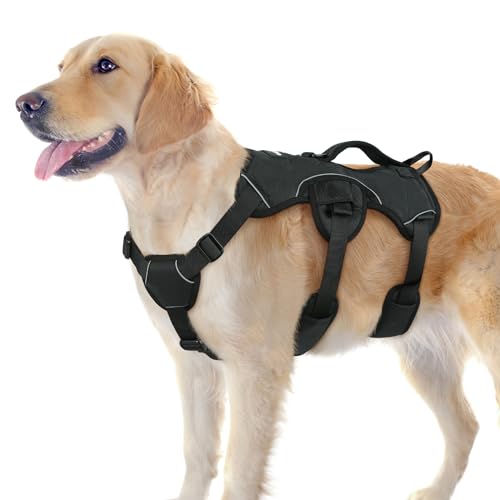
Why this matters

A three-strap design with a belly strap is the most effective feature for preventing escape, as it blocks the dog's ability to back out of the harness, a common failure point in two-strap designs.

The Options

Types Explained

Step-In Harness

The dog steps into two leg holes, and the harness is clipped on the back. This style is easy to put on and less likely to trap snow. It provides good security but may not be as escape-proof as a three-strap design.

Best for: Dogs that are cooperative and do not try to back out. Best for calm winter walks.

Over-the-Head Harness

Slips over the dog's head and buckles around the chest. Many escape-proof designs use this style with a third belly strap. It offers a secure fit but can be challenging to put on if your dog resists having things pulled over its head.

Best for: Escape-prone dogs that need extra security. Ideal for winter walks where slipping is a concern.

Vest Harness

A wrap-around design that covers more of the dog's body, often with padding and a handle. It provides warmth and even pressure distribution. However, it may be bulkier and trap snow or moisture.

Best for: Short-coated dogs that need extra warmth. Good for cold climates but may not be as escape-proof if not fitted tightly.

No-Pull Harness

Features a front chest attachment that steers the dog sideways when they pull, discouraging the behavior. Many are also escape-proof with a martingale loop. They can be effective for training but may require a learning curve for the handler.

Best for: Dogs that pull on leash. Useful for winter walks to prevent slipping on ice.
The Rankings

Top 5 Picks

#1
Ruffwear Front Range All-Day Adventure Harness
Best Overall

Ruffwear Front Range All-Day Adventure Harness

View on Amazon

This harness features two secure buckle points and a padded chest plate that prevent backing out, even in deep snow. Reflective trim and a light loop enhance visibility. The aluminum V-ring is strong and rust-resistant. One trade-off is the price, which is higher than many alternatives, and the padding can be bulky for very small dogs.

#2
Rabbitgoo Escape Proof Dog Harness
Best Budget

Rabbitgoo Escape Proof Dog Harness

View on Amazon

Offering excellent value, this harness has a front clip and a third belly strap that makes escape nearly impossible. The reflective stitching is bright, and the padded mesh lining is comfortable. However, the plastic buckles may feel less durable in extreme cold, and the sizing can run small for deep-chested breeds.

#3
Kurgo Tru-Fit Smart Harness with Crash-Tested Tether
Best for Large Dogs

Kurgo Tru-Fit Smart Harness with Crash-Tested Tether

View on Amazon

Designed for strong dogs, this harness has a steel nesting buckle and five adjustment points for a custom fit. It includes a crash-tested tether for car travel, adding safety. The padding is thick and comfortable. A limitation is that the front clip ring is plastic, which may wear over time, and the harness can be tricky to adjust initially.

#4
2 Hounds Design Freedom No-Pull Harness
Best No-Pull

2 Hounds Design Freedom No-Pull Harness

View on Amazon

With both front and back clips, this harness uses a martingale-style loop that tightens gently when your dog pulls, discouraging the behavior without choking. The padded chest plate and velvet lining prevent chafing. One downside is that the martingale action may not be enough for extremely strong pullers, and the price is moderate.

#5
Chai's Choice 3M Reflective Dog Harness
Best for Training

Chai's Choice 3M Reflective Dog Harness

View on Amazon

This harness has a front clip for steering and a back clip for casual walks, plus a handle for control. The 3M reflective material is highly visible. It is lightweight and easy to put on. A trade-off is that the padding is minimal, so it may not be as comfortable for long winter walks, and the buckles are plastic.

Before You Buy

Key Buying Factors

01

Escape-Proof Design

Look for a harness with a third belly strap or a martingale loop that prevents your dog from backing out. A front clip can also help by redirecting forward motion. Ensure the harness has at least two secure points of adjustment to achieve a snug fit that cannot be slipped.

02

Winter Durability

Materials should remain flexible in cold temperatures. Nylon can stiffen, so consider neoprene or coated polyester. Hardware should be rust-resistant, such as zinc alloy or stainless steel. Check that buckles do not become brittle in freezing conditions.

03

Visibility Features

Reflective stitching, trim, or panels are essential for low-light winter walks. Some harnesses also have a loop for attaching a light or clip-on beacon. Bright colors like orange or yellow can also help your dog stand out against snow.

04

Comfort and Padding

A padded chest plate and lined straps reduce chafing and distribute pressure evenly. For winter, padding also provides a layer of insulation. Ensure the padding does not trap moisture, which can cause skin irritation.

05

Ease of Use

A harness that is easy to put on and take off is important when dealing with a wriggly dog or cold hands. Look for step-in styles or those with quick-release buckles. Multiple adjustment points allow you to fine-tune the fit over a winter coat.

Living With It

Care, Cost and Maintenance

Cleaning

Most harnesses can be hand-washed with mild soap and warm water. Avoid machine washing unless the manufacturer specifies it, as agitation can damage padding or reflective materials. Rinse thoroughly to remove soap residue, which can irritate skin. Air dry away from direct heat.

Storage

Store the harness in a dry place at room temperature. Avoid leaving it in a car or near a heater, as extreme heat can degrade elastic and plastic components. Hang it or lay flat to prevent creases that could weaken the webbing over time.

Inspection

Before each winter walk, check buckles, D-rings, and stitching for signs of wear. Look for cracks in plastic buckles, rust on metal parts, or frayed straps. Replace the harness if any component is compromised, especially for an escape-proof design where security is critical.

Pro tip

Before your first winter walk, practice putting the harness on and adjusting it indoors while your dog is calm. This helps you get a snug fit and ensures your dog is comfortable before facing cold conditions.

Frequently asked questions

How do I measure my dog for an escape-proof harness?
Use a flexible measuring tape. Measure the chest girth at the widest part behind the front legs, and the neck circumference where the collar would sit. For a snug fit, you should be able to fit two fingers between the harness and your dog's body. Always refer to the manufacturer's size chart, as sizing varies by brand. If your dog is between sizes, choose the larger size and adjust the straps for a tight fit.
Are no-pull harnesses effective for escape-prone dogs?
No-pull harnesses with a front clip can help reduce pulling, but they are not automatically escape-proof. Look for a harness that combines a front clip with a third belly strap or martingale loop to prevent backing out. The no-pull feature alone does not stop a determined dog from slipping a harness that is too loose or poorly designed.
What makes a harness truly escape-proof?
An escape-proof harness typically has three points of adjustment: neck, chest, and belly. The belly strap is key because it prevents the dog from backing out. Some designs use a martingale loop that tightens when the dog pulls. Additionally, the harness should have a secure front clip that does not allow the dog to rotate the harness. Proper fit is essential; even the best design fails if it is too loose.
Should I use a harness or a collar for winter walks?
A harness is generally safer for winter walks because it distributes pressure across the chest and back, reducing the risk of neck injury if your dog pulls or slips on ice. Collars can put pressure on the trachea and are easier to slip out of, especially if your dog has a thick winter coat. For escape-prone dogs, a harness is the better choice.
What materials are best for a winter harness?
Look for materials that remain flexible in cold temperatures, such as neoprene or coated polyester. Nylon can stiffen and become less comfortable. Hardware should be rust-resistant, like zinc alloy or stainless steel. Reflective materials are important for visibility. Avoid harnesses with metal parts that can get very cold against your dog's skin.
How do I wash my dog's harness?
Hand wash with mild soap and warm water. Use a soft brush to remove dirt from straps and padding. Rinse thoroughly to remove all soap. Do not machine wash unless the label says it is safe, as the agitation can damage reflective strips and padding. Air dry away from direct heat or sunlight.
Will an escape-proof harness fit a small dog?
Yes, many brands offer sizes for small dogs, but you need to measure carefully. Small dogs often have a proportionally larger chest relative to their neck, so look for a harness with multiple adjustment points. Some harnesses designed for small breeds have a narrower chest strap to prevent chafing. Always check the minimum chest girth requirement.
Can an escape-proof harness be used for large, strong dogs?
Yes, but you need a harness with heavy-duty hardware, such as metal buckles and reinforced stitching. Look for a weight rating that exceeds your dog's weight. Large dogs may require a harness with a handle for extra control. Ensure the front clip is metal, as plastic clips can break under strong pulling.
Is it safe to leave a harness on my dog indoors?
It is generally not recommended to leave a harness on your dog indoors unsupervised. The harness can get caught on furniture or crate bars, posing a strangulation risk. Additionally, constant wear can cause skin irritation or matting of the coat. Remove the harness when your dog is inside and only use it during walks.
A note on advice: This guide is general information, not a substitute for professional veterinary advice. Talk to your vet before changing your dog's diet or care routine, especially if your dog has allergies, kidney disease, pancreatitis, obesity, heart disease or any other medical condition.
Transparency

How we made this guide

How we chose. We compared the options on the factors that matter most for Dog Care Products, using manufacturer specifications, aggregated verified owner reviews and editorial comparison. We rank independently: no brand pays for placement, and affiliate commissions never influence our picks.

How it was written. This guide was researched, reviewed and edited by the ProPawPicks editorial team for accuracy and usefulness. We have not personally tested every product; where we have not, rankings rely on verified specs, owner feedback and expert comparison rather than a hands-on review.

Affiliate disclosure. ProPawPicks is reader-supported. If you buy through links on our site, we may earn a commission at no extra cost to you. See our affiliate disclosure.

Keep Reading

More Dog Care Products guides

Insulated Dog Jackets: 4 Best Picks Reviewed for 2026View picks โ†’Stop Wasting Treats: 5 Best Interactive Dog Cameras 2026View picks โ†’Picking Invisible Dog Fence for AllergiesView picks โ†’Invisible Dog Fence under 50 That Hold UpView picks โ†’Which Invisible Dog Fence Is Best? 5 Top Picks (2026)View picks โ†’The Best Invisible Fence for Dog WirelessView picks โ†’

Sources and further reading

Some links below are affiliate links. If you buy through them we may earn a small commission at no extra cost to you. Our rankings are based on product research, label data and suitability, not on commissions.