Quick answer
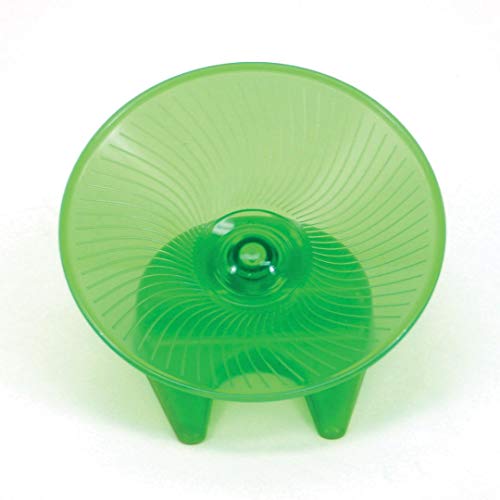
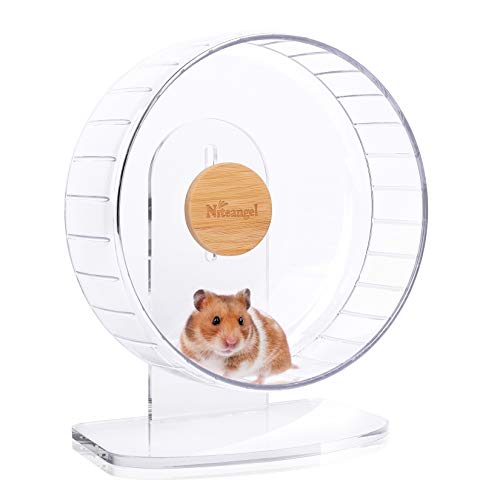
The best exercise wheel for a pet mouse is a solid-surface wheel sized for a small rodent, roughly 4 to 6.5 inches across, with quiet ball bearings and a stable base or secure cage mount. Our top pick is the Niteangel Super-Silent for its silent bearing and smooth acrylic track. For a budget option the Kaytee Silent Spinner runs quietly and mounts to bars, the Exotic Nutrition Wodent Wheel Senior gives more room for larger mice, and the Ware Flying Saucer suits mice that prefer a flat, tilted run.
Why a solid, right-size wheel matters
Mice are highly active and run for long stretches at night, so a good wheel is real exercise, not a luxury. Two features protect your mouse. First, the running surface must be solid. Wire rungs, mesh, and open bars trap tiny feet and toes and are linked to sore hocks (bumblefoot) and even amputated toes. Second, the size must fit a mouse. A wheel that is too small forces the spine into a constant curve, which is uncomfortable and can strain the back over time. Mice need a smaller wheel than hamsters, so aim for a flat-back running posture rather than a hooped one.
What to look for
Choose a fully closed running band made of plastic, acrylic, or wood with no gaps. Match the diameter to your mouse so the back stays close to level while running. Look for a quiet ball bearing or silent hub, since noise at night signals friction and disturbs sleep. A wide freestanding base resists tipping, while a bar-mount wheel needs a firm bracket that will not wobble loose. Finally, pick a wheel that comes apart for weekly cleaning, because a track that snaps off the axle is far easier to keep hygienic. Enclosed or shielded designs can also reduce the chance of a long tail getting caught during a fast spin.
How we chose
We started by ruling out anything unsafe for a mouse: wire or mesh tracks, undersized hamster-only diameters, and rattly axles. From what remained, we focused on wheels with fully solid surfaces, mouse-appropriate diameters in the 4 to 6.5 inch range, and genuinely quiet ball bearing or silent-hub mechanisms. We then compared how stable each wheel stayed during fast running, how easily it came apart for weekly cleaning, and how it held up to heavy nightly use. We weighed long-run owner feedback from small-pet keepers and favored designs that stay quiet, keep the back flat, and remain simple to sanitize week after week.
What to avoid
Skip the tiny wire or mesh wheels bundled with cheap starter cages; they are usually both too small and unsafe. Never use an exercise ball as a substitute, as it offers poor airflow, blocks normal behavior, and carries a real injury risk when a mouse cannot see or rest. If a wheel squeaks, wobbles, or shows cracks and sharp edges, retire it before it hurts your pet.