Quick Answer
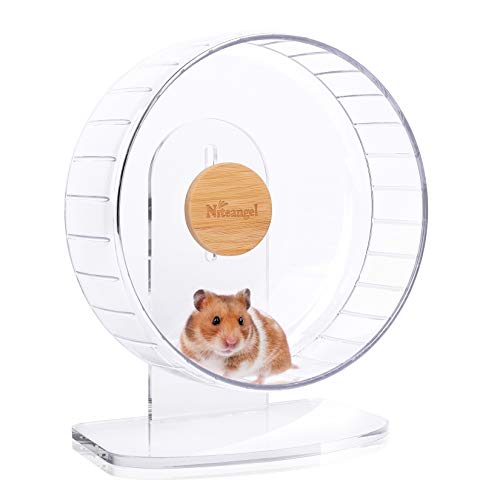
A Roborovski hamster is tiny but astonishingly athletic, often covering several miles across a single night, so a wheel is not an optional toy but a core welfare need. The best choice has a solid, continuous running surface and an upright design measured at roughly 20 to 21 cm (about 8 inches) or larger, even though the hamster itself is only a few grams. That size lets a Robo run flat backed instead of curling its spine. Solid plastic or acrylic wheels with a quiet ball bearing and a stable base, such as the enclosed and silent models in our list, fit that brief best.
Why It Matters
Roborovski hamsters are among the most active rodents kept as pets, and in the wild they travel long distances foraging at dusk and dawn. A cage cannot replace that range, so the wheel becomes their main outlet for natural movement. A good wheel supports healthy weight, muscle tone, and mental stimulation, while an unsuitable one can cause repetitive strain, foot injuries, or a hunched posture that stresses the spine over time. Because these problems build slowly and are easy to miss, the size and surface you pick now shape your hamster’s comfort for its whole life.
What to Look For
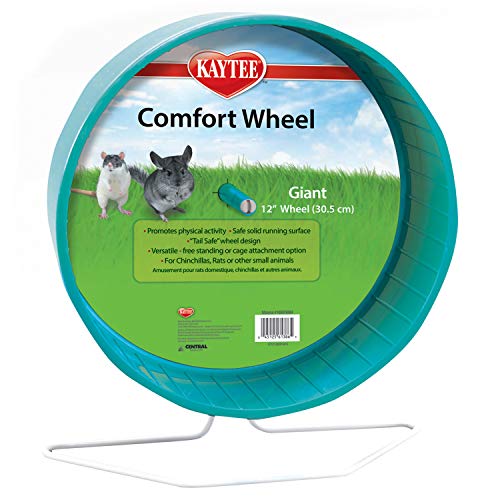
Start with diameter: aim for about 20 to 21 cm or more so the running surface is nearly flat under the hamster and the back does not arch. The surface must be solid, never wire rungs or mesh, which can trap the small feet of a Robo and lead to broken toes or bumblefoot. Favor an upright wheel with a quiet bearing and a wide, weighted base or a secure cage mount so it does not wobble during fast, erratic sprints. Easy disassembly for cleaning and non toxic materials round out a design that is safe to live with in a bedroom.
How We Chose
We compared widely available wheels against the traits that matter most for this small, speedy species: solid running surface, adequate diameter, quiet operation, stability, and simple cleaning. We prioritized enclosed or silent upright designs that keep bedding out of the mechanism and reduce night noise, and we noted where a listed size sits at the lower edge of what an adult Robo needs. We did not lab test these products ourselves, so treat our picks as editorial research; for any health concern about posture, feet, or activity, consult an exotics or small animal veterinarian.
What to Avoid
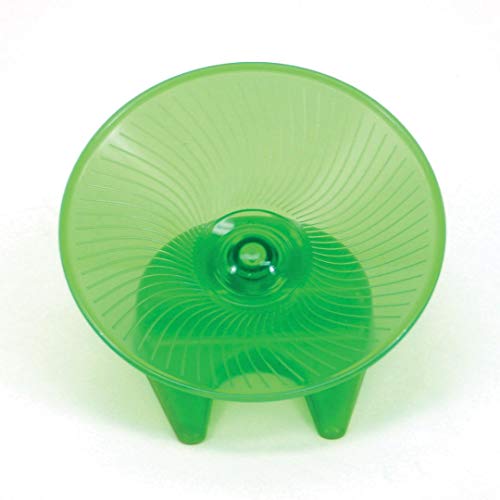
Skip any wheel with a wire or mesh surface, and avoid undersized wheels below roughly 20 cm that force a Robo to run with an arched back. Be cautious with saucer only setups, which spin at an angle and can push the spine into an awkward curve, especially in smaller sizes; a saucer can be a bonus alongside an upright wheel but should not be the only option. Steer clear of flimsy stands that tip during sprints, and avoid wheels that squeak loudly or trap bedding, since a Robo that finds the wheel unpleasant may stop using it and lose its main source of exercise.