Quick answer
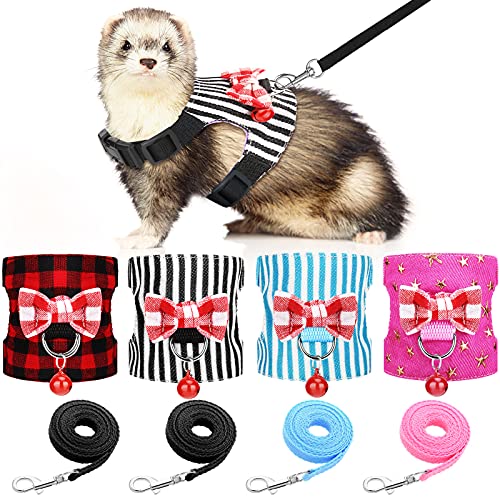
The best ferret harness is a vest or H-style design that wraps across the chest and shoulders, because ferrets have narrow heads and long, flexible bodies and will slip straight out of a collar or a single thin strap. Fit it snugly, with room for about two fingers underneath, keep every outing supervised, and clip on a lightweight leash. Our top pick is the Marshall Ferret Harness and Lead Set, an adjustable set made specifically for a ferret’s shape. If you want the best escape resistance, choose a full vest; if your ferret dislikes bulk, a snug H-harness is the next best option.
Why a secure vest harness matters
Ferrets are famous escape artists. Their skull is barely wider than their neck, so anything that relies on a collar or a loose loop lets a determined ferret back straight out and bolt. A vest or H-harness spreads pressure over the shoulders and ribs instead of the throat, which is both safer for breathing and far harder to wriggle free of. The trade-off is fit: a vest only works when it is snug and adjusted to your slim ferret, not left baggy. A harness that is too loose gives a ferret the slack it needs to twist and reverse out, so the shape and the fit have to work together.
What to look for
Prioritize a body-spreading vest or H shape over a thin strap. Look for multiple adjustment points so you can dial in a snug two-finger fit on a narrow ferret, soft lightweight fabric that will not chafe, and a secure buckle or clip that holds under wriggling. A matched lightweight leash keeps control without weighing the ferret down, and a sturdy D-ring gives you a reliable attachment point. Reflective trim and washable materials are useful extras for regular supervised outdoor time, and breathable fabric helps in warmer weather.
How we chose
We focused on harnesses built for ferrets or same-size small pets, favoring vest and H designs that spread pressure across the body rather than collar-style loops. We weighed adjustability for a slim frame, snug escape resistance, comfort of materials, and whether a leash was included in the set. We read owner feedback for real escape and fit patterns, paying attention to reports of ferrets slipping free, and we prioritized picks that pair a secure body wrap with easy, precise adjustment so the fit stays snug over time.
What to avoid
Skip collars and single narrow straps, which ferrets slip in seconds. Avoid stiff or heavy materials that make a ferret refuse to move, and any harness with only one adjustment point that cannot snug down on a slim body. Never leave a harness on an unsupervised ferret, since straps can snag during play or in the cage and cause injury. Introduce any new harness gradually indoors before heading out, and keep outings away from heat, traffic, other animals and toxic plants. A harness supplements daily free-roam time and gentle supervised walks; it does not replace them.
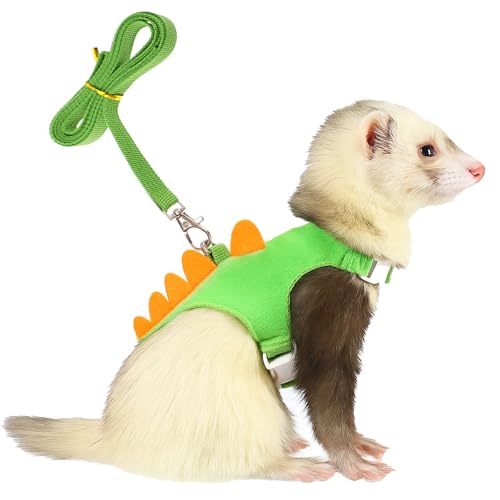
![[3-Piece Set] Escape Proof Small Pet Harness and Leash](https://m.media-amazon.com/images/I/51JU5bboc4L._SL500_.jpg)