Quick answer
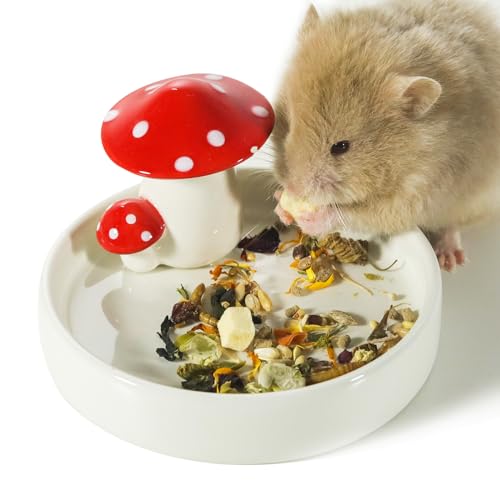
Honestly, your mouse may not need a bowl at all. Plenty of keepers scatter dry food across the bedding so the mouse forages for it, which is excellent natural enrichment and gentle daily exercise. That said, a small bowl is genuinely useful for fresh or wet food, for keeping a tidy feeding spot, and for watching how much your mouse eats. If you want one, pick a small, low, heavy ceramic dish. Our top pick is the Niteangel Mushroom Ceramics Bowl, with the Kaytee Stoneware Ceramic Bowl close behind for near-indestructible weight.
Bowl vs scatter feeding
Both approaches are valid, so choose what fits your mouse. Scatter feeding means sprinkling the daily dry mix over clean bedding rather than serving it in a dish. Mice are foragers by nature, and hunting for scattered seeds and pellets keeps a busy little mouse moving, curious, and mentally engaged throughout the day. It spreads eating out and mimics the way mice search for food in the wild. A bowl, by contrast, keeps food in one place. That makes it easy to serve fresh vegetables, add wet or soft foods, and see at a glance whether your mouse is eating normally. Many keepers do both: scatter the dry ration for enrichment and use a small dish for fresh treats and portioned foods.
What to look for
Size and weight matter most. A mouse is tiny, so a 3 to 3.5 inch dish is plenty, and a low side of about an inch means your mouse steps in without straining its neck. Heavy stoneware or fired ceramic resists tipping and cannot be gnawed apart, unlike light plastic that mice chew and scatter. Our top pick, the Niteangel Mushroom Ceramics Bowl, pairs a wide flat base with a smooth glaze, while the Kaytee Stoneware Ceramic Bowl adds serious weight. The Living World Ergonomic Food Dish suits smaller budgets, and the Apatal suction dish anchors to the cage floor for determined flippers. A smooth glaze wipes clean fast and resists sticking food.
How we chose
We compared widely sold small-pet dishes on material safety, base weight, side height, and how easily each one cleans. We favored heavy ceramic and stoneware that a mouse cannot chew or flip, in a compact footprint that fits a small cage without crowding the wheel, hide, or water bottle. Bowls that scatter food, slide around, or sit too deep for a small face lost points. We leaned toward shallow, tip-proof designs that make daily monitoring simple.
What to avoid
Skip deep bowls made for cats and dogs, because a mouse cannot reach the bottom comfortably and may strain to feed. Avoid thin, light plastic, since mice gnaw it and can swallow sharp shards. Steer clear of tall sides, wobbly or narrow bases, and anything with flaking paint or a chipped rim that could injure a small mouth. When in doubt, remember that less bowl and more foraging is often the simpler, safer, and more enriching route for most pet mice.


