The Quick Answer
An Abyssinian is simply a rosette-coated guinea pig, so its diet is identical to any other guinea pig. Build every day around three things: unlimited grass hay as the bulk of the diet, a measured amount of a plain timothy-based pellet fortified with vitamin C, and a daily serving of fresh, vitamin-C-rich vegetables. Guinea pigs cannot make their own vitamin C, so that part is not optional. The swirled Abyssinian coat has no bearing on what goes in the food bowl.
Why It Matters
Because guinea pigs lack the enzyme to synthesize vitamin C, a diet that skips fortified pellets or fresh veg can slide into deficiency, which shows up as a rough coat, stiffness, and low energy. Hay is just as critical: the long fiber keeps the gut moving and grinds down teeth that grow for life. Pellets are a supporting player, not the main course, and too many can crowd out hay and lead to weight gain. If you notice appetite loss, weight change, or signs of illness, contact an exotic or small-animal vet rather than guessing.
What to Look For
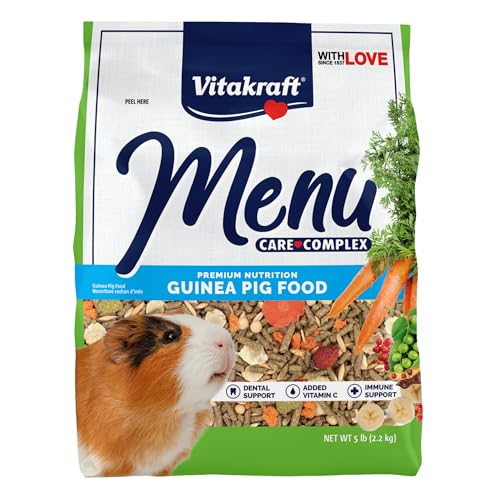
Choose a plain, uniform pellet made from timothy or other grass hay, with a high fiber content and no seeds, corn, colorful pieces, or dried fruit mixed in. Those mixes invite selective eating, where a pig picks out the sweet bits and leaves the balanced part behind. Check that the pellet is fortified with a stabilized form of vitamin C and, just as important, buy a bag with a good date and use it within a few months, because vitamin C degrades over time once the bag is open.
How We Chose
We focused on foods that match what veterinary and rescue guidance recommends for guinea pigs: grass-hay-based recipes, honest fiber levels, added vitamin C, and a uniform pellet shape rather than a muesli mix. We favored plain formulas without sugary add-ons and gave weight to widely available, freshly stocked options so the vitamin C is still potent when it reaches your pig. This is editorial research, not hands-on lab testing, and individual needs vary.
What to Avoid
Skip muesli-style mixes with seeds and colored bits, anything alfalfa-based for a healthy adult (too much calcium and protein), and rabbit or general rodent food that lacks proper vitamin C. Go easy on sugary treats and starchy pellets, since Abyssinians gain weight as easily as any guinea pig when the bowl is overfilled. And never let hay run out or assume pellets alone cover vitamin C; pair them with fresh veg every day.