Quick answer
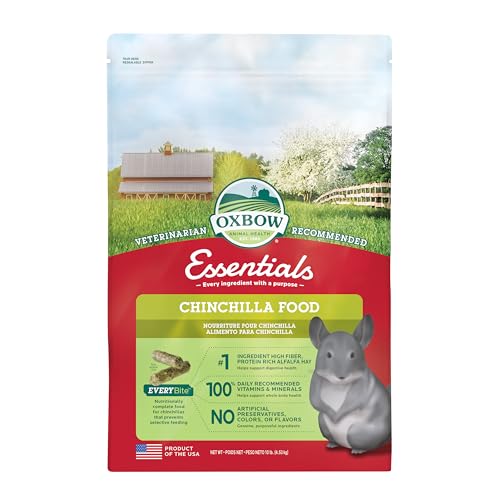
The best diet for a chinchilla is simple: unlimited grass hay as the bulk of every day, a small measured serving of plain high-fiber chinchilla pellets, and only tiny occasional safe treats. For pellets, the Oxbow Essentials Chinchilla Food is our top pick because it is a plain, timothy-based pellet with no seeds, nuts, or dried fruit. Mazuri Chinchilla Diet is a trusted budget option, and Small Pet Select makes a clean three-ingredient pellet good for first-time owners. Whatever pellet you choose, hay still does most of the work.
Why a high-fiber low-fat diet matters
Chinchillas evolved in the dry Andes and have a very sensitive digestive system built for a high-fiber, low-fat, low-moisture desert diet. Long strands of grass hay keep the gut moving and wear down teeth that grow continuously throughout life. Fatty, sugary, or high-moisture foods overwhelm that system and can cause bloat, diarrhea, and gastrointestinal stasis, which is a genuine emergency. A chinchilla that stops eating can decline within hours, so prevention through diet matters far more than any treat. Keeping fat low and fiber high is not a preference, it is how you keep the animal healthy, and it is why hay always comes before pellets.
What to look for
Choose a plain, uniform pellet made for chinchillas, not rabbit or guinea pig food and not a colorful muesli mix. Look for a first ingredient of timothy or another grass hay, crude fiber around 18 percent or higher, protein near 16 percent, and fat at or below about 4 percent. Avoid anything with added seeds, nuts, dried fruit, or bright pieces, because chinchillas will pick out the sweet bits and leave the fiber behind.
How we chose
We compared widely available chinchilla foods on fiber and fat levels, ingredient simplicity, and whether the formula avoids selective feeding. We favored plain pressed pellets over muesli-style mixes, timothy-based recipes over alfalfa for adult animals, and brands with a long track record among owners and rescues. We also checked that each pick was formulated for chinchillas specifically, not repackaged rabbit or guinea pig food, since those are balanced for different needs. Value and consistent availability broke any ties, since a diet only works if you can keep buying the same product week after week without swapping recipes and upsetting a sensitive gut.
What to avoid
Do not feed fruit, vegetables, nuts, seeds, or any sugary, fatty, or high-moisture food. These are a leading cause of digestive upset in chinchillas and can trigger bloat and diarrhea fast. Skip muesli mixes, yogurt drops, and rabbit or guinea pig pellets, which are the wrong balance for this species. If your chinchilla shows soft droppings, a swollen belly, or a drop in appetite, treat it as urgent and call an exotic vet. Introduce any new food very slowly over a week or more, always keep unlimited hay in the cage, and provide fresh water at all times.


