Quick answer
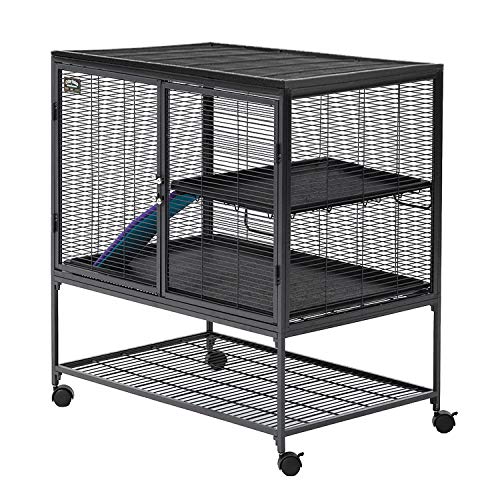
The best habitat for a chinchilla is a tall, multi level metal cage set up inside a cool, dry, draft free room. A chinchilla is a busy climber and jumper, so the cage is only the shell. What turns it into a real home is the fit out: solid wood ledges at varied heights, safe wood or pumice chews, a solid surface wheel, a snug hide, a hay rack with unlimited hay, a chew safe water bottle, and a dust bath offered two or three times a week. Our current top pick for the cage itself is the Ferplast Krolik Extra Large for its wide footprint and narrow bar spacing.
Why the whole habitat matters
A cage on its own does not keep a chinchilla healthy. These animals are crepuscular and highly active at dawn and dusk, and their teeth grow for their entire life, so they must climb, jump, and chew every day. Ledges let them move between levels, chews wear the teeth down, and the dust bath keeps their dense fur clean because they are never bathed in water. Chinchillas are also social, so many owners keep a bonded pair. Just as important is the room itself, since temperature and humidity make or break the setup.
What to look for
Choose a cage with solid or wood covered shelves rather than bare wire, and bar spacing under 0.75 inches. Add wood ledges at several heights, a solid running wheel of 14 to 15 inches so the back stays straight, and a hide for daytime rest. Provide a loose pile or rack of grass hay at all times, a glass or steel water bottle, and a rotation of untreated wood and pumice chews. Offer chinchilla dust in a deep tub or clip on dust house for a short session, then take it out.
How we chose
Our editorial team compared cages and accessories on floor space, vertical layout, bar spacing, chew safety, and how easily plastic parts can be swapped for wood or metal. We favored tall units that leave room for several ledges and a wheel without crowding, plus accessory sets made from chinchilla safe materials. We did not test on live animals; picks reflect published specs, materials, and long standing small pet care guidance. Where a cage ships with plastic ramps or shelves, we note that they should be replaced with wood or metal before your chinchilla moves in.
What to avoid
The biggest danger is heat. Chinchillas overheat fast and can suffer fatal heat stroke above roughly 75 F, so never place the habitat in direct sun or a warm, humid room. Keep it cool and dry and away from drafts and radiators. Skip plastic shelves and toys that get chewed and swallowed, wire or mesh wheels that trap toes, and cedar or pine bedding. If your chinchilla pants, drools, or lies flat, treat it as an emergency and contact an exotics vet.