Quick answer
The best hamster habitat is a big, single-level home built for burrowing, not a tall tower of tubes. Give your hamster one large unbroken floor, deep bedding, a correctly sized solid wheel, a hide and a sand bath. Our top setup pairs a spacious enclosure like the Niteangel Vista glass style habitat or a Savic Metro based barred home with the accessories that turn a box into a real living space. Whatever you choose, one rule never bends: Syrian hamsters must live alone.
Why the whole habitat matters
A habitat is the entire living environment, not just the walls around it. We cover enclosure choice in depth in our separate hamster cage guide, so here the focus is the full setup: floor area, bedding depth, the wheel, chews, a sand bath, a hide and safe placement. Hamsters are ground dwelling burrowers. A small cage with a big price tag still fails if the floor is cramped or the bedding is thin. Get the whole environment right and you get a calmer, more active, less stressed animal.
What to look for
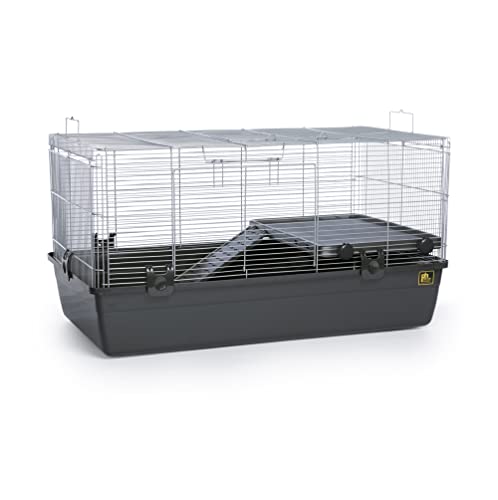
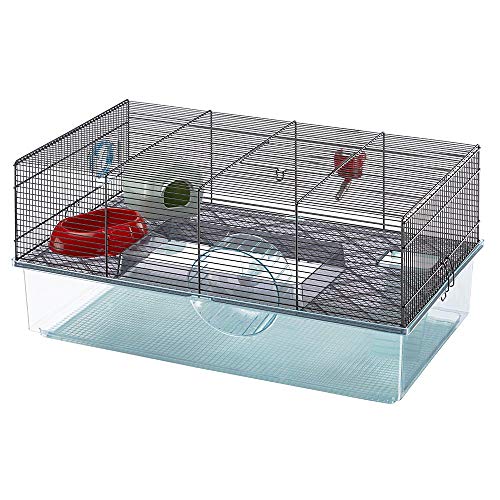
Prioritize a large continuous floor. A widely cited welfare minimum is about 100 by 50 cm (roughly 450 square inches) of unbroken floor, and more is always better, with Syrians needing the larger end. Add deep bedding of at least 6 inches, or 15 cm and up, so your hamster can dig proper tunnels. Fit a solid surface wheel sized to the animal: 8 inches or larger for Syrians, 6.5 inches or larger for dwarfs, so the back stays flat while running. Round it out with a hide, a shallow sand bath, safe wood chews and a clean water source. Deep bases like those on the Ferplast Favola and Prevue Universal help hold that bedding in place.
How we chose
We compared real habitats on usable floor space, base depth for burrowing, ventilation, bar spacing at or under 0.5 inches, and how easily each one cleans. We weighted continuous floor area and bedding depth most heavily, because those two factors drive daily welfare more than any accessory. We favored setups that support deep bedding and a full sized wheel over gimmicky multi-level towers. Value picks like the Kaytee CritterTrail earn a place as starter or travel homes but not as a forever floor plan, while roomier bases like the Prevue Universal scale up to a proper long term setup.
What to avoid
Skip tall multi-level and tube heavy cages: they trap stale air, clean poorly and waste the horizontal room hamsters actually use. Avoid tiny pet store boxes, mesh or wire wheels that hurt feet, and any plan to house two Syrians together. Syrians are strictly solitary and will fight, sometimes fatally. Some dwarf species can occasionally share a same sex pair, but many still do best solo, so watch closely and separate at the first sign of tension. When in doubt, give each hamster its own complete habitat, since a solo animal with enough space rarely misses company.