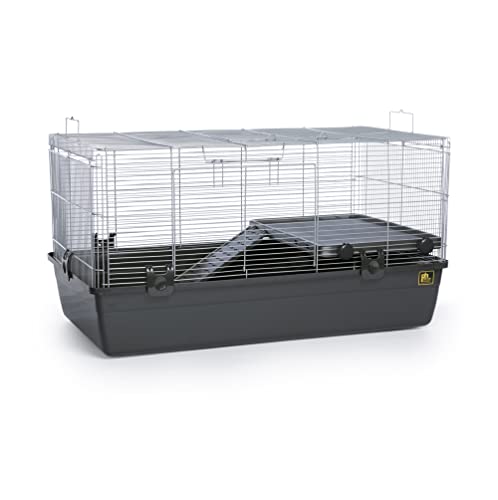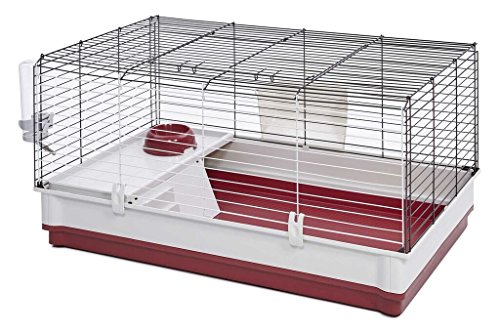
Quick answer
The best rabbit habitat gives far more room than a traditional small hutch. Welfare groups suggest a minimum enclosure around 8 to 12 square feet of solid floor, plus a connected exercise run of about 24 to 32 square feet, or free-roam of a rabbit-proofed room. A large exercise pen (x-pen) such as the MidWest folding pen, or a C&C-style grid setup, beats any narrow cage. Add a hide, a hay and litter station, and a bonded pair needs double the space.
Why space matters
Rabbits are athletes. They sprint, binky, and stand fully upright to survey their surroundings. A cage that only allows two or three hops leaves them frustrated and prone to weak bones, obesity, and boredom-driven chewing. Floor space matters more than height, and the floor should be solid, never wire, to prevent sore hocks. A pen roughly 4 feet by 4 feet reaches about 16 square feet, closer to what a single rabbit needs to move naturally. Remember that a bonded pair needs roughly double that footprint, since two rabbits share, groom, and play in the same space and quickly outgrow anything cramped.
What to look for
Prioritize floor space over decorative levels. Choose a solid or pan floor you can line with fleece or a litter tray. An exercise pen like the MidWest lets you expand the footprint by adding panels, and a C&C setup built from wire grids and coroplast is endlessly modular. Look for a dedicated hide, a hay rack over a corner litter box, and low sides for easy in-and-out. Bar spacing near one inch keeps adults from escaping or getting stuck. The Living World habitat and Ferplast Krolik work as a home base only when paired with daily run time in a larger pen or a rabbit-proofed room.
How we chose
We compared floor area against welfare minimums, ruled out wire-bottom designs, and favored setups that expand rather than trap. We weighed cleaning access, safe bar spacing near one inch, and how well each option supports a bonded pair. We also looked at whether a hide, hay rack, and corner litter box could fit without crowding the open floor. Indoor pens ranked above isolated outdoor hutches because indoor rabbits face fewer predators, milder temperatures, and far more human company. The Prevue home and MidWest pen scored high for flexible, roomy layouts that grow with an active rabbit.
What to avoid
Avoid tall, narrow cages that trade floor space for shelves, and skip wire floors that bruise delicate feet. Steer clear of small isolated outdoor hutches, which expose rabbits to loneliness, predators, and dangerous heat or cold. The TRIXIE natura hutch suits mild climates only if you connect a large run and never leave a rabbit alone in it. One cramped cage is never enough on its own; a rabbit needs a secure base plus room to truly stretch out and run.