Quick answer
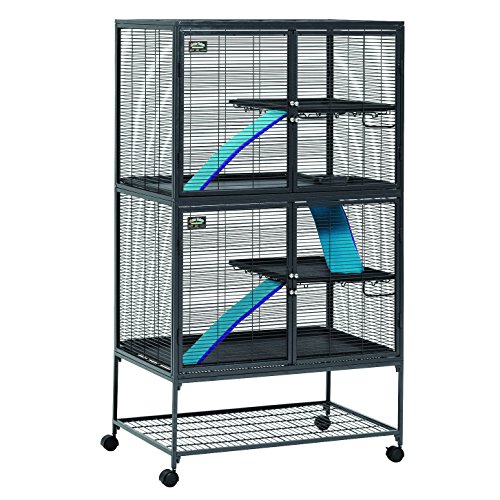
The best sugar glider habitat is a tall, vertical world, not just a box with bars. Sugar gliders are arboreal, nocturnal, and deeply social, so the full setup needs a tall cage packed with branches, ropes, and ledges, sleeping pouches mounted up high, a solid-surface wheel, food and water cups fixed near the top, a warm room around 75 to 80 F, and at least one bonded cage mate. Start with a Critter Nation by MidWest Homes for the framework, then fill the vertical space with pouches, safe toys, and daily bonding time.
Why the whole habitat matters
A cage on its own is just an empty shell. Sugar gliders spend their nights climbing, leaping, and gliding between high points, and they sleep by day bundled together in a pouch near the ceiling of the cage. If the space is short, bare, or cold, they get stressed, bored, and chilled. Treating the habitat as the whole environment, height, enrichment, warmth, and company, is what keeps them active and calm. This is why our picks lean on tall frames like the Critter Nation and the Prevue Hendryx flight cage that give real vertical room to work with.
What to look for
Prioritize height and vertical layers over floor space. Bar spacing must stay at or under 1/2 inch so a glider cannot squeeze out. Add several fleece sleeping pouches high in the cage, mount food and water cups up near the top since gliders avoid the floor, and include a solid-surface wheel with no spokes. Fill the middle with branches, ropes, and rotating toys. Keep the room warm and draft-free, and never plan for a single glider, always a bonded pair. Then set aside time every night for out-of-cage bonding, because the habitat only works when it also delivers company and freedom to glide.
How we chose
We compared cages and accessories on the traits that matter to an arboreal animal: usable height, safe bar spacing, chew-resistant coating, and how easily you can mount pouches and cups up high. We favored tall frames such as the Critter Nation and the Yaheetech multi-level cage, checked that doors were secure and pans pulled out for cleaning, and confirmed each pick could be built into a complete warm, social, enriched environment rather than bare housing. We also weighted how simply you can add high pouches, a solid wheel, and elevated cups, since a good habitat is only as strong as the accessories it holds.
What to avoid
Skip short, wide cages built for hamsters or rabbits, wire-spoke wheels that trap tiny limbs, and bar spacing wider than 1/2 inch. Avoid galvanized wire, which can cause zinc poisoning, and cedar or pine bedding, whose oils irritate the airways. Do not place food on the cage floor, do not let the room drop below the mid 70s F, and never house a glider alone. A vet or exotic pet professional can confirm your setup and diet before you bring gliders home.


