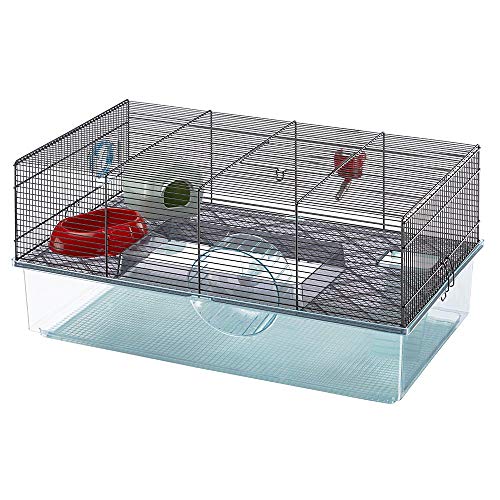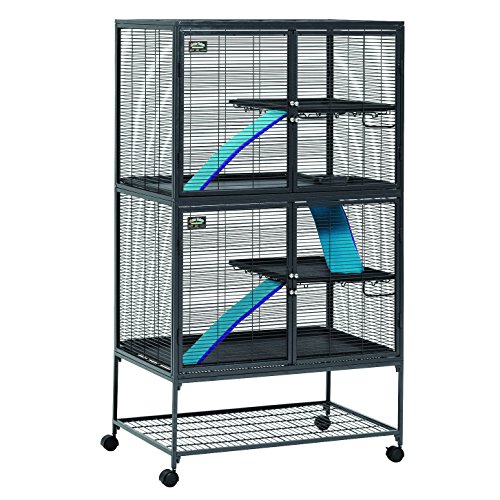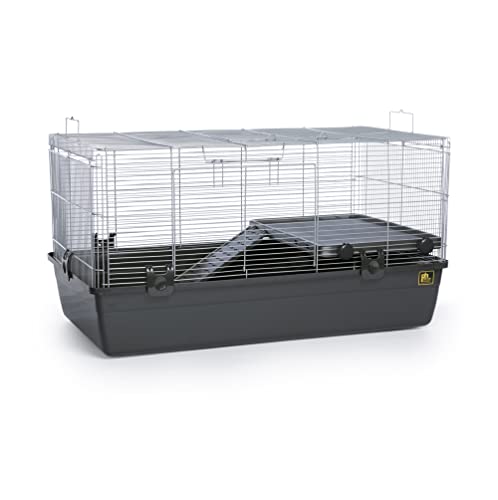
Quick answer for the best Syrian hamster habitat in 2026
The best habitat for a Syrian hamster is a single large enclosure with a big unbroken floor area, deep bedding for burrowing, and a large solid running wheel. Many welfare organisations suggest a minimum continuous floor area of around 100 by 50 cm (roughly 4,000 square inches), and bigger is always better. Syrian hamsters are the largest pet hamster and they are strictly solitary, so each hamster needs its own space. Our top overall pick is the Prevue Pet Products Universal Small Animal Home for its usable floor space, deep base, and safe 0.4 inch bar spacing, though any enclosure you buy should be judged first on floor area and bedding depth.
Why the right habitat matters for a Syrian hamster
Syrian hamsters cover a lot of ground in the wild and a cramped cage is linked to stress behaviours such as bar biting and repetitive route running. A large habitat lets your hamster express natural burrowing, foraging, and wheel running, which supports both physical and mental wellbeing. Just as important, Syrian hamsters are territorial and must live alone; housing two together, even siblings, very often ends in serious and sometimes fatal fights. If your hamster shows signs of stress, sores, or overgrown teeth, an exotics vet is the right person to advise you.
What to look for in a Syrian hamster enclosure
Prioritise a large unbroken floor area over extra levels or tubes, because floor space is where a hamster actually lives and burrows. You want a deep base that holds at least 15 to 25 cm of bedding, bar spacing no wider than about 1 cm (0.4 inch) to prevent escapes, and room for a large solid running wheel of roughly 28 cm or more so the back stays flat rather than arched. Good ventilation, a secure door, and an easy to clean base round out a habitat that is comfortable for the hamster and practical for you.
How we chose these habitats
We compared widely available enclosures against published welfare guidance on floor space, bedding depth, and bar spacing, then read owner feedback for build quality, escape reports, and cleaning ease. We did not run lab style testing; this is an editorial shortlist based on manufacturer specifications and welfare standards. Where a popular product falls short of the larger floor area many welfare bodies now recommend, we say so plainly rather than overselling it, so you can weigh convenience against space.
What to avoid when housing a Syrian hamster
Avoid small starter cages, narrow plastic tube systems that a large Syrian can get stuck in, and any wire floors or ramps that can injure feet and legs. Steer clear of tiny wheels that force the spine into a curve, and never house two Syrian hamsters together. Skip cedar and pine shavings, which give off oils that can irritate the airways, and choose paper based or aspen bedding instead. When in doubt about health, housing, or diet, check with an exotics vet who sees small mammals.