๐Ÿ† Complete Buyer's Guide ยท Cat Food

Struggling with hairball control while helping your cat gain weight?

Hairball control foods can hinder weight gain if fiber is too high. We highlight options balancing 3-5% fiber with high calorie density, led by Hill's Science Diet Adult Hairball Control & Healthy Weight.

Some links below are affiliate links. If you buy through them we may earn a small commission at no extra cost to you. Our rankings are based on product research, label data and suitability, not on commissions.

Hill's Science Diet Adult Hairball Control & Healthy Weight Chicken Recipe Dry Cat Food โ˜… Top Pick: Hill's Science Diet Adult Hairball Control & Healthโ€ฆ Check Price on Amazon →
3% to 5%
Ideal crude fiber range for hairball control
30%+
Minimum protein (dry matter) for weight gain
15%+
Minimum fat (dry matter) for calorie density
7 to 10 days
Recommended transition period to new food
โšก Key takeaways
  • Best Overall: Hill's Science Diet Adult Hairball Control & Healthy Weight Chicken Recipe Dry Cat Food. This formula balances hairball control with weight management, using natural fiber to redu.
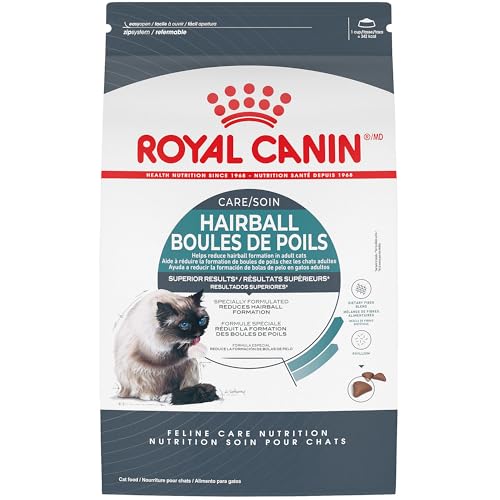
  • Best for Sensitive Stomach: Royal Canin Hairball Care Dry Cat Food. Royal Canin's blend of dietary fibers and highly digestible proteins helps reduce hairball.
  • Best Wet Food: Purina Pro Plan Hairball Management Salmon & Tuna Entree Canned Cat Food. This wet food offers high moisture content for hydration and palatable protein sources to.
  • Best for High Protein: Blue Buffalo Wilderness Hairball Control Chicken Recipe Dry Cat Food. With 40% protein from real chicken, this grain-free formula supports muscle growth while c.
  • Best Budget: Iams Proactive Health Hairball Care Dry Cat Food. Iams provides a cost-effective option with chicken as the first ingredient and a blend of.
At a Glance

Quick Comparison

Quick answer

Our top pick is Hill’s Science Diet Adult Hairball Control & Healthy Weight Chicken Recipe. It combines natural fiber to reduce hairballs with balanced nutrition for weight gain. For cats needing extra calories, Royal Canin Hairball Care Dry Cat Food is a close runner-up. If your cat prefers wet food, Purina Pro Plan Hairball Management Salmon & Tuna Entree provides moisture and protein.

What to consider for Hairball Control Cat Food For Weight Gain

Choosing a hairball control cat food that also supports weight gain requires balancing fiber content with calorie density. Hairball formulas typically include extra fiber (like psyllium or cellulose) to help move hair through the digestive tract, but too much fiber can reduce calorie absorption. Look for foods with moderate fiber (around 3% to 5% crude fiber) and higher fat and protein to promote weight gain. Also consider the cat’s life stage, as kittens and seniors have different needs. Wet foods can be beneficial for hydration and may be easier to digest, but dry foods often have higher calorie density. Always consult your veterinarian before changing your cat’s diet, especially if your cat is underweight or has health issues.

What to look for in a cat food

When selecting a cat food for hairball control and weight gain, ensure it is AAFCO complete and balanced for your cat’s life stage (kitten, adult, or senior). The first ingredient should be a named meat source (e.g., chicken, salmon) to provide high-quality animal protein. Cats require taurine, an essential amino acid, so check that the food contains added taurine or naturally sufficient levels. Moisture content matters: wet food (canned) supports urinary health and can be more palatable, while dry food is calorie-dense. For weight gain, look for a recipe with at least 30% protein and 15% fat on a dry matter basis. Avoid foods with excessive carbohydrates or fillers. Finally, consider any specific needs like grain sensitivity or digestive issues.

How we chose these picks

  • Evaluated ingredient lists for named meat as first ingredient and adequate protein and fat levels.
  • Checked that each product is AAFCO complete and balanced for the appropriate life stage.
  • Reviewed fiber content to ensure effective hairball control without overly diluting calories.
  • Considered brand reputation and history of quality control.
  • Read customer feedback to gauge palatability and effectiveness for weight gain and hairball reduction.
  • Compared price per pound to offer options across budgets.
  • Never ranked a product higher just because it pays a commission.

What to avoid

  • Avoid foods with unnamed meat sources (e.g., “meat meal”) or very low animal protein content.
  • Do not choose a food that lacks guaranteed taurine levels, as taurine deficiency can cause serious health issues.
  • Be cautious with all-life-stages formulas for kittens or seniors; they may not meet specific needs.
  • Avoid abrupt diet switches; transition over 7 to 10 days to prevent digestive upset.

For more guidance, explore our cat guides, cat food, and cat health resources.
Why this matters

Hairball control cat foods rely on increased fiber to move hair through the digestive tract, but too much fiber can hinder weight gain. The best options balance fiber (3% to 5%) with high calorie density from protein and fat.

The Options

Types Explained

Dry Kibble

Convenient, calorie-dense, and helps with dental health through crunching. Often contains higher fiber for hairball control. May be less hydrating.

Best for: Cats that need extra calories and are not prone to urinary issues. Good for weight gain due to high energy density.

Wet Canned Food

High moisture content supports hydration and urinary health. Usually more palatable and easier to digest. Lower calorie density per volume.

Best for: Cats that are picky eaters, have dental issues, or need increased water intake. Can be mixed with dry food for balanced nutrition.

Grain-Free Formulas

Replace grains with alternative carbs like potatoes or peas. Some cats with grain sensitivities may benefit. Not necessarily higher protein.

Best for: Cats with suspected grain allergies or sensitivities. Ensure the food still meets AAFCO standards and provides adequate taurine.

Limited Ingredient Diets

Contain fewer ingredients to minimize allergens. Often single protein source and limited carbs. May be easier on sensitive stomachs.

Best for: Cats with food allergies or intolerances. Can help identify triggers while still providing hairball control and weight gain support.
The Rankings

Top 5 Picks

#1
Hill's Science Diet Adult Hairball Control & Healthy Weight Chicken Recipe Dry Cat Food
Best Overall

Hill's Science Diet Adult Hairball Control & Healthy Weight Chicken Recipe Dry Cat Food

View on Amazon

This formula balances hairball control with weight management, using natural fiber to reduce hairballs and L-carnitine to support metabolism. It provides high-quality protein for lean muscle gain. However, some cats may find the kibble size too small, and it is not ideal for kittens.

#2
Royal Canin Hairball Care Dry Cat Food
Best for Sensitive Stomach

Royal Canin Hairball Care Dry Cat Food

View on Amazon

Royal Canin's blend of dietary fibers and highly digestible proteins helps reduce hairballs while being gentle on the stomach. It also contains omega fatty acids for skin and coat health. A limitation is the higher price point and that it may not provide enough calories for significant weight gain in very underweight cats.

#3
Purina Pro Plan Hairball Management Salmon & Tuna Entree Canned Cat Food
Best Wet Food

Purina Pro Plan Hairball Management Salmon & Tuna Entree Canned Cat Food

View on Amazon

This wet food offers high moisture content for hydration and palatable protein sources to encourage eating. It includes natural fiber to help control hairballs. However, it is lower in calorie density than dry food, so you may need to feed larger amounts or combine with dry food for weight gain.

#4
Blue Buffalo Wilderness Hairball Control Chicken Recipe Dry Cat Food
Best for High Protein

Blue Buffalo Wilderness Hairball Control Chicken Recipe Dry Cat Food

View on Amazon

With 40% protein from real chicken, this grain-free formula supports muscle growth while controlling hairballs via natural fiber. It also contains LifeSource Bits for antioxidants. A drawback is that the high protein may be too rich for some cats, and it is more expensive than standard brands.

#5
Iams Proactive Health Hairball Care Dry Cat Food
Best Budget

Iams Proactive Health Hairball Care Dry Cat Food

View on Amazon

Iams provides a cost-effective option with chicken as the first ingredient and a blend of beet pulp and cellulose to reduce hairballs. It includes prebiotics for digestive health. However, it contains corn and by-products, which may not suit all cats, and the calorie density is moderate, so weight gain may be slower.

Before You Buy

Key Buying Factors

01

Fiber Source and Content

Look for natural fibers like psyllium, beet pulp, or cellulose. These help move hair through the digestive tract. Fiber content should be moderate (3% to 5%) to avoid reducing calorie absorption needed for weight gain.

02

Calorie Density

For weight gain, choose a food with higher calorie density (around 350 to 450 kcal per cup for dry food). Check the guaranteed analysis and feeding guidelines to ensure you can meet your cat's energy needs without overfeeding fiber.

03

Protein and Fat Levels

High-quality animal protein (30% or more on dry matter) supports muscle gain, while fat (15% or more) provides concentrated energy. Avoid foods with excessive carbohydrates, which can contribute to obesity without lean mass.

04

Life Stage Appropriateness

Ensure the food is formulated for your cat's life stage. Kittens need more calories and specific nutrients, while seniors may require lower phosphorus. All-life-stages foods may not be optimal for every cat.

05

Palatability and Texture

Underweight cats may be picky. Wet food often entices eating, but dry food is more calorie-dense. Some cats prefer pate, chunks, or gravy. Try small sizes first to see what your cat likes.

Living With It

Care, Cost and Maintenance

Transitioning to New Food

To avoid digestive upset, gradually mix the new food with the old over 7 to 10 days. Start with 25% new food and 75% old, then increase by 25% every few days. Monitor stool quality and appetite. If vomiting or diarrhea occurs, slow the transition and consult your vet.

Feeding Schedule and Portions

Divide daily portions into two to three meals to aid digestion and prevent overeating. Use a kitchen scale to measure food accurately. Adjust portions based on your cat's weight gain progress, aiming for 0.5 to 1 pound per month. Always provide fresh water.

Monitoring Hairball Frequency

Track how often your cat coughs up hairballs. A good hairball control diet should reduce frequency to once a week or less. If hairballs persist, consider adding a hairball remedy or increasing grooming. Regular brushing also helps reduce ingested hair.

Pro tip

To boost weight gain, add a small amount of high-calorie wet food topper or mix in a teaspoon of canned pumpkin (not pie filling) for extra fiber and calories, but adjust main meals to avoid overfeeding.

Frequently asked questions

How much should I feed my cat for weight gain?
Start with the feeding guide on the food package, which is based on your cat's current weight. For weight gain, you may need to increase portions by 10% to 25% or add a second meal. Monitor your cat's body condition score (BCS) weekly. Ideally, you should feel the ribs with a thin fat layer. If ribs are too prominent, increase food; if they are hard to feel, reduce. Always consult your veterinarian for a tailored plan, especially if your cat is underweight due to illness.
Is wet or dry food better for hairball control and weight gain?
Both have pros and cons. Dry food is more calorie-dense, which helps weight gain, and the crunch may reduce hairballs by cleaning teeth. However, dry food has lower moisture, which can contribute to urinary issues. Wet food provides hydration and is often more palatable, encouraging eating in picky cats, but you may need to feed larger volumes to achieve weight gain. Many owners combine both: dry for calories and wet for moisture. Choose based on your cat's preference and health needs.
Should I choose grain-free cat food for hairball control?
Grain-free is not necessary for most cats. Hairball control relies on fiber, which can come from grains or other sources. Some grain-free formulas use potatoes or peas for fiber. However, grain-free diets have been linked to dilated cardiomyopathy (DCM) in dogs, though the risk in cats is less clear. If your cat has a grain allergy, grain-free may help, but otherwise, a balanced diet with grains is fine. Always ensure the food contains adequate taurine, as some grain-free diets may have lower taurine levels.
Can I feed kitten food to my adult cat for weight gain?
Kitten food is higher in calories, protein, and fat, which can help an underweight adult cat gain weight. However, it also contains different calcium-to-phosphorus ratios and may not be balanced for adult maintenance. It is generally safe for short-term use under veterinary guidance, but long-term feeding can lead to obesity or nutrient imbalances. For persistent weight issues, choose an adult formula designed for weight gain or a high-calorie recovery diet.
What should I feed a senior cat with hairballs and weight loss?
Senior cats often need easily digestible protein and moderate fat. Look for a senior formula with added fiber for hairball control, such as Hill's Science Diet Senior Hairball Control. Ensure the food is AAFCO-approved for seniors. Wet food can help with hydration and is easier to chew. If your senior cat has dental issues, consider pate or minced textures. Always consult your vet to rule out underlying conditions like hyperthyroidism or kidney disease.
How does hairball control food affect urinary health?
Hairball control foods typically have higher fiber, which can help regulate digestion but may also affect mineral absorption. Some formulas add ingredients to support urinary health, such as controlled magnesium levels or urinary acidifiers. However, if your cat has a history of urinary crystals or blockages, choose a food specifically formulated for urinary health and discuss with your vet. Wet food is generally better for urinary health due to increased water intake.
Can hairball control food help my cat lose weight?
Some hairball control foods are also labeled for weight management, like Hill's Science Diet Adult Hairball Control & Healthy Weight. These have lower fat and calories but still provide fiber. However, for weight gain, you want a calorie-dense formula. If your cat needs both hairball control and weight loss, choose a weight management hairball formula and follow portion control. For weight gain, avoid weight management lines.
What if my cat is a picky eater and needs hairball control?
For picky eaters, try wet food or mix wet with dry to enhance aroma and taste. Brands like Fancy Feast or Tiki Cat offer hairball control varieties in palatable textures. You can also warm the food slightly to release smells. Rotate proteins (chicken, fish) to prevent boredom. If your cat refuses a new food, transition slowly over two weeks. Avoid adding toppers high in fat, as they can upset the nutritional balance.
How long does it take for hairball control food to work?
You may notice a reduction in hairball frequency within two to four weeks of consistent feeding. However, individual results vary. The fiber helps move hair through the digestive tract, but it does not eliminate hairballs entirely. Regular grooming is also essential. If hairballs persist after six weeks, consult your vet to rule out underlying gastrointestinal issues.
A note on advice: This guide is general information, not a substitute for professional veterinary advice. Talk to your vet before changing your pet's diet or care routine, especially if your pet has allergies, kidney disease, pancreatitis, obesity, heart disease or any other medical condition.
Transparency

How we made this guide

How we chose. We compared the options on the factors that matter most for Cat Food, using manufacturer specifications, aggregated verified owner reviews and editorial comparison. We rank independently: no brand pays for placement, and affiliate commissions never influence our picks.

How it was written. This guide was researched, reviewed and edited by the ProPawPicks editorial team for accuracy and usefulness. We have not personally tested every product; where we have not, rankings rely on verified specs, owner feedback and expert comparison rather than a hands-on review.

Affiliate disclosure. ProPawPicks is reader-supported. If you buy through links on our site, we may earn a commission at no extra cost to you. See our affiliate disclosure.

Keep Reading

More Cat Food guides

Cat Trees That Don’t Wobble: IRIS USA Top Pick ReviewedView picks โ†’Joint Relief for Cats That DeliverView picks โ†’Joint Supplements for Cats: A Buyer’s GuideView picks โ†’Best Joint Supplements for Dogs for Indoor Cats 2026: Top 5 PicksView picks โ†’Cat Deterrent Mats That Actually Work: 5 ReviewedView picks โ†’Best Kitten Food DIY 2026: Top 5 Reviewed by VetsView picks โ†’

Sources and further reading

Some links below are affiliate links. If you buy through them we may earn a small commission at no extra cost to you. Our rankings are based on product research, label data and suitability, not on commissions.