Quick answer
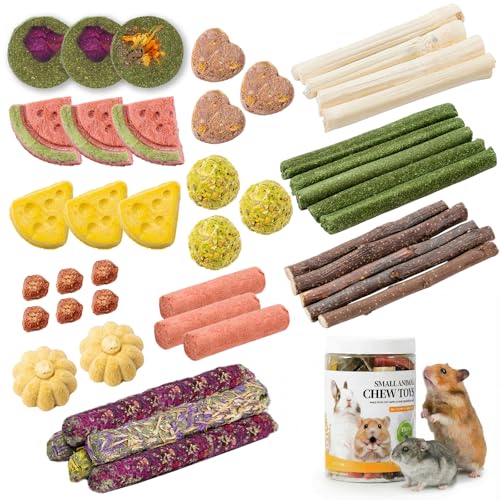
The best hamster chew sticks are plain, untreated apple or willow wood offered alongside simple wooden gnaw blocks. Our top pick is the Sukh Natural Organic Apple Sticks, a clean, additive free apple wood that most hamsters take to right away. For variety, a value bundle like the 45 piece natural chew toy set mixes woods and textures, while Bojafa apple sticks give you a big bulk bag to keep a steady supply. Vitakraft Crunch Sticks work as an occasional treat rather than a daily chew. Honestly, plain cardboard from your recycling does much of the same job for free, so start simple and see what your hamster actually uses.
Why hamsters need to gnaw
A hamster’s front teeth, the incisors, grow continuously for its entire life. Gnawing is how a hamster files those teeth down to a healthy length. Without enough to chew, the incisors can overgrow, which is painful and can stop a hamster eating properly. Signs of overgrown teeth include drooling, weight loss, pawing at the mouth, and visibly long or uneven front teeth. If you spot any of these, see an exotic vet, because overgrown teeth usually need professional trimming. Daily gnawing on safe wood, blocks, and cardboard is the simple, natural way to keep teeth in good shape.
What to look for
Choose plain, untreated woods sold for small animals, since apple, pear, and willow are all good. Look for chews with no paint, dye, glue, or added sugar, because a hamster puts everything in its mouth. A mix of shapes and textures, from thin sticks to solid gnaw blocks and softer seagrass or loofah, keeps things interesting and encourages more use. Size matters too, so sticks should be easy for small paws to hold. A steady, fresh supply beats one huge chew, so replace pieces as they splinter or wear down.
How we chose
We focused on plain, hamster safe materials first, favouring untreated fruit and hardwoods with no additives. We looked at value, variety, and how well each option suits a small animal’s mouth and paws, and we leaned on published small pet care guidance for what is safe to gnaw. We are honest about one thing, that many hamsters get most of their gnawing from their food, deep bedding foraging, and cardboard, so we treat chew sticks as a useful extra rather than a must buy. Offer a couple and let your hamster show you what it likes.
What to avoid
Skip cedar and aromatic pine, whose oils can irritate a hamster’s airways, and avoid any treated, painted, or dyed wood. Do not give plastic your hamster can gnaw and swallow, since pieces can cause dangerous blockages. Be cautious with hard mineral, salt, or calcium blocks that are heavily marketed, because a hamster on a good diet does not need them and they can be over consumed. Cherry and other stone fruit woods are not safe either. When in doubt, plain cardboard is free, safe, and genuinely useful.