Quick answer
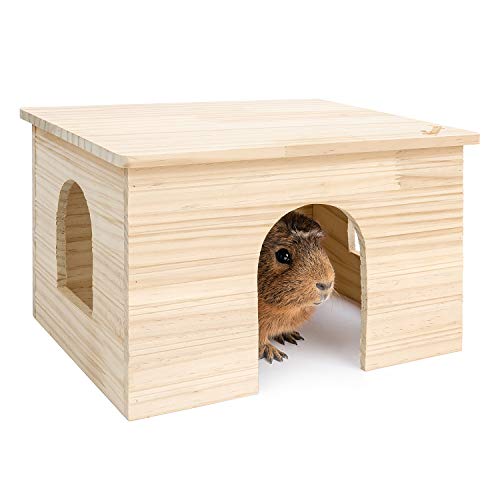
The best hideout for an Abyssinian guinea pig is the Kaytee Premium Timothy Treat Hideout, a woven grass house that gives a nervous prey animal a safe place to retreat while doubling as edible forage. If you want longer-lasting wood, the Niteangel Wood House with its removable roof is our pick, and the Oxbow Enriched Life Cozy Cave suits pigs that prefer a soft fleece burrow. For a guaranteed escape route, add an open tunnel. Whatever you choose, plan on one hide per pig.
Why guinea pigs need a hideout
Guinea pigs are prey animals. In the wild they survive by staying out of sight, so a cage with no cover keeps them on edge. A stressed pig hides in corners, freezes, and eats less, which quickly leads to weight loss and digestive trouble. A proper hideout gives your Abyssinian a den it controls: somewhere to sleep, escape noise, and settle after handling. Because guinea pigs are social and kept in pairs or groups, each one needs its own safe spot, otherwise a bolder cagemate can guard the only hide and leave the other exposed. A pig that feels secure explores more, sits out in the open longer, and grazes steadily, all signs of a settled, healthy animal.
What to look for
Size comes first. The hide must be big enough for the pig to fit fully and turn around, and a chunky adult Abyssinian needs more room than a youngster. Favor an open design or two exits so a pig is never trapped by a cagemate blocking the door. Materials must be chew-safe: untreated wood, seagrass or grass, plain cardboard, or fleece cuddle cups. The rosette coat of an Abyssinian traps loose bedding, so a hide lined with washable fleece or one that wipes clean keeps the fur tidier. Anything washable or cheap to replace beats hard-to-clean plastic.
How we chose
We prioritized picks that match how prey animals actually behave: secure cover, an easy escape route, and safe-to-gnaw construction. The Kaytee grass house and Oxbow Cozy Cave give soft, low-stress cover, while the Niteangel and Sirvarni wooden houses hold up to steady chewing and lift open for cleaning. We favored sizes generous enough for a stocky Abyssinian and designs that let two or more pigs each have a retreat of their own.
What to avoid
Skip cedar and other aromatic woods, which can irritate a guinea pig’s airways, and avoid painted or glued builds that shed pieces when chewed. Steer clear of single-exit plastic igloos as the only hide, since a dominant pig can trap a cagemate inside. Do not rely on one shared hideout for a bonded pair, as that guarantees one pig loses out. If your vet flags breathing or skin problems, pick a well-ventilated grass or wood option, keep the bedding dry, and replace any hide that has become splintered or heavily soiled.