The Quick Answer
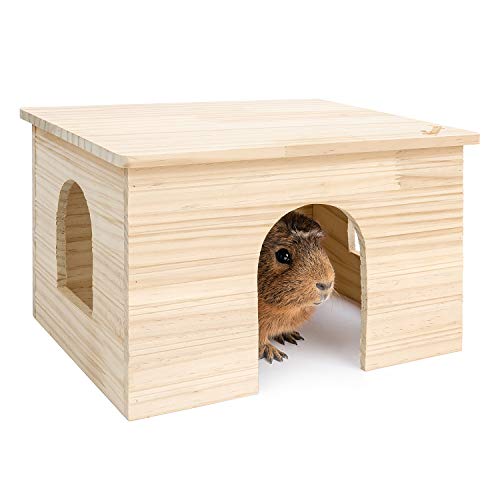
The best hideout for a chinchilla is a sturdy house made of untreated, kiln-dried wood such as pine or apple, sized so your chinchilla can sit fully upright and turn around inside. Our top pick is the Kaytee Woodland Get-A-Way Large, a chewable pine hideout with multiple entrances for ventilation and a removable tray for cleaning. For a two-level option that adds climbing, the Niteangel Wood House works well, and the edible Oxbow Timothy Hay Bungalow suits owners who want a fully consumable retreat.
Why a Good Hideout Matters
Chinchillas are prey animals that are most active at dawn and dusk, so they spend much of the day sleeping and need a private, enclosed spot to feel secure. Without a hideout, many chinchillas become stressed, restless, or reluctant to rest, which can affect appetite and long-term wellbeing. A solid wooden house also gives their constantly growing teeth something safe to gnaw on. Because chinchillas overheat easily, the hideout and the cage around it should stay cool, ideally below 68 to 72 degrees Fahrenheit, with good airflow rather than a sealed box that traps warmth.
What to Look For
Prioritize chinchilla-safe untreated wood such as kiln-dried pine, birch, or apple, with no paint, stain, glue, or oily softwoods like cedar. Choose a size of roughly 8 by 8 by 8 inches or larger for a single chinchilla, with more than one opening so air can move through and your pet never feels cornered. Chinchillas are active climbers, so ledges, a perch, or a second level add useful enrichment. Look for a removable tray or a simple shape you can wipe down, since hideouts collect droppings and urine quickly.
How We Chose
We focused on material safety first, filtering out plastic and treated or painted wood in favor of untreated, gnaw-safe options that will not cause harm if chewed and swallowed. We then weighed ventilation, interior room, climbing value, and how easy each hideout is to clean and replace. We compared manufacturer specifications, published materials lists, and owner feedback rather than claiming any hands-on lab testing. This is editorial research meant to narrow your choices, not veterinary advice.
What to Avoid
Skip plastic hides entirely, because chinchillas will chew them and can swallow sharp fragments that risk intestinal blockage. Avoid treated, painted, or varnished wood, aromatic softwoods such as cedar and fresh pine oils, and any hideout with only one tiny opening that traps heat. Also avoid enclosures too small for an adult to sit upright. If your chinchilla stops eating, breathes heavily, or seems overheated or lethargic, contact an exotics veterinarian promptly rather than waiting.