Quick answer
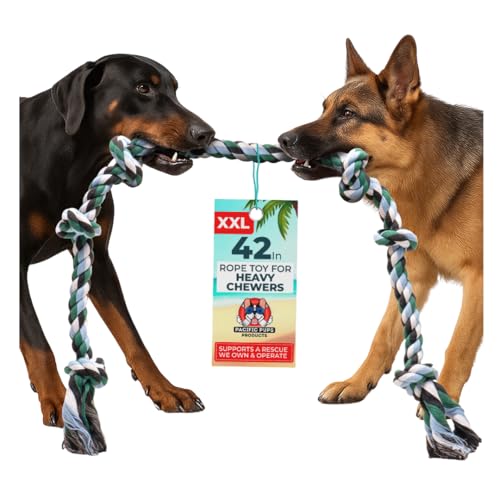
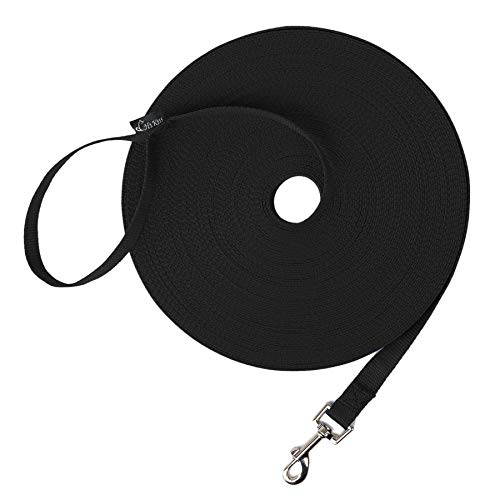
A long dog rope is really one of two tools, so buy for the job you actually have. If you want recall and off-leash training, get a long-line lead, a 15 to 30 foot rope lead that lets your dog roam while you keep control. If you want interactive play, get a long rope tug toy, a thick braided cotton rope for supervised tug and chewing. Our training pick is the reflective 10 to 100 foot lead, our best value lead is the Hi Kiss recall leash, and our toughest toy is the 42 inch six-knot giant rope for large chewers.
Long-line lead vs rope tug toy
These share a rope look but do opposite jobs. A long-line lead is a training tool. It gives a dog freedom to roam in an open, safe area while you keep a line on them, so you can practice recall and build toward reliable off-leash work step by step. Always clip a long-line to a harness, never a collar, because a dog hitting the end of the line at speed on a neck collar can cause serious neck or trachea injury. Never wrap the line around your hand, since a sudden pull can cause rope burn or worse. A rope tug toy is a supervised toy for tug-of-war and chewing, not for holding a dog under leash pressure. Keep the two jobs separate.
What to look for
For a long-line, pick length first: 15 to 30 feet suits recall, and longer lines suit open fields. Choose a strong but lightweight material like biothane or nylon, a secure clasp, and a comfortable or floating handle so it is easy to hold. For a rope tug toy, match the size and thickness to your dog, favor densely packed cotton and multiple knots, and check the ends for fraying before every play session. Big dogs with powerful jaws need a bigger, tougher rope.
How we chose
We grouped these picks by the two real uses and judged each on its own terms. Leads were rated on length range, line visibility, clasp strength, and how comfortable the line is to handle. Rope toys were rated on knot count, fiber density, and how well they hold up to hard chewing. We favored gear that matches a clear size and strength of dog rather than one-size claims, and we flagged which pick is a lead and which is a toy.
What to avoid
Do not use a chew rope as a leash, and do not use a training lead as a chew toy, because each is built for opposite forces. Skip a long-line on a flat collar, and never wrap it around your hand. Replace a rope tug toy once it frays, since swallowed strands can cause an intestinal blockage. Avoid an undersized toy for a strong chewer and an oversized, heavy line for a small dog.