Quick answer
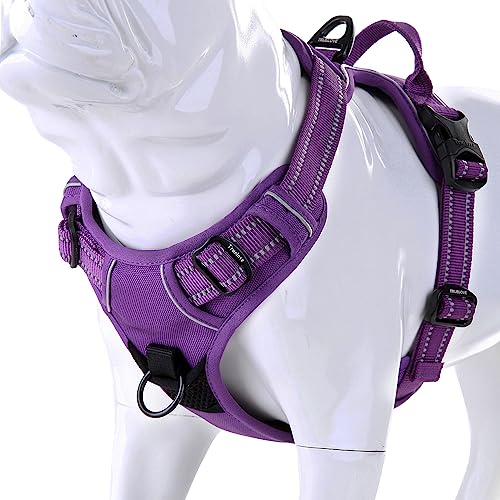
For a Cocker Spaniel, the best no pull harness is a padded front clip design with smooth, soft straps that will not tangle or mat the long silky coat, plus a secure adjustable fit for a deep chest. The front D-ring gently redirects gentle to moderate pulling by turning your dog toward you, so there is no pressure on the throat. A step-in or easy-on style avoids dragging fabric over the head and those long low-set ears. A harness like this manages pulling day to day, but it works best when you pair it with reward-based loose-leash training.
What no pull harness suits a Cocker Spaniel
Cocker Spaniels are medium, sturdy dogs, usually around 20 to 30 pounds, with a long feathered coat and a deep chest that tapers to a narrower waist. That body shape and coat drive the choice. Pick a front clip harness with a smooth chest panel and rounded, padded webbing so the straps glide over the feathering instead of catching and matting it. Look for a low-set neck strap that stays clear of the ear base, because Cockers are prone to ear trouble and you do not want straps rubbing there. Multiple adjustment points let you snug the fit for a deep-chested spaniel without pinching the shoulders.
What to look for
Prioritize a front D-ring for redirecting pulls, soft padding at the chest and girth, and a smooth inner surface that will not rub a silky coat. Choose an adjustable, multi-point fit so the harness sits secure without gapping or sliding. A step-in or quick-clip design saves you from pulling material over the ears each walk. Reflective stitching is a real plus for a gundog-type dog walked early or late. The two-finger rule keeps the fit right: snug enough that it cannot twist or slip, loose enough to move freely.
How we chose
We focused on harnesses that match the Cocker Spaniel build and coat: front clip control, padded smooth straps, and secure adjustability across a deep chest. We favored designs with low-profile neck straps that keep clear of the ears, easy on and off styles for a wiggly spaniel, and reflective detail for visibility. We leaned toward well-reviewed models with sturdy D-rings and reinforced stitching, since Cockers can pull in sudden bursts. Comfort against a long coat mattered as much as pull control.
What to avoid
Skip rough, thin webbing that rubs and mats the feathering, and any harness with high neck straps that sit against the ears. Avoid over-the-head-only designs if your dog dislikes fussing near the ears, and steer clear of a single fixed size that cannot adapt to a deep chest. Finally, do not expect the harness alone to end pulling. It reduces the payoff for pulling, but calm, consistent loose-leash training is what teaches the walk you want.