Quick answer
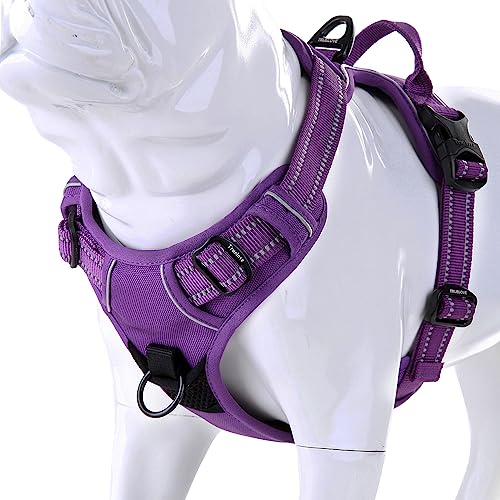
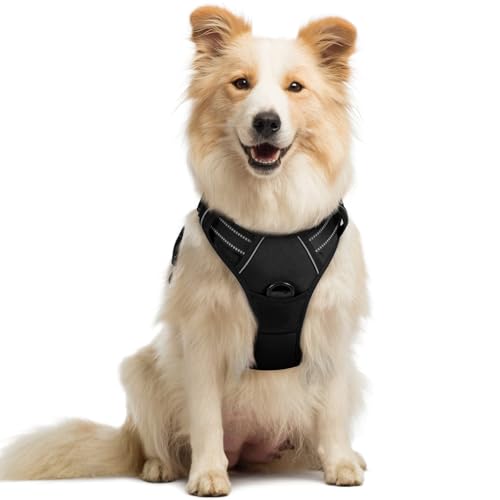
For a powerful German Shepherd, choose a heavy duty front clip no pull harness with a Y shaped front that frees the shoulder, wide padded straps, metal hardware, and a secure fit behind the ribs. The front chest ring redirects a strong pull sideways so your dog cannot simply lean into the pressure and drag you forward. A no pull harness is a training aid, not a cure, so pair it with steady loose leash practice. Top choices include the Ruffwear Front Range and the crash tested Kurgo Tru-Fit for a stronger build.
Why a strong front clip harness suits a GSD
German Shepherds are large working dogs, often 50 to 90 pounds, and they can pull with real force. A flat collar puts that force straight onto the neck and trachea, which is unsafe and does little to stop pulling. A front clip harness attaches at the chest, so when your Shepherd surges forward the leash turns them back toward you. That gentle redirection teaches the dog that pulling gets them nowhere, without choking or yanking. For an intelligent breed that learns fast, the consistent feedback speeds up training.
What to look for
Prioritize genuinely strong build quality. Look for reinforced stitching, welded or steel D rings, and buckles rated for large dogs. Wide padded chest and belly straps spread the load so nothing digs in during a hard pull. The front panel should sit in a Y across the breastbone, leaving the shoulder joint free to rotate, which matters for an athletic breed prone to joint issues. A dual clip design adds a back ring for relaxed walks once training sticks. Finally, confirm the neck and girth adjust independently, since a deep chest and narrower waist rarely fit one fixed size.
How we chose
We focused on harnesses built for large, strong pullers rather than light everyday models. We favored front clip or dual clip designs, heavy duty hardware, wide comfortable padding, a non restrictive Y front, and adjustment points that fit a Shepherd deep chest and narrow waist. We weighed owner feedback from large breed homes on durability, escape resistance, and chafing over months of daily use, and we leaned toward brands with a track record of standing up to powerful working dogs.
What to avoid
Skip thin single stitched straps and all plastic clips that a determined GSD can snap under load. Avoid harnesses with a strap straight across the front of the shoulders, since restricting the shoulder can shorten the stride and, over time, affect gait. Do not size up hoping to grow into it, because a loose harness lets a deep chested dog back out mid walk. And do not expect any harness alone to end pulling; treat it as one tool alongside training, patience, and plenty of rewarded practice on a loose leash.