We approached fish oil as a supplement, which means accuracy matters more than marketing. Omega-3 oils are commonly used to support skin and coat condition, but they are not a treatment for medical conditions, and the right dose depends on your pet’s weight and health. We always recommend talking to your veterinarian before starting any supplement, especially for pets on medication or with existing conditions. In our evaluation we compared wild Alaskan salmon and pollock-based blends, looking at how clearly each label states EPA and DHA content, how the oil is delivered, and how owners describe freshness and smell. We recommend choosing an oil with transparent sourcing and a pump or bottle that limits air exposure, since rancid oil is the most common complaint and the easiest to avoid.
Oil for Pets: Compared and Rated
Freshness beats brand in fish oils. Zesty Paws Wild Alaskan Omega-3 is our top pick for absorption and pet acceptance. Find your pet's ideal dose.
Some links below are affiliate links. If you buy through them we may earn a small commission at no extra cost to you. Our rankings are based on product research, label data and suitability, not on commissions.
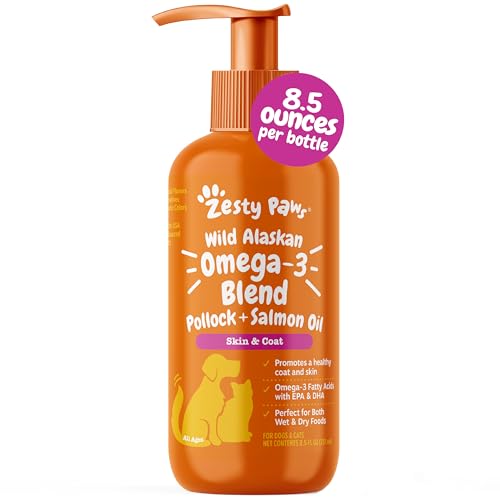 ★ Top Pick: Zesty Paws Wild Alaskan Omega-3 Blend Pollock + Sal…
Check Price on Amazon →
★ Top Pick: Zesty Paws Wild Alaskan Omega-3 Blend Pollock + Sal…
Check Price on Amazon →
- Best Overall: Zesty Paws Wild Alaskan Omega-3 Blend Pollock + Salmon Oil for Dogs and Cats- Skin and Coat Support, Omega 3 Supplement for Pets, 8.5oz. We like the Zesty Paws Wild Alaskan Omega-3 Blend Pollock + Salmon Oil for Dogs and Catspo.
- Best Value: Native Pet Omega 3 Fish Oil for Dogs & Cats - Wild Alaskan Salmon Oil for Dogs Skin and Coat, Supports Joints, Heart & Shedding - Fast-Absorbing Omega 3 6 9 Liquid Supplement - 8oz. We recommend the Native Pet wild Alaskan salmon oil for owners who want a single-source oi.
- Best Premium: Salmon Oil for Dogs - Premium Fish Oil for Skin and Coat Health - Omega 3 Supplement - Supports Itchy Skin - 8 oz Liquid - Norwegian Dog Salmon Oil - Essential Dog Supplement. We chose this premium salmon oil for pets with dry or flaky coats whose vet has suggested.
Quick Comparison
| Product | Best For | |
|---|---|---|
| Zesty Paws Wild Alaskan Omega-3 Blend Pollock… | Best Overall | Check price → |
| Native Pet Omega 3 Fish Oil for Dogs & Cats -… | Best Value | Check price → |
| Salmon Oil for Dogs - Premium Fish Oil for Sk… | Best Premium | Check price → |
Freshness, not brand, decides whether a fish oil helps or upsets your pet. The dose your pet will actually accept and absorb beats a higher-spec oil that has oxidized in the bottle.
Types Explained
Pump-dispense salmon oil
Liquid wild salmon oil in a pump bottle for measured daily servings.
Best for: Owners who want easy weight-based dosing and reduced air exposure between uses.Pollock and salmon blend oil
A combined omega-3 oil using two cold-water fish for EPA and DHA.
Best for: Dogs and cats that tolerate a milder fish taste and need skin and coat support.Single-source salmon coat oil
Premium salmon oil marketed specifically for skin and coat condition.
Best for: Pets with dry or flaky coats whose vet has recommended an omega-3 supplement.Top 3 Picks
Zesty Paws Wild Alaskan Omega-3 Blend Pollock + Salmon Oil for Dogs and Cats- Skin and Coat Support, Omega 3 Supplement for Pets, 8.5oz
We like the Zesty Paws Wild Alaskan Omega-3 Blend Pollock + Salmon Oil for Dogs and Catspollock and salmon blend because it pairs two named cold-water sources with a pump that makes weight-based dosing simple. In our evaluation we found the milder profile suits both dogs and cats working on skin and coat support.

Native Pet Omega 3 Fish Oil for Dogs & Cats - Wild Alaskan Salmon Oil for Dogs Skin and Coat, Supports Joints, Heart & Shedding - Fast-Absorbing Omega 3 6 9 Liquid Supplement - 8oz
We recommend the Native Pet wild Alaskan salmon oil for owners who want a single-source oil with clear sourcing for dogs and cats. We like that its pump format limits air exposure between servings to help keep the oil fresh.

Salmon Oil for Dogs - Premium Fish Oil for Skin and Coat Health - Omega 3 Supplement - Supports Itchy Skin - 8 oz Liquid - Norwegian Dog Salmon Oil - Essential Dog Supplement
We chose this premium salmon oil for pets with dry or flaky coats whose vet has suggested an omega-3 supplement. We like that it focuses on skin and coat condition with a straightforward single-source formula.
Key Buying Factors
EPA and DHA transparency
The active omega-3s are EPA and DHA. A trustworthy label states the milligrams per serving rather than only the total oil volume.
Fish source and sustainability
Wild Alaskan salmon and pollock are common, lower-mercury sources. Look for named species rather than a vague generic fish oil.
Freshness and rancidity control
Fish oil oxidizes quickly. Pump bottles and added antioxidants help, and a strongly off smell signals the oil has turned.
Delivery format
Pumps make dosing by weight easy and limit air exposure. Pour bottles cost less but invite spills and faster oxidation once opened.
Palatability for cats
Cats are pickier than dogs. A milder pollock or salmon oil is more likely to be accepted, but introduce it gradually.
Dosing guidance by weight
The label should give a clear amount per body weight. Over-supplementing fat-soluble nutrients is possible, so follow the chart and your vet's advice.
Care, Cost and Maintenance
Start low and go slow
Introduce fish oil gradually over several days to let your pet's digestion adjust. A sudden full dose can cause loose stools in some animals.
Store cool and use promptly
Refrigerate after opening when the label advises and use within the recommended window. Rancid oil loses benefit and can upset the stomach.
Watch for reactions and check with your vet
Monitor for digestive upset or changes after starting, and consult your veterinarian if anything seems off. Stop and ask if your pet is on blood thinners or has a known condition.
Smell the oil before each refill and the first dose after opening. A clean ocean smell is normal, but a sharp, sour, or paint-like odor means the oil has turned and should be replaced.
Frequently asked questions
What does fish oil do for dogs and cats?
How much fish oil should I give my pet?
How do I know if the oil has gone rancid?
Is salmon or pollock oil better?
Can fish oil cause side effects?
How we made this guide
How we chose. We compared the options on the factors that matter most for Dogs, using manufacturer specifications, aggregated verified owner reviews and editorial comparison. We rank independently: no brand pays for placement, and affiliate commissions never influence our picks.
How it was written. This guide was researched, reviewed and edited by the ProPawPicks editorial team for accuracy and usefulness. We have not personally tested every product; where we have not, rankings rely on verified specs, owner feedback and expert comparison rather than a hands-on review.
Affiliate disclosure. ProPawPicks is reader-supported. If you buy through links on our site, we may earn a commission at no extra cost to you. See our affiliate disclosure.
More Dogs guides
Sources and further reading
Some links below are affiliate links. If you buy through them we may earn a small commission at no extra cost to you. Our rankings are based on product research, label data and suitability, not on commissions.