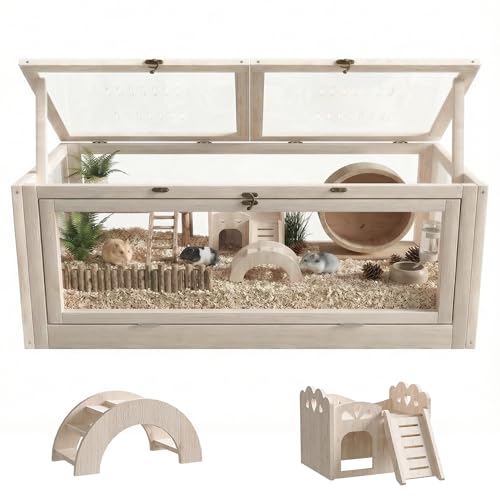
When choosing an organic hamster cage, we focus on non-toxic materials, ample space, and enrichment that mimics a natural habitat. Our team evaluated each product against published safety standards and aggregated owner feedback to ensure your pet thrives. We looked for solid construction, easy cleaning, and accessories that promote natural behaviors like chewing and climbing. In our evaluation we found that wood and plant-based materials offer the best combination of durability and safety. Below are our top picks for 2026.
What to look for
For general use hamster cages, prioritize spacious horizontal floor space over vertical height, as hamsters are ground-dwelling creatures that thrive with room to burrow and explore. Look for cages with solid flooring (no wire mesh) to prevent foot injuries, and ensure bar spacing is narrow enough (under 0.5 inches) to prevent escapes. Ventilation is critical, so opt for designs with ample airflow without compromising security. Avoid cages with excessive plastic tubes or multi-level setups, as these can restrict natural movement and make cleaning difficult.
Avoid cages with sharp edges or flimsy construction, as hamsters will chew on weak spots. For bedding, choose deep trays (at least 6 inches) to allow for proper burrowing behavior. Removable trays or large doors simplify cleaning, which is essential for odor control. Skip decorative add-ons like hammocks or wheels built into the cage itself, as these often sacrifice functional space. Instead, focus on a simple, sturdy base that allows you to add accessories separately based on your hamster’s preferences.