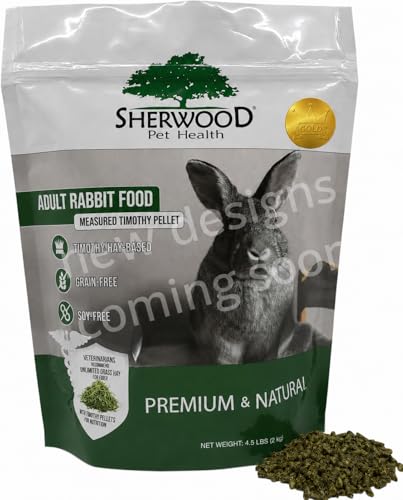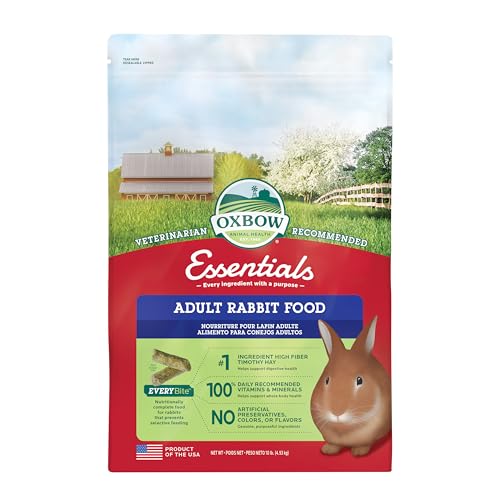
Quick Answer
For most adult dwarf rabbits, choose a uniform timothy based pellet with about 18 percent fiber or more, and feed only a small portion of roughly 1/8 to 1/4 cup per day. Oxbow Essentials Adult, Small Pet Select Timothy, and Sherwood Timothy Hay pellets are all solid single texture choices, and Kaytee Timothy Complete is a widely stocked budget option. Pellets are a supplement, not the main meal, so unlimited grass hay stays the foundation of the diet.
Why Pellet Choice and Portion Matter
A dwarf breed usually weighs about 1.1 to 3.5 pounds, so its calorie needs are tiny. Overfeeding pellets is one of the most common causes of obesity and soft stool in small rabbits, because dense pellets crowd out the hay that keeps the gut moving and the teeth worn down. A rabbit that fills up on pellets simply chews less, and less chewing means overgrown teeth and a sluggish digestive system. Picking a plain high fiber pellet and measuring a small daily portion protects digestion, dental health, and weight far more than any single brand claim on the front of the bag.
What to Look For
Start with a timothy or grass hay base for any rabbit over about 7 months. Look for fiber near or above 18 percent, moderate protein around 12 to 14 percent, calcium generally below 1 percent, and a short ingredient list you can actually read. Uniform extruded pellets, where every piece looks the same, stop a rabbit from picking out tasty bits and leaving the rest. A small pellet size also suits a dwarf rabbit’s little mouth. Save alfalfa based formulas for young growing dwarfs, or for cases where your vet recommends the extra calcium and protein during recovery or pregnancy.
How We Chose
We compared widely sold rabbit pellets on guaranteed analysis, ingredient quality, and pellet consistency, then cross checked those specs against general rabbit care guidance from veterinary and rescue sources. We favored uniform timothy pellets with clear fiber numbers and simple ingredients, and we set aside colorful mixes and any product built around seeds or dried fruit. We also weighed how easy each portion is to measure for a small breed, since a bag that pours fast is a bag that gets overfed. Real product specs, not marketing language, drove every pick on this list.
What to Avoid
Skip muesli style and seed or fruit mixes entirely. Those colorful blends encourage selective feeding, where a rabbit eats the sugary pieces and refuses the fibrous ones, which leads to dental disease, obesity, and gut trouble. Avoid pellets padded with corn, wheat middlings, or added sugars, and never treat a full bowl of pellets as a free feed the way you might with hay. Do not switch brands abruptly either, since a sudden change can upset a sensitive gut. When in doubt about portion size or any change in appetite or droppings, ask your rabbit savvy vet.