Quick answer
A pet ramp lets a dog get on and off a high bed without jumping, and that matters most for small or toy breeds, long-backed dogs like dachshunds and corgis, seniors, and any dog with arthritis or hip trouble. Even a modest jump down onto a hard floor is a real impact injury risk for a tiny or aging dog. For a dog with joint or spine concerns, a ramp with a gentle incline is usually the safer pick, while an agile small dog may do fine with compact steps. Whatever you choose, non-slip traction and a stable base decide whether your dog will actually trust it and use it.
Ramp vs steps for a bed
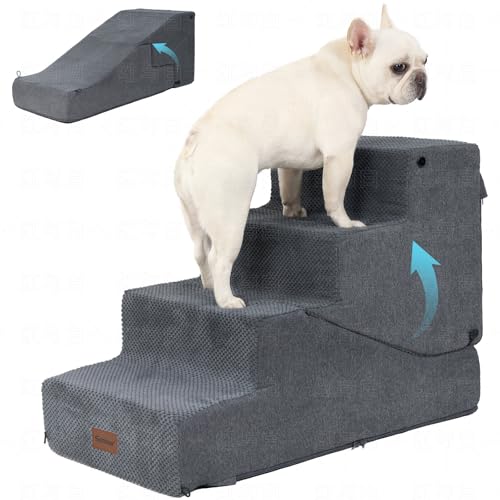
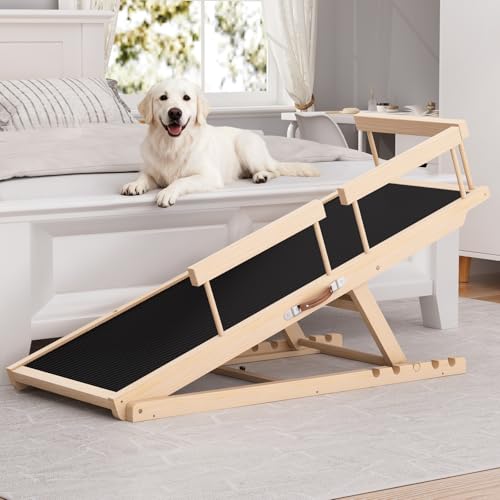
A ramp gives one continuous slope with no jumping between levels, so it is easier on backs and joints and better for dogs recovering from surgery or living with IVDD risk. The catch is length: a longer ramp makes a gentler, safer incline, but it needs floor space. Steps take up less room and suit confident, agile small dogs who can hop each level without strain. If your dog is old, sore, very small, or nervous, lean toward a ramp. If space is tight and your dog moves well, steps can work.
What to look for
Start with height and length. Measure your bed and pick a ramp long enough to keep the slope gentle, because a steep ramp defeats the purpose. Check the weight capacity and choose one rated well above your dog, since a ramp near its limit flexes and feels unsteady. The surface should be genuinely non-slip, with textured carpet or rubber treads rather than smooth plastic, and the feet should grip the floor so nothing slides. Stability is the last must: any wobble at the bed edge will send a cautious dog straight back to jumping.
How we chose
We focused on the features that keep a nervous or aging dog safe and willing to climb. We prioritized real traction, a sturdy frame, and rock-solid stability over looks or price, then favored adjustable-height models so the ramp can match different beds and couches at a gentle angle. We looked for capacities that suit both tiny dogs and heavier seniors, foldable designs for small rooms, and side rails where a dog needs extra reassurance. Owner-reported durability and easy cleaning helped us break ties.
What to avoid
Skip ramps with slick surfaces, weak feet, or a capacity that barely covers your dog, since all three invite slips. Avoid an incline that is too steep for a sore or short-legged dog, and do not assume your dog will use a ramp on day one. Introduce it slowly with a treat trail over a week or two so it becomes a habit. A bed ramp is a helpful management tool, not a cure, so pair it with weight control, less jumping, and your veterinarian’s guidance for any dog with existing back or joint disease.