Quick answer
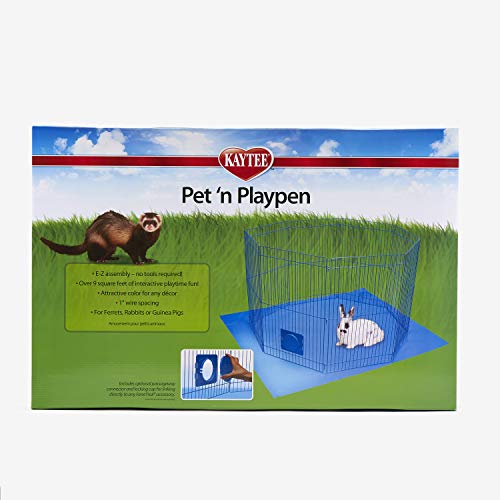
The best playpen for a pet mouse has tall, smooth, solid walls, no gaps a mouse can squeeze through, and ideally a secure cover. Our top pick is the Kaytee Pet-N-Playpen for its narrow 0.5 inch bar spacing, with the MidWest Homes panel pen as a roomy upgrade. Be honest with yourself first: mice are tiny, fast climbers and jumpers, so no open pen is truly escape proof. Many owners get safer results from a large sealed bin with high smooth sides, and every mouse needs constant supervision during floor time.
Why escape-proofing is everything
A mouse can flatten its body and slip through a gap of about a quarter inch, climb wire mesh like a ladder, and jump several inches straight up. That combination is exactly why playpens are tricky. A pen that safely holds a rabbit or guinea pig will not hold a mouse. If the walls have bars, the spacing must be no wider than 0.5 inches, and even then a determined mouse may climb them. Smooth, solid walls at least 12 inches tall are far harder to scale, and a fitted cover removes the jump-and-climb escape route entirely. Treat any pen as a supervised play space, never a substitute for a proper cage.
What to look for
Prioritize wall height and surface: tall, smooth, solid sides beat short wire panels every time. Check every seam and door for gaps, since mice exploit the smallest opening. Choose chew-resistant materials, because mice gnaw fabric and thin mesh quickly. A secure lid or cover is worth paying for if your mouse jumps or climbs. Look for a solid, wipeable floor so urine does not soak in. Keep the footprint large enough for real movement but small enough that you can watch the whole space at a glance, since supervision is the real safety feature. Add a hide and a handful of familiar bedding so a nervous mouse has somewhere to settle.
How we chose
We compared small-pet pens on the factors that actually matter for mice: bar spacing, wall height, wall smoothness, chew resistance, and whether a cover is available. We favored pens with spacing at or under 0.5 inches and solid, easy-clean floors. We also weighed honest limitations, flagging models that suit larger small pets better than mice, and noted where a sealed storage bin does the job more safely and cheaply. Picks are chosen to supplement a large cage, not replace one.
What to avoid
Avoid open-top pens with wide bar spacing, low walls, or climbable mesh, since these are the easiest for a mouse to escape. Skip soft fabric pens for anything but brief, watched sessions, because they get chewed through. Never leave a mouse alone in any playpen, even a covered one, and never place a pen near table edges or cords. Do not treat floor time as housing; a playpen supplements a large, secure cage, it does not replace it.


