๐Ÿ† Complete Buyer's Guide ยท Dog Food

Raise a Healthy Heeler: Best Australian Cattle Dog Puppy Food 2026

Avoid large breed formulas. Find out why Purina Pro Plan Puppy Chicken & Rice is our top pick for Australian Cattle Dog puppies maturing 35-50 lbs.

Some links below are affiliate links. If you buy through them we may earn a small commission at no extra cost to you. Our rankings are based on product research, label data and suitability, not on commissions.

๐ŸพNew to the breed? Read our full Australian Cattle Dog breed guide for temperament, care, health and lifespan. Purina Pro Plan Puppy Chicken and Rice Formula โ˜… Top Pick: Purina Pro Plan Puppy Chicken and Rice Formula Check Price on Amazon →
35 to 50 lb
Typical adult Heeler weight (medium breed)
26 to 32%
Practical protein range, dry-matter basis
7 to 10 days
Recommended gradual food transition window
3 to 4
Daily meals for young puppies
โšก Key takeaways
  • Best Overall: Purina Pro Plan Puppy Chicken and Rice Formula. This grain-inclusive recipe leads with real chicken, carries an AAFCO growth statement, an.
  • Best for Sensitive Stomach: Hill's Science Diet Puppy Sensitive Stomach and Skin. Built around chicken with prebiotic fiber and added omega-6 and vitamin E for skin and coa.
  • Best Budget: Diamond Naturals Puppy Formula. Lamb and rice based with named meat up front, guaranteed probiotics, and added DHA, this f.
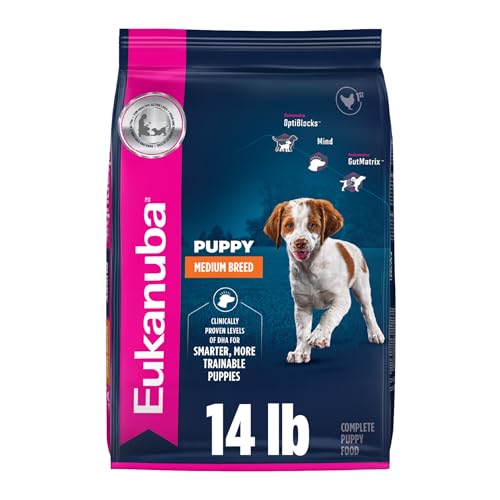
  • Best Grain-Inclusive: Eukanuba Puppy Medium Breed. Purpose-built for medium-breed puppies, this grain-inclusive recipe leads with chicken and.
  • Best for Puppies: Wellness Complete Health Puppy. This recipe combines deboned chicken and oatmeal with salmon-sourced DHA, antioxidants, an.
At a Glance

Quick Comparison

Quick answer

For most Australian Cattle Dog puppies, our top pick is Purina Pro Plan Puppy Chicken and Rice Formula. It leads with named chicken, carries an AAFCO complete-and-balanced statement for growth, includes guaranteed live probiotics, and provides the moderate protein and fat levels that suit an active medium breed without pushing rapid growth. If your puppy has a touchy stomach, Hill’s Science Diet Puppy Sensitive Stomach and Skin is a gentler choice. On a tight budget, Diamond Naturals Puppy Formula delivers solid named-meat nutrition for less. Want a grain-inclusive recipe with extra joint support, consider Eukanuba Puppy Medium Breed. For a different protein with whole-food extras, Wellness Complete Health Puppy rounds out the list.

What to consider for Puppy Food For Australian Cattle Dog

The Australian Cattle Dog, sometimes called the Blue Heeler or Queensland Heeler, is a compact, muscular working breed that typically matures around 35 to 50 pounds. That puts it firmly in the medium-breed category, so you generally want a medium-breed or all-breed puppy growth formula rather than a large-breed one. Heelers are famously energetic and were bred to drove cattle over long distances, so calorie needs while growing can be higher than for a couch-bound dog of the same size. The flip side is that this is a working dog people often keep busy, so it is easy to over-feed an active-looking puppy and create excess weight that strains developing joints.

Two breed-relevant health themes are worth flagging without overstating them. Australian Cattle Dogs have an above-average reported incidence of inherited deafness and of progressive retinal atrophy, neither of which is a nutrition problem, but both are reasons to keep up with your veterinarian. Joint health, including hip and elbow soundness, is the area where steady growth and sensible body condition genuinely help. Keeping a growing Heeler lean and feeding measured meals is one of the more practical things an owner can control. For any specific medical concern or before adding a supplement, talk to your veterinarian.

What to look for in a dog food

Start with the label. Look for an AAFCO complete-and-balanced statement for the correct life stage, which here means “growth” or “all life stages,” not “adult maintenance.” A statement that includes growth of large-size dogs is fine but not required for a medium breed. Next, check that a named meat such as chicken, lamb, or salmon, or a named meat meal, appears as the first ingredient rather than a vague “meat meal” or a grain. For an active medium-breed puppy, practical targets are often in the range of roughly 26 to 32 percent protein and about 12 to 20 percent fat on a dry-matter basis, with calorie density commonly around 350 to 450 kcal per cup, though exact needs vary by dog. These are general ranges, not medical rules, so feed to body condition and adjust with your vet’s input.

Because the Australian Cattle Dog is a medium breed, a standard medium-breed or all-breed puppy formula is appropriate; you do not need a large-breed puppy food, which is formulated to slow growth and control calcium for dogs expected to exceed roughly 50 to 70 pounds. Joint and omega support can be a nice extra: foods listing guaranteed omega-3 fatty acids, DHA for brain and eye development, or sources like fish oil and flaxseed may support a growing, active dog, though no food treats or prevents joint disease. Whatever you choose, transition gradually and monitor weight.

How we chose these picks

  • Confirmed each product is a real, currently sold puppy formula from an established brand with a published ingredient panel.
  • Prioritized recipes carrying an AAFCO complete-and-balanced statement for growth or all life stages.
  • Required a named animal protein, such as chicken or lamb, at or near the top of the ingredient list.
  • Favored protein, fat, and calorie levels that suit an active medium-breed puppy rather than a giant or toy breed.
  • Considered grain-inclusive options as the safer default given the ongoing FDA investigation into diet and canine DCM.
  • Looked for useful extras like DHA, omega-3 fatty acids, or guaranteed probiotics where the brand discloses them.
  • Checked each brand against publicly posted FDA recall information at the time of writing and favored brands with no recent active growth-formula recalls.
  • Never ranked a product higher just because it pays a commission.

What to avoid

  • Recipes that list only an unnamed “meat meal” or generic “meat” as the protein source, with no species named.
  • Defaulting to grain-free or legume-heavy recipes; the FDA investigation into a potential link between certain diets and canine dilated cardiomyopathy is ongoing, and grain-inclusive is the safer default unless your veterinarian advises otherwise.
  • Feeding an all-life-stages or adult-maintenance food as the main diet during the puppy growth window, and avoid large-breed puppy formulas for this medium breed unless your vet recommends one.
  • Abrupt diet switches; change foods over about 7 to 10 days to reduce the risk of stomach upset.

For more help raising a healthy, active Heeler, browse our dog guides, our dog food roundups, and our dog nutrition resources.

Why this matters

Australian Cattle Dogs are a medium breed that matures around 35 to 50 pounds, so they need a medium-breed or all-breed puppy growth formula, not a large-breed puppy food, which is specifically formulated to slow growth in dogs expected to exceed roughly 50 to 70 pounds.

The Options

Types Explained

Dry kibble (medium-breed puppy)

Shelf-stable kibble formulated for medium-breed growth, with moderate calorie density and a kibble size suited to a Heeler puppy's jaw.

Best for: Everyday primary feeding for most Australian Cattle Dog puppies

Sensitive-stomach puppy formula

Growth recipes using easily digestible proteins and prebiotic fiber to reduce loose stools and digestive upset.

Best for: Puppies that react to richer foods or have frequent soft stools

Grain-inclusive puppy recipe

Formulas that include rice, oats, or barley alongside named meat, aligning with the safer default amid the FDA DCM investigation.

Best for: Owners who want to avoid grain-free and legume-heavy diets

Budget complete-and-balanced puppy food

Lower-cost growth formulas that still lead with a named meat and carry an AAFCO statement, useful when feeding a fast-growing pup.

Best for: Households feeding an active puppy on a tighter budget
The Rankings

Top 5 Picks

#1
Purina Pro Plan Puppy Chicken and Rice Formula
Best Overall

Purina Pro Plan Puppy Chicken and Rice Formula

View on Amazon

This grain-inclusive recipe leads with real chicken, carries an AAFCO growth statement, and adds guaranteed live probiotics plus DHA from fish oil for brain and eye development. The moderate protein and fat suit an active medium-breed Heeler puppy without rushing growth. It is a strong all-rounder backed by a widely available, established line. The trade-off: it sits at a mid to premium price, so it costs more than basic grocery puppy foods.

#2
Hill's Science Diet Puppy Sensitive Stomach and Skin
Best for Sensitive Stomach

Hill's Science Diet Puppy Sensitive Stomach and Skin

View on Amazon

Built around chicken with prebiotic fiber and added omega-6 and vitamin E for skin and coat, this formula targets puppies whose stomachs react to richer foods. It carries an AAFCO growth statement and uses gentle, recognizable ingredients. For a Heeler pup prone to loose stools during transitions, it is a sensible first try. The trade-off: it is one of the pricier options here, and not every sensitive puppy responds, so monitor stools and consult your vet.

#3
Diamond Naturals Puppy Formula
Best Budget

Diamond Naturals Puppy Formula

View on Amazon

Lamb and rice based with named meat up front, guaranteed probiotics, and added DHA, this formula delivers complete-and-balanced growth nutrition at a noticeably lower cost per pound. It is a practical pick for owners feeding a fast-growing, active puppy on a budget. The trade-off: Diamond products are made in large co-packing facilities, and the brand has had past recalls, so check current FDA recall status and store the bag properly to keep it fresh.

#4
Eukanuba Puppy Medium Breed
Best Grain-Inclusive

Eukanuba Puppy Medium Breed

View on Amazon

Purpose-built for medium-breed puppies, this grain-inclusive recipe leads with chicken and includes DHA for cognitive development plus calcium and phosphorus levels aimed at steady growth. The medium-breed sizing fits an Australian Cattle Dog well. The trade-off: it contains corn and wheat, which some owners prefer to avoid, and the kibble size is tuned for medium jaws, so very young pups may need it slightly moistened at first.

#5
Wellness Complete Health Puppy
Best for Puppies

Wellness Complete Health Puppy

View on Amazon

This recipe combines deboned chicken and oatmeal with salmon-sourced DHA, antioxidants, and no artificial colors or flavors, and it carries an AAFCO growth statement. The whole-food ingredient list appeals to owners wanting fewer fillers for a growing Heeler. The trade-off: it is a premium-priced food, and its calorie density means you should measure portions carefully for an active puppy to avoid overfeeding and unwanted weight gain.

Before You Buy

Key Buying Factors

01

Correct life-stage label

Choose a food with an AAFCO complete-and-balanced statement for growth or all life stages, not adult maintenance. This is the single most important label check for any puppy.

02

Named meat first

A specific protein like chicken, lamb, or salmon at the top of the ingredient list signals a defined protein source, which is preferable to a vague unnamed meat meal.

03

Medium-breed suitability

Australian Cattle Dogs mature around 35 to 50 pounds, so a medium-breed or all-breed puppy formula fits better than large-breed food, which is built to slow growth in much bigger dogs.

04

Calorie control for activity

Heelers are high-energy, but it is easy to overfeed an active-looking puppy. Pick a food you can portion precisely and feed to a lean body condition to protect developing joints.

05

Grain-inclusive by default

Given the ongoing FDA investigation into diet and canine DCM, a grain-inclusive recipe is the safer default for most puppies unless your veterinarian advises otherwise for a specific reason.

Living With It

Care, Cost and Maintenance

Measure every meal

Use the bag's feeding chart as a starting point, weigh or use a measuring cup, and adjust to keep your puppy lean. Split the daily amount into 3 to 4 meals for young pups, then reduce meal frequency as they grow.

Transition gradually

When switching foods, mix increasing amounts of the new food into the old over about 7 to 10 days. A slow change lowers the risk of stomach upset, which active Heeler puppies are prone to during abrupt swaps.

Track growth and body condition

Check your puppy's waist and ribs regularly; you should feel ribs easily without pressing hard. If your puppy looks chunky or too thin, adjust portions and discuss growth and any joint concerns with your veterinarian.

Pro tip

Measure every meal with a scale or a proper cup and feed to a lean body condition where you can easily feel the ribs; with a high-energy Heeler it is easier to over-feed an active-looking puppy than to underfeed one.

Frequently asked questions

How much should I feed an Australian Cattle Dog puppy?
Start with the feeding chart printed on your chosen food, since amounts vary by calorie density and your puppy's age and weight. Most growing Heeler puppies eat measured portions split into three to four meals a day when young, dropping to two meals as they mature. Because Australian Cattle Dogs are very active, needs can run higher than for sedentary dogs, but it is easy to overfeed. Feed to body condition rather than to a fixed number, keeping your puppy lean to protect developing joints. For a tailored amount, ask your veterinarian, who can factor in your puppy's growth rate and activity.
How many calories does an Australian Cattle Dog puppy need each day?
Daily calorie needs depend on age, current weight, growth stage, and how active your puppy is, so there is no single number. A growing, energetic Heeler puppy generally needs more calories per pound than an adult of the same size, and needs taper as growth slows. Rather than chasing an exact figure, use your food's feeding guide as a starting point, then adjust based on body condition over the following weeks. Many medium-breed puppy foods land around 350 to 450 kcal per cup. Your veterinarian can calculate a more precise daily energy target for your individual puppy if you want one.
Is grain-free food safe for an Australian Cattle Dog puppy?
The FDA has an ongoing investigation into a potential link between certain diets, often grain-free and legume-heavy ones, and canine dilated cardiomyopathy, and that work is not yet concluded. Because of this uncertainty, our editorial team treats grain-inclusive recipes as the safer default for most puppies, including Heelers. Grains like rice, oats, and barley are not inherently bad and provide useful nutrients. If your puppy has a diagnosed grain allergy or another medical reason to avoid grains, that is a conversation for your veterinarian, who can recommend an appropriate diet. Do not switch to grain-free simply because it sounds healthier.
Does my Australian Cattle Dog puppy really need puppy-specific food?
Yes, during the growth window a puppy or all-life-stages formula is generally appropriate rather than adult maintenance food. Puppy formulas are balanced for growth, with protein, fat, calcium, and phosphorus levels and added DHA suited to developing bodies and brains. For a medium breed like the Australian Cattle Dog, a medium-breed or all-breed puppy food fits well; you do not need a large-breed puppy formula, which is designed to slow growth in dogs expected to exceed roughly 50 to 70 pounds. Confirm the bag carries an AAFCO complete-and-balanced statement for growth, and ask your veterinarian when to transition to adult food.
What if my Australian Cattle Dog puppy is becoming overweight?
Heelers look athletic, which can make excess weight easy to miss, yet carrying extra pounds during growth adds strain to developing joints. First, check body condition: you should feel the ribs easily and see a visible waist from above. If your puppy is heavy, measure every meal precisely, cut back on treats, and make sure the daily food amount matches the feeding chart for the goal weight, not the current one. Keep up appropriate exercise for the puppy's age. Because rapid weight changes during growth can have health implications, work with your veterinarian on a safe plan rather than crash-dieting a growing dog.
When should I switch my Australian Cattle Dog from puppy food to adult food?
Most medium-breed dogs, including Australian Cattle Dogs, are ready to move from puppy to adult food around 12 months of age, though the exact timing varies by individual. Switching too early can shortchange a still-growing dog, while staying on calorie-dense puppy food too long can promote unwanted weight gain. When you do transition, do it gradually over about 7 to 10 days to reduce stomach upset. Senior-specific diets come much later in life and are a separate decision. Your veterinarian can confirm when your particular puppy has finished growing and recommend the right adult formula for an active breed.
Is medium-breed puppy food right for an Australian Cattle Dog, or should I use large-breed food?
A medium-breed or all-breed puppy food is the right fit for an Australian Cattle Dog. Adults typically weigh about 35 to 50 pounds, which places them in the medium-breed category. Large-breed puppy formulas are specifically designed to control calcium and calorie density to slow growth in dogs expected to exceed roughly 50 to 70 pounds, so they are not necessary here and could under-fuel an active medium pup. Choose a formula with kibble sized for a medium jaw and an AAFCO growth statement. If your individual dog is unusually large or has a specific orthopedic concern, ask your veterinarian whether a different approach makes sense.
Should I feed my Australian Cattle Dog puppy dry or wet food?
Both can work if the product carries an AAFCO complete-and-balanced statement for growth. Dry kibble is convenient, cost-effective, supports dental abrasion, and is easy to measure for an active puppy, which is why most owners use it as the main diet. Wet food adds moisture and palatability and can help tempt a picky eater or one recovering from illness, but it is pricier per calorie and spoils faster once opened. Many owners feed dry as the base and add a spoon of wet as a topper. Whatever you choose, measure portions to avoid overfeeding, and ask your veterinarian if you have a specific dietary concern.
How can food support an active Australian Cattle Dog puppy's joints and energy?
No food prevents or treats joint disease, but a few features may support an active growing Heeler. Look for a complete-and-balanced growth formula with named meat protein, sensible fat for sustained energy, and added omega-3 fatty acids or DHA, often from fish oil or flaxseed, which support development. Just as important is keeping your puppy lean through measured meals, since excess weight stresses developing hips and elbows. Steady, controlled growth matters more than any single ingredient. For supplements such as joint products, or if you notice limping or stiffness, consult your veterinarian before adding anything, because the Australian Cattle Dog can be prone to certain inherited conditions.
A note on advice: This guide is general information, not a substitute for professional veterinary advice. Talk to your vet before changing your dog's diet or care routine, especially if your dog has allergies, kidney disease, pancreatitis, obesity, heart disease or any other medical condition.
Transparency

How we made this guide

How we chose. We compared the options on the factors that matter most for Dog Food, using manufacturer specifications, aggregated verified owner reviews and editorial comparison. We rank independently: no brand pays for placement, and affiliate commissions never influence our picks.

How it was written. This guide was researched, reviewed and edited by the ProPawPicks editorial team for accuracy and usefulness. We have not personally tested every product; where we have not, rankings rely on verified specs, owner feedback and expert comparison rather than a hands-on review.

Affiliate disclosure. ProPawPicks is reader-supported. If you buy through links on our site, we may earn a commission at no extra cost to you. See our affiliate disclosure.

Keep Reading

More Dog Food guides

Insulated Dog Jackets: 4 Best Picks Reviewed for 2026View picks โ†’Interactive Dog Toys for Boredom: Our ShortlistView picks โ†’Invisible Dog Fence for Large Dogs: 5 Best Picks (2026)View picks โ†’Invisible Dog Fence for Sensitive Stomachs: 2026 Top Pick ReviewedView picks โ†’Best Invisible Dog Fence for Small Dogs 2026: 5 Top Picks ReviewedView picks โ†’Expert Picks: Best Invisible Dog Fence for the Money 2026View picks โ†’

Sources and further reading

Some links below are affiliate links. If you buy through them we may earn a small commission at no extra cost to you. Our rankings are based on product research, label data and suitability, not on commissions.