๐Ÿ† Complete Buyer's Guide ยท Dog Food

Puppy food for coat health: 5 best picks compared 2026

Omega 3 and 6 fatty acids are key for a puppy's coat. See how Purina Pro Plan Shredded Blend stacks up against top competitors.

Some links below are affiliate links. If you buy through them we may earn a small commission at no extra cost to you. Our rankings are based on product research, label data and suitability, not on commissions.

Purina Pro Plan Puppy Shredded Blend Chicken & Rice Formula โ˜… Top Pick: Purina Pro Plan Puppy Shredded Blend Chicken & Riceโ€ฆ Check Price on Amazon →
1.5% to 2.5%
Omega-6 fatty acids (min) for coat health
0.1% to 0.3%
Omega-3 fatty acids (DHA min) for brain and coat
25% to 35%
Protein content range for growing puppies
12% to 20%
Fat content range for energy and coat shine
โšก Key takeaways
  • Best Overall: Purina Pro Plan Puppy Shredded Blend Chicken & Rice Formula. This formula combines tender shreds and crunchy kibble for texture variety.
  • Best for Sensitive Stomach: Hill's Science Diet Puppy Sensitive Stomach & Skin. Designed for puppies with digestive sensitivities, this food includes prebiotic fiber and.
  • Best Budget: Diamond Naturals Puppy Formula. This affordable option contains real chicken, DHA, and omega fatty acids from salmon oil.
  • Best for Puppies: Blue Buffalo Life Protection Formula Puppy. With deboned chicken first, DHA, and LifeSource Bits (antioxidant-rich kibble), this food.
  • Best Grain-Inclusive: Wellness Complete Health Puppy Deboned Chicken & Oatmeal Recipe. This grain-inclusive recipe uses oatmeal and barley for digestible carbohydrates.
At a Glance

Quick Comparison

Quick answer

Our top pick for overall coat health is Purina Pro Plan Puppy Shredded Blend Chicken & Rice Formula. It provides high-quality protein, omega-6 fatty acids, and essential nutrients that support a soft, shiny coat. For puppies with sensitive stomachs, Hill’s Science Diet Puppy Sensitive Stomach & Skin is an excellent alternative. If you’re on a budget, Diamond Naturals Puppy Formula offers great value without sacrificing key nutrients.

What to consider for Puppy Food For Coat Health

A puppy’s coat reflects its overall health. Key nutrients for coat health include omega-3 and omega-6 fatty acids (like DHA and EPA), high-quality animal protein for hair structure, zinc for skin integrity, and vitamin E for antioxidant support. Look for named meat sources (e.g., chicken, salmon) and avoid artificial additives. The food should be AAFCO-approved for growth and meet your puppy’s breed size (small, medium, large) to ensure proper calorie density and nutrient balance.

What to look for in a dog food

Choose a food that is AAFCO complete and balanced for the growth life stage. Look for a named meat (e.g., chicken, lamb, salmon) as the first ingredient. Protein should be around 25 to 35% on a dry matter basis, fat 12 to 20%, and calories appropriate for your puppy’s size (typically 350 to 500 kcal per cup for large breeds, higher for small breeds). For coat health, omega-6 fatty acids (linoleic acid) should be at least 1.5% and omega-3s (DHA) at least 0.1%. Large breed puppies need controlled calcium and phosphorus levels (around 1.0% calcium) to support proper bone development. Joint support from glucosamine and chondroitin can be beneficial for large breeds. Always consult your veterinarian for specific recommendations.

How we chose these picks

  • Analyzed ingredient lists for named protein sources and absence of artificial colors, flavors, and preservatives.
  • Ensured all products meet AAFCO nutrient profiles for growth and are appropriate for the puppy’s life stage.
  • Evaluated omega-3 and omega-6 fatty acid levels for coat and skin support.
  • Checked for inclusion of DHA for brain and eye development.
  • Considered brand reputation, manufacturing quality control, and history of recalls.
  • Reviewed calorie density and kibble size for breed suitability.
  • Read customer feedback focusing on coat condition and palatability.
  • Never ranked a product higher just because it pays a commission.

What to avoid

  • Avoid foods where the first ingredient is an unnamed meat meal (e.g., “poultry meal”) as the only protein source; named meals like chicken meal are acceptable.
  • Do not default to grain-free or legume-heavy recipes unless advised by a veterinarian, due to the FDA’s ongoing investigation into a potential link with canine dilated cardiomyopathy (DCM). Grain-inclusive formulas are generally a safer choice.
  • Do not feed an all-life-stages food to a large-breed puppy, as it may have inappropriate calcium or calorie levels that can affect growth.
  • Avoid abrupt diet switches; transition over 7 to 10 days by gradually mixing the new food with the old.

For more guidance, see our dog guides, dog food reviews, and dog health articles.
Why this matters

Omega-3 and omega-6 fatty acids are the most critical nutrients for a puppy's coat health, but they must be balanced. Too much omega-6 without enough omega-3 can promote inflammation, so look for foods with fish oil or flaxseed as a source of omega-3s.

The Options

Types Explained

Dry Kibble

Convenient and cost-effective, dry kibble helps reduce plaque buildup. Many formulas are available for different life stages and coat health needs.

Best for: Owners seeking affordable, shelf-stable options with dental benefits.

Wet Food

Higher moisture content aids hydration and is often more palatable. Wet food can be used as a topper or complete diet.

Best for: Puppies who are picky eaters or need extra moisture.

Grain-Inclusive

Contains grains like rice, oats, or barley as carbohydrate sources. These are generally safer than grain-free diets due to the FDA DCM investigation.

Best for: Most puppies, unless a veterinarian advises otherwise.

Limited Ingredient

Formulated with fewer ingredients to minimize allergic reactions. Often uses a single protein source and limited carbohydrates.

Best for: Puppies with food sensitivities or allergies.
The Rankings

Top 5 Picks

#1
Purina Pro Plan Puppy Shredded Blend Chicken & Rice Formula
Best Overall

Purina Pro Plan Puppy Shredded Blend Chicken & Rice Formula

View on Amazon

This formula combines tender shreds and crunchy kibble for texture variety. It features real chicken as the first ingredient, DHA for brain development, and omega-6 fatty acids for a healthy coat. One limitation is that it contains poultry by-product meal, which some owners prefer to avoid.

#2
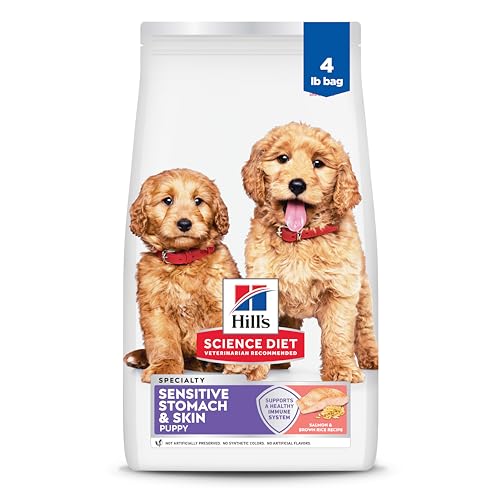
Hill's Science Diet Puppy Sensitive Stomach & Skin
Best for Sensitive Stomach

Hill's Science Diet Puppy Sensitive Stomach & Skin

View on Amazon

Designed for puppies with digestive sensitivities, this food includes prebiotic fiber and easily digestible ingredients. It provides vitamin E and omega-6s for skin and coat health. A trade-off is that it is more expensive than many other puppy foods.

#3
Diamond Naturals Puppy Formula
Best Budget

Diamond Naturals Puppy Formula

View on Amazon

This affordable option contains real chicken, DHA, and omega fatty acids from salmon oil. It also includes probiotics for digestive health. The main limitation is that it is not specifically formulated for large breed puppies, so check the calorie density for your pup.

#4
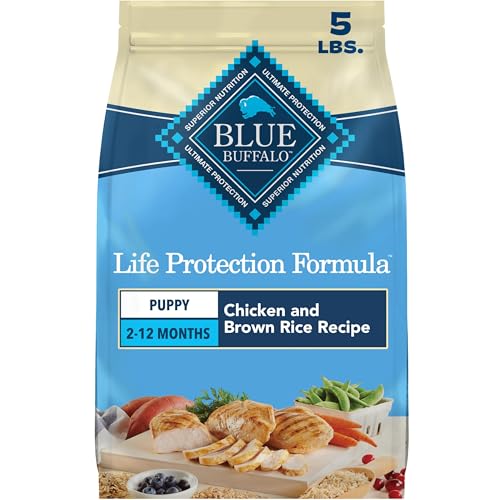
Blue Buffalo Life Protection Formula Puppy
Best for Puppies

Blue Buffalo Life Protection Formula Puppy

View on Amazon

With deboned chicken first, DHA, and LifeSource Bits (antioxidant-rich kibble), this food supports overall growth and coat health. It includes omega-3 and omega-6 fatty acids. One drawback is that some puppies may not eat the LifeSource Bits.

#5
Wellness Complete Health Puppy Deboned Chicken & Oatmeal Recipe
Best Grain-Inclusive

Wellness Complete Health Puppy Deboned Chicken & Oatmeal Recipe

View on Amazon

This grain-inclusive recipe uses oatmeal and barley for digestible carbohydrates. It provides DHA, taurine, and omega fatty acids for heart and coat health. The limitation is that it has a slightly lower protein content compared to some competitors.

Before You Buy

Key Buying Factors

01

Omega Fatty Acid Content

Look for foods with named sources of omega-3 and omega-6 fatty acids, such as fish oil, flaxseed, or chicken fat. These support skin health and a glossy coat.

02

Protein Quality

High-quality animal protein (chicken, lamb, salmon) provides amino acids necessary for hair growth. Avoid foods with unnamed meat meals or excessive plant proteins.

03

Life Stage Appropriateness

Ensure the food is formulated for growth (puppy) and matches your puppy's breed size. Large breed puppies need controlled calcium and calories to prevent skeletal issues.

04

AAFCO Statement

Always check for an AAFCO statement confirming the food is complete and balanced for growth. This ensures essential nutrients are present in proper amounts.

05

Ingredient Transparency

Choose brands that clearly list ingredients and avoid artificial preservatives, colors, or flavors. Reputable brands often have detailed nutritional information available.

Living With It

Care, Cost and Maintenance

Brushing and Grooming

Regular brushing distributes natural oils, removes loose fur, and stimulates the skin. Use a brush appropriate for your puppy's coat type (slicker, bristle, or pin brush). Start grooming early to accustom your puppy.

Bathing Schedule

Bathe your puppy only when necessary, typically every 4 to 6 weeks, using a gentle puppy shampoo. Over-bathing can strip natural oils, leading to dry skin and a dull coat.

Nutritional Supplements

Consult your veterinarian before adding supplements. Omega-3 fish oil can support coat health, but too much can cause digestive upset. A balanced diet usually provides all needed nutrients.

Pro tip

To boost coat shine, add a teaspoon of canned sardines (in water, no salt) to your puppy's meal once or twice a week. Sardines are rich in omega-3s, but check with your vet first.

Frequently asked questions

How much should I feed my puppy for optimal coat health?
Feeding amounts vary by brand, puppy size, and activity level. Follow the feeding guide on the package, but adjust based on your puppy's body condition. Generally, puppies need 3 to 4 meals per day until 6 months old, then 2 meals. Ensure the food provides adequate omega fatty acids for coat health. Consult your veterinarian for personalized recommendations.
How many calories does a puppy need daily?
Calorie needs depend on breed size, age, and activity. Small breed puppies may need 200 to 400 kcal per day, while large breeds can require 800 to 1,500 kcal. Check the food's calorie content per cup and adjust portions. Overfeeding can lead to obesity, which affects coat condition. Use a measuring cup and monitor weight regularly.
Is grain-free puppy food safe for coat health?
Grain-free diets are not necessarily better for coat health and may be linked to a risk of DCM, according to an FDA investigation. Unless your puppy has a diagnosed grain allergy, grain-inclusive foods are generally recommended. Always consult your veterinarian before choosing a grain-free diet.
Can I feed adult dog food to my puppy?
No, adult dog food lacks the proper balance of nutrients (like DHA, calcium, and protein) required for growth. Puppy food is formulated to support development, including coat health. Feed a complete and balanced puppy formula until your dog reaches maturity, which varies by breed size.
What should I feed an overweight puppy?
Consult your veterinarian for a weight management plan. Choose a puppy food with lower calorie density and higher fiber to promote satiety. Avoid free-feeding; measure portions and limit treats. Ensure the food still meets AAFCO growth standards. Regular exercise is also important for overall health and coat condition.
Can senior dogs eat puppy food for coat health?
Senior dogs have different nutritional needs, including lower calories and adjusted protein levels. Puppy food is too rich and may cause obesity or other issues. For coat health in seniors, look for senior formulas with added omega fatty acids and joint support. Always consult your veterinarian.
How do I choose the right food for my puppy's breed size?
Large breed puppies need controlled calcium (around 1.0%) and calorie levels to prevent rapid growth and skeletal problems. Small and medium breeds can handle higher calorie densities. Look for breed-specific formulas or those labeled for large breed puppies. Kibble size also matters for chewing ease.
Is dry or wet food better for coat health?
Both can support coat health if they are complete and balanced. Dry food is convenient and helps with dental health, while wet food provides extra moisture. Some puppies prefer wet food, which can encourage eating. Choose a high-quality option with omega fatty acids regardless of form.
How long does it take to see improvements in my puppy's coat?
Dietary changes can affect coat condition within 4 to 8 weeks, as hair growth cycles take time. Consistently feeding a nutrient-rich puppy food with adequate omega fatty acids should yield a shinier, softer coat. If no improvement is seen, consult your veterinarian to rule out underlying health issues.
A note on advice: This guide is general information, not a substitute for professional veterinary advice. Talk to your vet before changing your pet's diet or care routine, especially if your pet has allergies, kidney disease, pancreatitis, obesity, heart disease or any other medical condition.
Transparency

How we made this guide

How we chose. We compared the options on the factors that matter most for Dog Food, using manufacturer specifications, aggregated verified owner reviews and editorial comparison. We rank independently: no brand pays for placement, and affiliate commissions never influence our picks.

How it was written. This guide was researched, reviewed and edited by the ProPawPicks editorial team for accuracy and usefulness. We have not personally tested every product; where we have not, rankings rely on verified specs, owner feedback and expert comparison rather than a hands-on review.

Affiliate disclosure. ProPawPicks is reader-supported. If you buy through links on our site, we may earn a commission at no extra cost to you. See our affiliate disclosure.

Keep Reading

More Dog Food guides

Stop Wasting Treats: 5 Best Interactive Dog Cameras 2026View picks โ†’Picking Invisible Dog Fence for AllergiesView picks โ†’2026 Puppy Fence Guide: 5 Top Invisible Dog Fences ReviewedView picks โ†’Best Invisible Dog Fence for Small Dogs 2026: 5 Top Picks ReviewedView picks โ†’Invisible Dog Fence under 50 That Hold UpView picks โ†’Which Invisible Dog Fence Is Best? 5 Top PicksView picks โ†’

Sources and further reading

Some links below are affiliate links. If you buy through them we may earn a small commission at no extra cost to you. Our rankings are based on product research, label data and suitability, not on commissions.