Quick answer
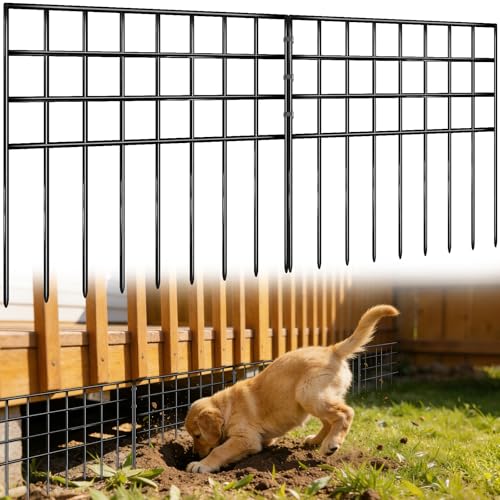
The best rabbit fence is a no-dig barrier that seats into the soil and seals the ground line, because rabbits get past fences by tunneling under far more often than by jumping over. Our top pick is the 32.5 ft (L) x 22 in (H) arched no-dig panel set, a rustproof metal system with spiked panels that sink into the ground and a snap-circle design that locks sections together without tools. For longer perimeters, the 42.5 ft no-dig panel kits cover more ground at a lower cost per foot, and the 17 in decorative panels suit flower-bed borders where light rabbit pressure is the main concern.
Why rabbit fencing matters
A rabbit will find the weakest point in a barrier within days. Left open at the base, even a tall fence lets a rabbit dig a shallow tunnel and slip under to reach vegetables, flower beds, or a lawn. The right fence closes that ground line. Whether you are keeping wild rabbits out of a garden or fencing off a safe area for a pet rabbit on grass, the goal is the same: no gap a rabbit can push through, dig under, or squeeze a head into.
What to look for
Focus on ground contact first. Look for panels that seat several inches into the soil, ideally angled outward at the base. Check how sections join, because the better sets reduce the gap between panels to about 1.25 to 1.5 inches so a rabbit cannot squeeze through. A powder-coated or galvanized finish keeps the metal from rusting through a season of rain and snow. For a pet rabbit, also check bar spacing, since a young or small rabbit can slip through or get its head stuck in a wide opening.
How we chose
We compared five no-dig fence systems on the specs that decide whether a rabbit gets through: seating depth, panel gap, coating, and total run length. We read manufacturer measurements and owner reports rather than making testing claims we cannot verify. Sets that reduced the ground gap and used a rust-resistant coating ranked highest, with the longer 42.5 ft kits favored where a large perimeter needed covering affordably and the shorter arched panels favored where looks mattered.
What to avoid
Skip fences with an open ground line or wide gaps between panels, since those are the first place a rabbit exploits. Avoid bare, uncoated metal that corrodes and weakens at the spikes. Do not rely on a garden fence alone to protect a pet rabbit from predators like foxes, cats, or birds of prey, because an outdoor rabbit still needs a covered, secure enclosure and supervision. And in rocky or compacted soil, plan to pre-dig a shallow trench so the spikes seat fully instead of leaving a lift a rabbit can work under.