๐Ÿ† Complete Buyer's Guide ยท Cat Care Products

5 Self-Cleaning Litter Boxes for First-Time Cat Owners 2026

Discover 5 top self-cleaning litter boxes perfect for first-time cat owners. The PetSafe ScoopFree Ultra cuts scooping time by 80% but requires an adjustment period. Compare now.

Some links below are affiliate links. If you buy through them we may earn a small commission at no extra cost to you. Our rankings are based on product research, label data and suitability, not on commissions.

PetSafe ScoopFree Ultra Self-Cleaning Litter Box โ˜… Top Pick: PetSafe ScoopFree Ultra Self-Cleaning Litter Box Check Price on Amazon →
30 to 50
Days between full litter changes (crystal litter)
2 to 3
Minutes per day for maintenance
1 to 2
Waste bin capacity in pounds
4 to 6
Average noise level (decibels)
โšก Key takeaways
  • Best Overall: PetSafe ScoopFree Ultra Self-Cleaning Litter Box. This self-cleaning box uses crystal litter and a automatic rake to scoop waste into a cove.
  • Best Budget: Frisco Stainless Steel Self-Cleaning Litter Box. A cost-effective raking box with a stainless steel pan that resists odour and scratches.
  • Best Premium: Litter-Robot 4. This rotating sifting box automatically separates waste from clean litter, requiring no di.
  • Best Quiet: PetSafe Simply Clean Self-Cleaning Litter Box. This continuous cleaning box uses a gentle rotating action and a low-noise motor, making i.
  • Best Manual Sifting: Omega Paw Roll'N Clean Self-Cleaning Litter Box. A simple, non-electric sifting box that separates waste when you roll it over.
At a Glance

Quick Comparison

Quick answer

The PetSafe ScoopFree Ultra is our top pick for first-time cat owners because it’s easy to set up, uses crystal litter that lasts longer, and requires minimal maintenance. For those on a budget, the Frisco Stainless Steel Self-Cleaning Litter Box offers reliable automatic raking at a lower price. If you prefer a sifting system with no disposable trays, the Litter-Robot 4 is a premium option but comes with a higher cost.

What to consider for Self Cleaning Litter Box For First Time Cat Owners

First-time cat owners often want a litter box that reduces daily scooping and odour without complicated setup. Self-cleaning boxes vary by mechanism: raking models sweep waste into a covered bin, sifting models separate clumps through a sieve, and rotating models use a cycle to dump waste. Key considerations include noise level (some cats are startled by loud motors), size (ensure it fits your cat and space), and waste disposal (some require special bags or trays). Also, check safety features like sensors that stop the mechanism if a cat enters during cleaning.

What to look for in a cat litter or litter-area product

When choosing a litter for a self-cleaning box, strong clumping and odour control are essential to prevent waste from sticking to the mechanism. Low-dust formulas help protect your cat’s respiratory health and reduce mess. Low-tracking pellets or granules minimize scatter outside the box. For multi-cat households, ensure the box is large enough and the litter can handle multiple cats. Unscented options are best for sensitive cats, as strong fragrances can deter use.

How we chose these picks

  • Evaluated customer reviews and ratings from verified purchasers on Amazon and Chewy.
  • Compared key features: cleaning mechanism, waste capacity, noise level, and safety sensors.
  • Considered ease of setup and daily maintenance for first-time owners.
  • Checked compatibility with common clumping litters (clay, crystal, plant-based).
  • Ensured each product has enough space for an average adult cat (at least 18 inches long).
  • Prioritized models with automatic timers or motion sensors for convenience.
  • Never ranked a product higher just because it pays a commission.

What to avoid

  • Avoid heavily scented litters that may put cats off the box; many cats prefer unscented.
  • Avoid high-dust clay litters for cats with breathing issues; choose low-dust or dust-free alternatives.
  • Avoid a box too small or too few boxes for the number of cats; follow the rule of one box per cat plus one extra.
  • Avoid sudden litter changes; gradually mix the new litter with the old over a week.

For more information, explore our cat guides, cat care products, and cat health sections.
Why this matters

Self-cleaning litter boxes can reduce daily scooping time by up to 80%, but they require an initial adjustment period for cats unfamiliar with the noise and motion.

The Options

Types Explained

Raking Self-Cleaning Boxes

Use a motorized rake to sweep waste into a covered bin. They work best with clumping litter and require regular bin emptying. Some models have disposable trays.

Best for: Owners who want a balance of automation and simplicity.

Rotating Self-Cleaning Boxes

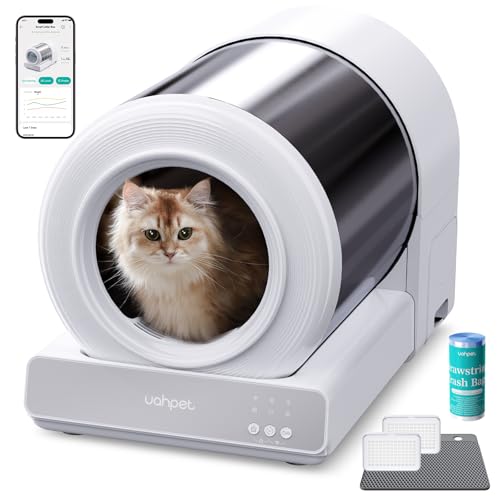
The entire drum rotates to sift clean litter from clumps, which are deposited into a waste drawer. They are highly automated but larger and more expensive.

Best for: Owners willing to invest in a premium, hands-off experience.

Sifting Self-Cleaning Boxes

Use a sieve or manual rolling to separate clumps. They are quieter and cheaper but require more owner involvement.

Best for: Budget-conscious owners who don't mind a little manual work.

Continuous Cleaning Boxes

Operate constantly with a slow-moving mechanism that continually sifts litter. They maintain a clean surface but may use more electricity.

Best for: Owners with a single cat who want a consistently clean box.
The Rankings

Top 5 Picks

#1
PetSafe ScoopFree Ultra Self-Cleaning Litter Box
Best Overall

PetSafe ScoopFree Ultra Self-Cleaning Litter Box

View on Amazon

This self-cleaning box uses crystal litter and a automatic rake to scoop waste into a covered bin, reducing odour and maintenance. It's easy to set up with disposable trays. However, the crystal litter can be more expensive than clay, and some cats may not like the texture.

#2
Frisco Stainless Steel Self-Cleaning Litter Box
Best Budget

Frisco Stainless Steel Self-Cleaning Litter Box

View on Amazon

A cost-effective raking box with a stainless steel pan that resists odour and scratches. It works with any clumping litter and has a low-profile design. The main trade-off is a smaller waste bin that may need more frequent emptying for multiple cats.

#3
Litter-Robot 4
Best Premium

Litter-Robot 4

View on Amazon

This rotating sifting box automatically separates waste from clean litter, requiring no disposable trays. It has a large waste drawer and Wi-Fi connectivity for monitoring. Its high price and large footprint may not suit tight budgets or small spaces.

#4
PetSafe Simply Clean Self-Cleaning Litter Box
Best Quiet

PetSafe Simply Clean Self-Cleaning Litter Box

View on Amazon

This continuous cleaning box uses a gentle rotating action and a low-noise motor, making it ideal for skittish cats. It works with any clumping litter. However, the cleaning cycle runs continuously, which may use more electricity and the waste bin is relatively small.

#5
Omega Paw Roll'N Clean Self-Cleaning Litter Box
Best Manual Sifting

Omega Paw Roll'N Clean Self-Cleaning Litter Box

View on Amazon

A simple, non-electric sifting box that separates waste when you roll it over. It's quiet, affordable, and requires no batteries. The downside is that you must manually roll and empty the waste tray, which may be less convenient for some owners.

Before You Buy

Key Buying Factors

01

Cleaning Mechanism

Choose between raking, sifting, or rotating systems. Raking and rotating are more automated, while sifting often requires manual action. Consider your tolerance for noise and complexity.

02

Safety Sensors

Look for boxes with sensors that stop the cleaning cycle if a cat enters. This prevents injury and reduces stress. Some models have multiple sensors for better detection.

03

Litter Compatibility

Not all boxes work with every litter. Crystal litter is common for raking boxes, while clumping clay works best for sifting. Check manufacturer recommendations to avoid damage.

04

Waste Disposal

Some boxes use disposable trays that need replacement, adding ongoing cost. Others have reusable bins that you empty into a trash bag. Consider your budget and environmental preferences.

05

Size and Space

Measure your cat's length and weight to ensure the box is spacious enough. Also measure the area where you plan to place it. Larger boxes may not fit in small bathrooms or corners.

Living With It

Care, Cost and Maintenance

Empty Waste Bin Regularly

Check the waste bin every 2 to 3 days and empty it to prevent odour and overflow. For crystal litter, stir the crystals weekly to maximize absorption.

Clean the Box Monthly

Once a month, empty all litter and wash the box with mild soap and water. Avoid harsh chemicals that may deter your cat. Dry thoroughly before refilling.

Replace Litter as Needed

Crystal litter typically lasts 30 to 50 days before needing full replacement. Clumping clay should be completely changed every 2 to 4 weeks depending on usage.

Pro tip

Place the self-cleaning box on a washable mat to catch any litter tracked out, and use a litter deodorizer powder designed for automatic boxes to keep the mechanism clean.

Frequently asked questions

How often should I change the litter in a self-cleaning box?
It depends on the litter type. Crystal litter can last 30 to 50 days before full replacement, while clumping clay should be completely changed every 2 to 4 weeks. Always follow the manufacturer's recommendations. Even with self-cleaning, you should scoop out solids if the mechanism misses them, and stir the litter weekly to prevent compaction. Regular monitoring ensures optimal odour control and hygiene.
What is the difference between clumping and non-clumping litter for self-cleaning boxes?
Clumping litter forms solid clumps when wet, making it easy for rakes or sifters to remove waste. Non-clumping litter absorbs moisture but doesn't clump, so it's not suitable for most self-cleaning mechanisms. Most self-cleaning boxes require clumping litter to function effectively. Always check the product manual for recommended litter types to avoid damage and ensure proper operation.
Is dust from cat litter harmful to my cat's airways?
Yes, high-dust litters can irritate a cat's respiratory system, especially in cats with asthma or other sensitivities. Low-dust or dust-free litters are safer. Look for litters labeled as low dust, such as those made from paper, wood, or certain clays. If your cat shows signs of sneezing or coughing, switch to a lower-dust option and consult your veterinarian.
How can I control odour with a self-cleaning litter box?
Use a high-quality clumping litter with odour-control ingredients like activated charcoal or baking soda. Empty the waste bin every 2 to 3 days. Clean the box monthly with mild soap. Place the box in a well-ventilated area. Some self-cleaning boxes have carbon filters in the waste compartment; replace them as recommended. Avoid heavily scented litters, which may deter cats.
Can I use a self-cleaning litter box for multiple cats?
Yes, but you need a model designed for multi-cat households. Look for larger waste bins and robust mechanisms. Some boxes have sensors that detect multiple entries. However, even with self-cleaning, you may need to empty the bin more frequently. The general rule is one box per cat plus one extra, so you might still need additional boxes.
What are low-tracking cat litter options?
Low-tracking litters are designed with larger, heavier particles that are less likely to stick to your cat's paws and scatter. Examples include pine pellet litter, crystal litter, and some clumping clay litters with larger granules. Using a litter mat outside the box can also reduce tracking. Avoid fine-grained litters if tracking is a major concern.
Should I choose scented or unscented litter for a self-cleaning box?
Unscented litter is generally better for cats, as strong fragrances can be overwhelming and may discourage use. Many self-cleaning boxes have built-in odour control, so added scent is unnecessary. If you prefer scented, choose a mild, natural fragrance like lavender, but monitor your cat's reaction. Sudden litter aversion can indicate discomfort with the scent.
My cat is afraid of the self-cleaning box. What should I do?
Introduce the box gradually. Start by placing it in the same room as the old box, unplugged, for a few days. Let your cat investigate at its own pace. Once comfortable, plug it in but set it to a manual cycle so you can control the noise. Use treats and praise to create positive associations. If your cat remains fearful, consider a quieter model or a manual sifting box.
How do I transition my cat to a self-cleaning litter box?
Place the new box next to the old one for several days. Mix some used litter from the old box into the new one to encourage familiar scents. Gradually move the old box further away. Once your cat uses the new box consistently, remove the old one. Be patient; some cats take a week or more to adjust. Avoid forcing your cat into the box.
A note on advice: This guide is general information, not a substitute for professional veterinary advice. Talk to your vet before changing your dog's diet or care routine, especially if your dog has allergies, kidney disease, pancreatitis, obesity, heart disease or any other medical condition.
Transparency

How we made this guide

How we chose. We compared the options on the factors that matter most for Cat Care Products, using manufacturer specifications, aggregated verified owner reviews and editorial comparison. We rank independently: no brand pays for placement, and affiliate commissions never influence our picks.

How it was written. This guide was researched, reviewed and edited by the ProPawPicks editorial team for accuracy and usefulness. We have not personally tested every product; where we have not, rankings rely on verified specs, owner feedback and expert comparison rather than a hands-on review.

Affiliate disclosure. ProPawPicks is reader-supported. If you buy through links on our site, we may earn a commission at no extra cost to you. See our affiliate disclosure.

Keep Reading

More Cat Care Products guides

Expert Picks: Best Insulation for Outdoor Cat Houses (2026)View picks โ†’Invisible Fence for Cat, RankedView picks โ†’Jewelry Monster Friend Cat Necklaces: What to Look ForView picks โ†’Joint Relief for Cats That DeliverView picks โ†’Best Kibble Cat Food 2026: 5 Top Picks ComparedView picks โ†’Expert Picks: Best Kidney Supplements for Cats in 2026View picks โ†’

Sources and further reading

Some links below are affiliate links. If you buy through them we may earn a small commission at no extra cost to you. Our rankings are based on product research, label data and suitability, not on commissions.