Quick answer
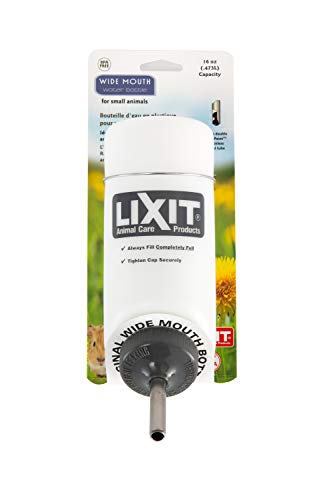
The safest way to water a rabbit is to offer a heavy, tip-proof bowl and a clean bottle together, then watch which one your rabbit actually uses. Many rabbits drink more and faster from a bowl, which helps gut and urinary health, while a bottle keeps water free of hay and bedding. If you rely on a bottle, choose good capacity, a reliable no-drip valve, and a secure mount, and check it every single day. Our top pick is the 16 ounce Lixit Weather Resistant bottle for its steady double ball valve and easy filling.
Bottle or bowl for a rabbit?
Honestly, a bowl often wins. Rabbit vets and welfare groups note that rabbits drink more, faster, and in a more natural head-down posture from a heavy ceramic bowl than from a narrow sipper tube. Good hydration matters because rabbits are prone to gut slowdown and urinary sludge when they drink too little. A bottle still has one real advantage: it keeps the water clean from hay, bedding, and droppings. The best answer for most homes is both. Offer a heavy bowl for volume and a bottle as clean backup, and let your rabbit choose.
What to look for
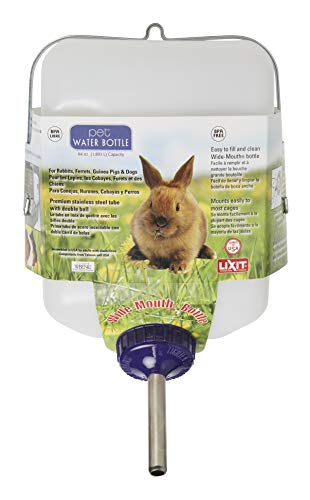
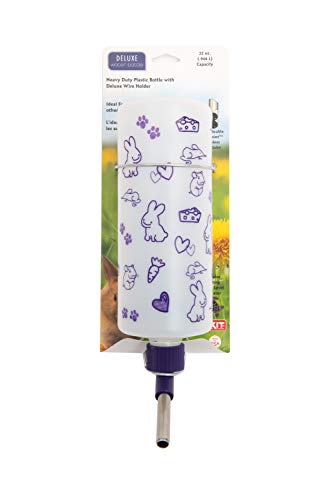
Start with capacity, because rabbits drink far more than people expect. A single rabbit needs at least a 32 ounce bottle, and a large breed or a pair does better with 64 ounces so you are not refilling twice a day. Next comes the valve. A double ball-bearing nozzle resists dripping far better than a single-ball spout that soaks bedding and runs dry overnight. Mount it securely at nose height, roughly shoulder level, so your rabbit can drink without straining. Finally, favor glass or thick chew-resistant plastic, since rabbits gnaw thin bottles until they crack and leak.
How we chose
We compared widely available rabbit bottles on capacity, valve design, mount strength, and how easy each is to clean. We favored models with wide mouths for quick weekly scrubbing and double valves that hold a vacuum without weeping. Weather resistance mattered for hutch rabbits facing cold snaps, since a bottle that cracks or freezes fails exactly when it is coldest. We leaned on established welfare guidance from groups like the ASPCA and rabbit-focused vets, which stresses constant access to fresh water and treats a bowl as a valid or better primary source. Bottles that only suited tiny animals, dripped in basic checks, or used flimsy clips did not make the list.
What to avoid
Avoid tiny hamster-sized bottles, which empty too fast for a heavy-drinking rabbit. Skip single-ball valves that drip and thin plastic your rabbit can chew through. Do not mount the bottle too high or too low, and never treat a bottle as set-and-forget. A stuck valve can silently leave a rabbit without water for a whole day, which is dangerous, so check flow daily and clean regularly to stop algae from building up inside the tube.