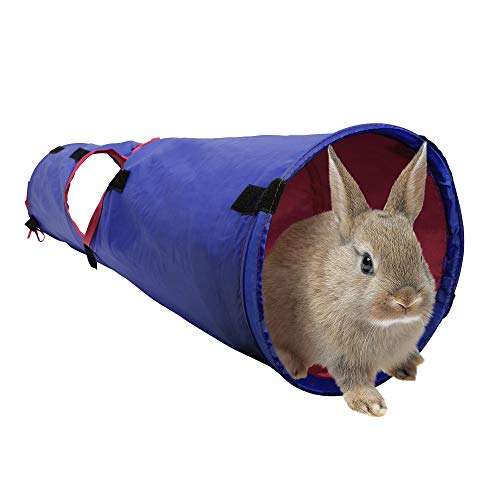
Quick Answer: The Best Tunnel for an Abyssinian Guinea Pig in 2026
Guinea pigs are prey animals, and an Abyssinian with its swirling rosette coat is no exception. The best tunnel is one that is wide enough for a chunky adult to pass through without squeezing, ideally with two openings so your pig never feels cornered or trapped. For most homes a soft fleece tunnel with a shapeable frame is the sweet spot, while a wipe clean plastic tube wins for durability and a cardboard tube is a cheap, chewable extra. Aim for roughly 8 to 10 inches of internal width and offer at least two hideouts so a startled pig always has somewhere to dash.
Why a Tunnel Matters for a Prey Animal
In the wild, guinea pigs survive by staying near cover and bolting into it at the first sign of danger. A house guinea pig keeps that instinct, so a cage with open floor and nowhere to hide leaves many pigs on edge, freezing or scattering when you approach. Adding tunnels gives your Abyssinian a place to retreat, which lowers day to day stress and often makes a shy pig bolder over time. A tunnel with an entrance and an exit is best of all, because a pig that can always see a way out feels far safer than one facing a dead end. For a social, easily startled pet, that sense of control is a small change that can make a big difference to how settled it feels.
What to Look for in a Guinea Pig Tunnel
Start with width. A cramped tube that forces a chunky pig to reverse out is stressful and rarely used, so favor a wide bore of around 8 to 10 inches. Look for two openings so the tunnel reads as a safe pass through rather than a trap. Material matters for an Abyssinian, whose wiry rosettes can catch on rough seams, so smooth fleece, fabric, grass or seagrass, or smooth edged plastic all work well. Prioritize anything wipe clean or machine washable, because hay, droppings and the odd spill build up fast. Finally, check ventilation, since mesh ends or open sides stop a tunnel from getting stuffy in a warm room.
How We Chose These Tunnels
We did not lab test these products, and we are upfront about that. Instead we compared widely available tunnels on the specifications that actually matter for a rosette coated guinea pig: internal width, number of openings, material safety, and how easy each is to clean. We favored designs with two openings and smooth surfaces, and we flagged where a fabric option needs supervision. We also weighed owner reported longevity, since a determined chewer can shorten the life of any fabric tunnel. Our picks span fleece, fabric, plastic and cardboard so there is a sensible option whatever your budget and cleaning routine.
What to Avoid
Skip anything too narrow for an adult pig to turn around in, and avoid single ended tubes that can leave a nervous pig feeling boxed in. Watch out for loose threads, frayed seams or rough textures that can snag an Abyssinian’s coat. Fabric tunnels are wonderful enrichment, but a dedicated chewer may swallow threads or stuffing, so supervise fabric with known nibblers and switch to plastic or fresh cardboard if you see damage. Steer clear of printed or glued cardboard, and never leave a torn tunnel in the cage. If your guinea pig avoids all hideouts, stops eating, or seems unwell, that is a vet question rather than a shopping one, since behavior changes can signal a health problem.