Quick answer
Chinchillas genuinely enjoy tunnels and tubes, and they love to run and hide through them, but because chinchillas are relentless chewers the material matters more than the shape. Choose a metal tunnel or a thick untreated wood or willow tunnel that doubles as a chew toy. For most cages the Niteangel Natural Wooden Tunnel in untreated pine is the safest all-round pick, with the hand-woven Ware Willow Twig Tunnel a great foraging companion. Skip thin plastic tubes, which get destroyed fast and turn into swallow-sized pieces, and skip fabric tunnels your chinchilla can chew and ingest. Pair whichever tunnel you choose with ledges and vertical space, since a tunnel is one part of a good chinchilla setup rather than the whole thing.
Why chew-safe tunnels matter
A chinchilla’s teeth never stop growing, so it will gnaw almost anything you put in the cage. A metal tunnel survives that abuse and stays smooth, while thick pine or willow gets chewed slowly and safely, giving the teeth useful wear. Plastic is the problem: it splinters into sharp shards, and swallowed plastic is a real intestinal blockage risk. Fabric and fleece tunnels carry the same danger, because a chinchilla that chews loose threads can ingest fibers. If you would not want it eaten, do not put it in the cage.
What to look for
Size first: the tunnel should be wide enough, roughly 4 to 6 inches across, for an adult chinchilla to pass through and turn around without getting stuck. Favor untreated, kiln-dried wood with no glue, paint, or varnish, or food-safe metal with no sharp seams. Multiple openings stop a nervous chinchilla feeling trapped. Because chinchillas need a dry environment, pick something you can wipe down or that is cheap enough to replace when soiled.
How we chose
We prioritized material safety over looks, ranking chew-proof metal and thick untreated wood or willow above anything plastic or fabric. We checked internal width against adult chinchilla size, looked for stable openings that will not collapse, and favored tunnels that also work as chew enrichment. Honestly, a tunnel is just one item among many. Chinchillas are athletic jumpers and climbers that need ledges, platforms, and real vertical space in a tall cage, so we treat tunnels as one layer of enrichment, not the centerpiece.
What to avoid
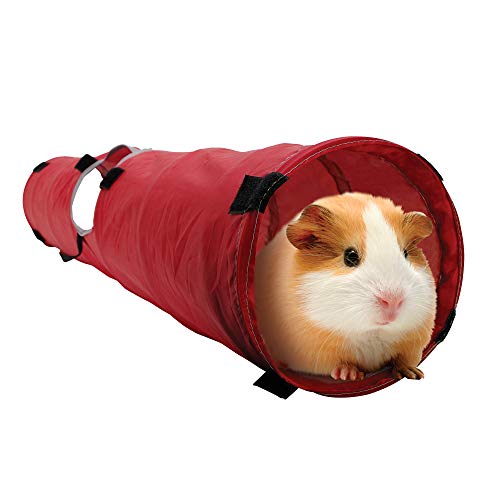
Avoid thin plastic tubes like basic connector tunnels as a chew target, since a determined chinchilla will shred them; use hard plastic only if it is out of biting reach. Avoid fabric and fleece tunnels for chewers because ingested fibers can cause blockages. Skip anything with treated or painted wood, sharp mesh, or gaps that catch toes. Remember that wood and willow tunnels are meant to be gnawed down over time; replacing a chewed one is normal, not a defect. Finally, do not rely on a single tunnel for enrichment; without ledges, platforms, and height to jump and climb, an active chinchilla will get bored no matter how nice the tunnel is.