Quick answer
The safest vitamin C for a Teddy guinea pig comes from food first, not a bottle. Feed fresh vitamin C rich vegetables such as bell pepper every day, alongside fresh, correctly stored vitamin C fortified guinea pig pellets. If your pig still needs extra, a plain chewable vitamin C tablet dosed for guinea pigs, like Oxbow Natural Science Vitamin C, is a better choice than liquid drops added to the water bowl. Most healthy pigs on a good fresh diet do not need any supplement at all.
Why guinea pigs need vitamin C
Guinea pigs cannot make their own vitamin C, unlike most animals, so every bit has to come from their diet. An adult Teddy needs roughly 10 to 30 mg per day, and more if she is pregnant, ill, or recovering. Without enough, pigs develop scurvy, which shows as a rough coat, swollen or sore joints, reluctance to move, poor appetite, weight loss, and bleeding gums. Because the dense Teddy coat can hide early changes, watch behavior closely rather than relying on how the fur looks, and call an exotics vet if you see these signs. Getting the daily intake right is a genuine health issue, not an optional extra.
What to look for
Pick a plain vitamin C product with no added sugar, no artificial colors, and a clear milligram amount per tablet so you can dose it accurately. Scored or small tablets make it easy to give a fair share of 10 to 30 mg, and a chewable format your pig will accept by hand matters more than a big headline number. For pellets, buy small dated bags and use them quickly, since vitamin C degrades within a few months of opening, and store them cool and dry so the stated level stays meaningful. Avoid combined multivitamins that could push other nutrients too high, and steer clear of anything that only works by dosing the water bowl.
How we chose
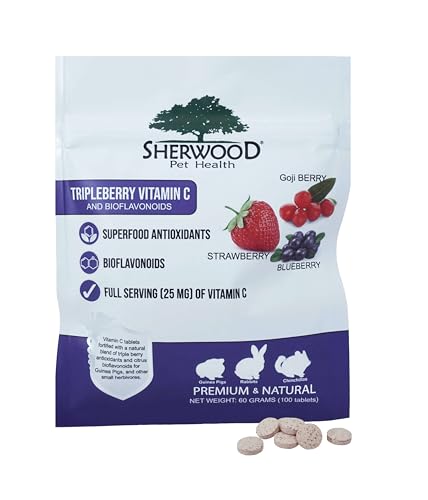
We compared widely sold options such as Oxbow Natural Science Vitamin C, the Sherwood Tripleberry tablets, and common chewable formats on dose clarity, ingredient quality, and how easy each is to portion for a small mouth. We favored chewable tablets and diet based vitamin C over water additives, and we flagged any product that relies on the water bowl or hides sugar in the base. We also gave weight to freshness, since a small dated bag used quickly delivers a truer dose than a large tub that sits open for months.
What to avoid
Skip liquid vitamin C drops added to drinking water. Vitamin C breaks down fast in water, so the real dose is unpredictable, and the changed taste can make a pig drink less, which risks dehydration. Do not massively over supplement either; more is not better. Keep the daily amount near 10 to 30 mg unless your vet advises more for pregnancy, illness, or recovery, and let a proper fresh diet do most of the work.