๐Ÿ† Complete Buyer's Guide ยท Cat Food

Best Under 10 Lb Cat Food for Weight: 5 Picks for Any Budget

Find the best weight management cat food for cats under 10 lbs. Hill's Science Diet Perfect Weight leads our picks. These foods boost metabolism with L-carnitine and prevent overeating.

Some links below are affiliate links. If you buy through them we may earn a small commission at no extra cost to you. Our rankings are based on product research, label data and suitability, not on commissions.

Hill's Science Diet Perfect Weight Adult Dry Cat Food, Chicken & Rice Recipe โ˜… Top Pick: Hill's Science Diet Perfect Weight Adult Dry Cat Foโ€ฆ Check Price on Amazon →
5 to 8 oz
Daily wet food for a 10 lb cat on a weight loss plan
30 to 40%
Ideal protein content (dry matter) for weight management
10 to 15%
Ideal fat content (dry matter) for weight loss
0.1%
Minimum taurine content (dry matter) recommended by AAFCO
โšก Key takeaways
  • Best Overall: Hill's Science Diet Perfect Weight Adult Dry Cat Food, Chicken & Rice Recipe. This formula is specifically designed for weight management with controlled calories and L.
  • Best Wet Food: Royal Canin Feline Health Nutrition Thin Slices in Gravy Canned Cat Food. Royal Canin's wet food provides a balanced diet with moderate calories and high moisture t.
  • Best Budget: Purina Pro Plan Weight Management Chicken & Rice Formula Dry Cat Food. This affordable option offers real chicken first, with reduced fat and calories.
  • Best for Sensitive Stomach: Blue Buffalo Healthy Gourmet Salmon Entree Natural Adult Wet Cat Food. Made with salmon as the first ingredient, this grain-free wet food is gentle on digestion.
  • Best High Protein: Wellness CORE Grain-Free Reduced Fat Turkey & Duck Recipe Dry Cat Food. This high-protein, low-fat formula helps cats feel full while preserving muscle.
At a Glance

Quick Comparison

Quick answer

For most cats under 10 lbs needing weight management, our top pick is Hill’s Science Diet Perfect Weight Adult Dry Cat Food. It provides precise calorie control with high-quality protein to maintain lean muscle. If your cat prefers wet food or has a sensitive stomach, consider the runner-up options below.

What to consider for Weight Management Cat Food For Cats Under 10 Lbs

Small cats have higher metabolic rates per pound, so calorie density matters. A weight management formula should be lower in calories but still rich in protein to preserve muscle mass. Portion sizes are critical; even a few extra kibbles can add up. Look for foods with L-carnitine to support fat metabolism and controlled fat levels. Also consider your cat’s life stage: kittens need more calories, while seniors may require joint support.

What to look for in a cat food

First, ensure the food has an AAFCO statement confirming it is complete and balanced for your cat’s life stage (adult, kitten, or all life stages). The first ingredient should be a named meat source (e.g., chicken, turkey, fish) to provide animal protein. Cats require taurine, an essential amino acid; check that it is added. For weight management, look for moderate protein (30-40% dry matter) and lower fat (10-15% dry matter). Wet food can help with hydration and urinary health, but dry food may be more convenient for portion control. Always choose a formula appropriate for your cat’s age and health condition.

How we chose these picks

  • Evaluated calorie content per cup and per can to ensure suitability for weight loss in small cats.
  • Checked that the first ingredient is a named animal protein source.
  • Confirmed AAFCO nutritional adequacy statement for adult maintenance or all life stages.
  • Reviewed ingredient lists for added taurine and L-carnitine.
  • Considered customer feedback on palatability and weight loss results.
  • Prioritized brands with a history of quality control and feeding-data reviews.
  • Compared price per serving to ensure value.
  • Never ranked a product higher just because it pays a commission.

What to avoid

  • Avoid foods with unnamed meat sources (e.g., “meat meal”) or very low protein content (below 30% dry matter).
  • Steer clear of recipes that do not list added taurine; deficiency can cause serious health issues.
  • Do not default to all-life-stages food for a senior or kitten without checking calorie density and nutrient levels.
  • Never switch your cat’s food abruptly; transition over 7 to 10 days to avoid digestive upset.

For more cat care advice, visit our cat guides or explore cat food and cat health resources.

Why this matters

Cats under 10 lbs have a higher metabolic rate per pound, so even small overfeedings can cause weight gain. Weight management foods for these cats often contain L-carnitine to aid fat metabolism and are portion-controlled to prevent overeating.

The Options

Types Explained

Dry Kibble

Convenient and shelf-stable, dry food allows precise portion measurement. Many weight management formulas are available in kibble form with controlled calories and added L-carnitine.

Best for: Owners who prefer easy feeding and storage, and cats that eat dry food well.

Wet Canned Food

High moisture content helps with hydration and urinary health. Wet food is often lower in calories per volume, making it easier to create a calorie deficit.

Best for: Cats that need extra water intake, picky eaters, or those on a strict calorie restriction.

Grain-Free Formulas

These replace grains with alternative carbohydrates like potatoes or peas. Some cats may digest them better, but grain-free does not guarantee lower calories.

Best for: Cats with grain sensitivities or owners who prefer a grain-free diet.

Prescription Diets

Formulated by veterinarians for specific medical conditions like obesity or diabetes. They require a vet's approval and are often more expensive.

Best for: Cats with health issues that require strict dietary management under veterinary supervision.
The Rankings

Top 5 Picks

#1
Hill's Science Diet Perfect Weight Adult Dry Cat Food, Chicken & Rice Recipe
Best Overall

Hill's Science Diet Perfect Weight Adult Dry Cat Food, Chicken & Rice Recipe

View on Amazon

This formula is specifically designed for weight management with controlled calories and L-carnitine to help burn fat. It has high-quality chicken protein to maintain lean muscle. However, some cats may not like the kibble size, and it is more expensive than some alternatives.

#2
Royal Canin Feline Health Nutrition Thin Slices in Gravy Canned Cat Food
Best Wet Food

Royal Canin Feline Health Nutrition Thin Slices in Gravy Canned Cat Food

View on Amazon

Royal Canin's wet food provides a balanced diet with moderate calories and high moisture to support urinary health. It is palatable even for picky eaters. A limitation is that it contains grains, which some owners prefer to avoid, and it is pricier per serving.

#3
Purina Pro Plan Weight Management Chicken & Rice Formula Dry Cat Food
Best Budget

Purina Pro Plan Weight Management Chicken & Rice Formula Dry Cat Food

View on Amazon

This affordable option offers real chicken first, with reduced fat and calories. It includes natural prebiotic fiber for digestive health. However, it contains corn and wheat, which may not suit sensitive cats, and some cats may not lose weight as effectively as with premium formulas.

#4
Blue Buffalo Healthy Gourmet Salmon Entree Natural Adult Wet Cat Food
Best for Sensitive Stomach

Blue Buffalo Healthy Gourmet Salmon Entree Natural Adult Wet Cat Food

View on Amazon

Made with salmon as the first ingredient, this grain-free wet food is gentle on digestion and low in calories. It contains no artificial preservatives. A downside is that it has a strong fish smell that some cats love but owners may find unpleasant, and it is not specifically formulated for weight loss.

#5
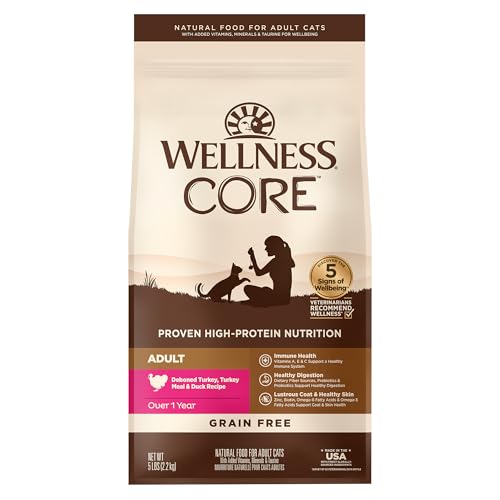
Wellness CORE Grain-Free Reduced Fat Turkey & Duck Recipe Dry Cat Food
Best High Protein

Wellness CORE Grain-Free Reduced Fat Turkey & Duck Recipe Dry Cat Food

View on Amazon

This high-protein, low-fat formula helps cats feel full while preserving muscle. It includes L-carnitine and probiotics. However, the high protein content may not be suitable for cats with kidney issues, and it is one of the more expensive options.

Before You Buy

Key Buying Factors

01

Calorie Density

Look for foods with 300 to 400 kcal per cup for dry food, or 150 to 200 kcal per 5.5 oz can for wet food. Lower calorie density helps with portion control and gradual weight loss.

02

Protein Quality

Choose a named meat as the first ingredient (chicken, turkey, fish). Adequate protein (30-40% dry matter) helps maintain lean body mass while losing fat.

03

Fiber Content

Moderate fiber (3-5% dry matter) can increase satiety. Ingredients like beet pulp or psyllium are beneficial. Too much fiber may reduce nutrient absorption.

04

Life Stage Appropriateness

Ensure the food is formulated for adult maintenance or all life stages. Kittens need higher calories; seniors may need joint support. Weight management foods are typically for adult cats.

05

Form: Dry vs. Wet

Wet food provides moisture and is often lower in calories per gram, aiding weight loss. Dry food is more convenient for portion control. A combination can work well.

Living With It

Care, Cost and Maintenance

Portion Control

Use a kitchen scale to measure food accurately. Follow the feeding guide on the package, but adjust based on your cat's weight loss progress. A typical weight loss plan reduces calories by 20-30% from maintenance. Divide daily food into multiple small meals to prevent hunger.

Transitioning Foods

When switching to a weight management diet, gradually mix the new food with the old over 7 to 10 days. Start with 25% new food and 75% old, then increase by 25% every few days. This reduces the risk of digestive upset and helps your cat accept the new taste.

Monitoring Weight

Weigh your cat weekly using a baby scale or at the vet. Aim for a weight loss of 0.5 to 2% of body weight per week. If weight loss stalls, reduce portions slightly or increase activity. Consult your veterinarian if you have concerns about the rate of loss.

Pro tip

Use a digital kitchen scale to weigh your cat's food portions in grams rather than relying on volume measurements, as kibble size and density can vary significantly between brands.

Frequently asked questions

How much should I feed my cat for weight management?
The amount depends on the food's calorie density and your cat's current weight. For a 10 lb cat on a weight loss plan, a typical dry food portion is about 1/3 to 1/2 cup per day, split into two meals. For wet food, about 5 to 8 ounces total daily. Always check the feeding guide on the package, but adjust based on your cat's progress. Consult your vet for a precise calorie target.
Is wet or dry food better for weight loss?
Both can work, but wet food has advantages: it is higher in moisture, which helps with satiety and urinary health, and often lower in calories per gram. Dry food is easier to portion and more convenient. Many owners use a combination: wet food for meals and a small amount of dry for treats. The key is total calorie control regardless of form.
Should I choose grain-free food for my cat?
Grain-free is not necessary for most cats unless they have a diagnosed grain allergy. Some grain-free formulas use high-carb alternatives like potatoes, which may not aid weight loss. Focus on protein and fat content rather than grain presence. Ensure the food still contains adequate taurine, as some grain-free diets have been linked to taurine deficiency in the past.
Can kittens eat weight management cat food?
No, kittens need higher calories, protein, and specific nutrients for growth. Weight management foods are too low in calories and may lack essential nutrients like DHA. Feed a kitten-formulated food until they reach adulthood (around 1 year). If a kitten is overweight, consult your vet for guidance rather than using an adult weight management diet.
What should I feed a senior cat for weight management?
Senior cats (7+ years) may have lower metabolism and require fewer calories, but they also need higher protein to prevent muscle loss. Look for a senior formula with moderate fat, added joint supplements (glucosamine, chondroitin), and easy-to-digest ingredients. Always check with your vet, as seniors may have underlying health issues like kidney disease that require special diets.
How does weight management cat food support urinary health?
Many weight management formulas include controlled mineral levels (magnesium, phosphorus) and promote a slightly acidic urine pH to reduce crystal formation. Wet food increases water intake, which dilutes urine and flushes the bladder. However, not all weight management foods are specifically formulated for urinary health; if your cat has a history of urinary issues, choose a diet designed for that purpose.
Can weight management food help my cat lose weight without exercise?
Diet is the most important factor for weight loss, but exercise helps maintain muscle mass and boosts metabolism. Even without structured exercise, reducing calories will lead to weight loss. However, combining portion control with play sessions (e.g., laser pointer, feather toys) can improve overall health and make weight loss more sustainable.
What if my cat is a picky eater and refuses weight management food?
Try mixing a small amount of the new food with their current favorite, gradually increasing the proportion. Warming the food slightly can enhance aroma. Some cats prefer wet food over dry. If your cat still refuses, consider a different protein source or brand. Avoid adding high-calorie toppers, as they can sabotage weight loss. Consult your vet if the refusal persists.
Is it safe to free-feed weight management food?
No, free-feeding is not recommended for weight management because it makes calorie control difficult. Even low-calorie foods can lead to overeating if left out all day. Instead, measure portions and feed at set meal times. This also allows you to monitor your cat's appetite and detect any changes that might indicate illness.
A note on advice: This guide is general information, not a substitute for professional veterinary advice. Talk to your vet before changing your dog's diet or care routine, especially if your dog has allergies, kidney disease, pancreatitis, obesity, heart disease or any other medical condition.
Transparency

How we made this guide

How we chose. We compared the options on the factors that matter most for Cat Food, using manufacturer specifications, aggregated verified owner reviews and editorial comparison. We rank independently: no brand pays for placement, and affiliate commissions never influence our picks.

How it was written. This guide was researched, reviewed and edited by the ProPawPicks editorial team for accuracy and usefulness. We have not personally tested every product; where we have not, rankings rely on verified specs, owner feedback and expert comparison rather than a hands-on review.

Affiliate disclosure. ProPawPicks is reader-supported. If you buy through links on our site, we may earn a commission at no extra cost to you. See our affiliate disclosure.

Keep Reading

More Cat Food guides

Interactive Cat Toys That Mimic Prey: 2026 Top PicksView picks โ†’Interactive Cat Feeders That Cats Actually Use: 2026 Top 4View picks โ†’Iprimio Cat Litter Scoops, ReviewedView picks โ†’Cat Deterrent Mats That Actually Work: 5 ReviewedView picks โ†’Best Kh Manufacturing Cat Trees 2026: 5 Sturdy Picks for Large HomesView picks โ†’Best Kibble Cat Food 2026: 5 Top Picks ComparedView picks โ†’

Sources and further reading

Some links below are affiliate links. If you buy through them we may earn a small commission at no extra cost to you. Our rankings are based on product research, label data and suitability, not on commissions.