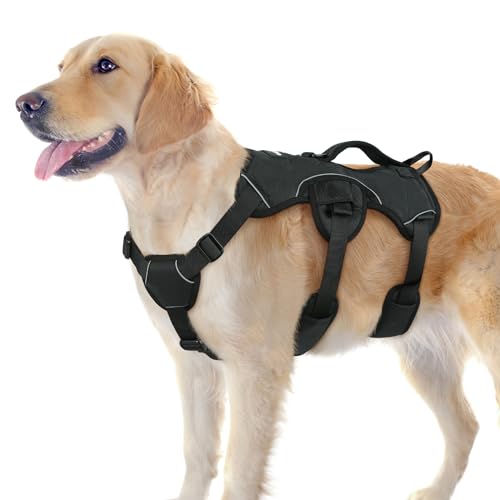
Secure your escape artist with the top 5 harnesses of 2026. We compare the best, including the Ruffwear Web Master, which uses a three-point system to prevent backing out.
Some links below are affiliate links. If you buy through them we may earn a small commission at no extra cost to you. Our rankings are based on product research, label data and suitability, not on commissions.
The best escape-proof dog harness for most escape artists is the Ruffwear Web Master. Its three adjustment points and strong buckles make it extremely secure. For a budget option, the Rabbitgoo Escape Proof Harness offers a similar design at a lower price. The 2 Hounds Design Freedom No-Pull Harness is ideal for dogs that pull, while the Julius-K9 IDC Powerharness suits large, strong dogs. The Blue-9 Balance Harness is great for training and everyday use.
What to consider for Top 5 Escape Proof Dog Harnesss For Escape Artists
Escape artist dogs require a harness with a secure, snug fit that prevents backing out or slipping the straps. Look for a harness with at least two adjustment points (neck and chest), and ideally a third around the belly. The material should be strong nylon or polyester with reinforced stitching. Buckles should be heavy-duty plastic or metal. A handle on the back gives you extra control if your dog tries to bolt. Reflective stitching improves visibility in low light. Avoid harnesses with flimsy clips or limited adjustability, as these are common failure points for escape artists.
What to look for in a gear item (harness, collar, leash or muzzle)
Correct fit and sizing are critical: measure your dog’s neck and chest girth and follow the manufacturer’s sizing chart. Durable hardware and materials: look for rust-resistant buckles and strong D-rings. Safety features: escape-resistant design with a martingale loop or double-belly strap; no-choke construction (front clip for no-pull); reflective elements for visibility. Comfort and padding: a padded chest plate and soft edges prevent chafing. No-pull design: a front clip discourages pulling without causing discomfort. For collars, ensure a quick-release or breakaway for safety. For leashes, choose a sturdy 4-6 foot leash with a comfortable handle. For muzzles, ensure pant room and proper fit.
How we chose these picks
We evaluated harnesses based on escape resistance features such as multiple adjustment points and secure buckles.
We considered customer reviews and ratings from verified purchasers on Amazon.
We prioritized brands with a reputation for quality and durability.
We compared price points to offer options for different budgets.
We looked for safety features like reflective materials and no-pull options.
We checked sizing ranges to ensure options for small to large dogs.
Never ranked a product higher just because it pays a commission.
The most effective escape-proof harnesses use a three-point adjustment system that secures the neck, chest, and belly, making it nearly impossible for a dog to back out. This design is common in top-rated models like the Ruffwear Web Master.
The Options
Types Explained
Step-In Harness
The dog steps into the harness, and it clips over the back. Easy to put on but may be less secure for escape artists.
Best for: Dogs that are calm and not prone to backing out.
Over-the-Head Harness
Slips over the dog's head and buckles around the chest. Common and adjustable, but some dogs dislike having something go over their head.
Best for: Most dogs with proper training and desensitization.
Vest Harness
Covers more of the dog's torso with a padded vest. Offers great security and comfort, but can be hot in summer.
Best for: Escape artists and dogs that pull, as the vest distributes pressure evenly.
No-Pull Harness
Features a front clip that redirects the dog's body when they pull. Discourages pulling without choking. Some designs also include a martingale loop.
Best for: Dogs that pull on leash and need training support.
The Rankings
Top 5 Picks
#1
Best Overall
Ruffwear Web Master Harness
View on Amazon
The Ruffwear Web Master is a top pick for escape artists due to its three adjustment points that ensure a custom, secure fit. The padded chest and belly straps are comfortable, and the strong aluminum V-ring and reinforced webbing withstand pulling. However, it is pricier than some alternatives, and the fit can be tricky for dogs with deep chests.
This harness features a unique martingale loop that tightens gently when the dog pulls, discouraging escape. The front and back clips give you control options. It's well-padded and comfortable. One limitation is that the martingale loop may not be secure enough for dogs that are determined to back out, and the sizing can be confusing.
Built for strength, the Julius-K9 IDC Powerharness has a heavy-duty handle, reflective strips, and a chest plate that distributes pressure. The buckles are robust and the material is durable. However, it is bulky and may not fit dogs with narrow chests well. The price is also on the higher side.
The Rabbitgoo harness offers a similar design to the Ruffwear at a fraction of the cost. It has two metal D-rings, front and back clips, and adjustable straps. The padding is adequate for most dogs. The downside is that the buckles are plastic and may not be as durable over time, and the fit can be less precise for very small or large dogs.
The Blue-9 Balance Harness is designed for training with a front clip that discourages pulling and a back clip for casual walks. The five adjustment points allow a custom fit that prevents escape. It is lightweight and comfortable. However, it lacks a handle for control, and the thin straps may not be ideal for very strong pullers.
Look for a harness with multiple adjustment points (neck, chest, belly) to prevent slipping. A martingale loop or double-belly strap adds security. Avoid harnesses that rely solely on elastic or thin straps.
02
Hardware Durability
Check that buckles and D-rings are made of strong metal or heavy-duty plastic. Reinforced stitching at stress points is essential. Weak hardware is a common failure point for escape artists.
03
Comfort and Padding
Padded chest and belly panels reduce chafing and distribute pressure. Breathable mesh lining helps in warm weather. A well-padded harness encourages your dog to accept wearing it.
04
Sizing and Fit
Measure your dog's neck and chest girth accurately. Follow the manufacturer's sizing chart. A harness that is too loose can be escaped; too tight restricts movement. Some brands offer multiple sizes or adjustable straps.
05
Safety Features
Reflective stitching or trim improves visibility in low light. A handle on the back gives you extra control. Ensure the harness does not restrict the dog's shoulders or neck movement.
Living With It
Care, Cost and Maintenance
Cleaning
Most harnesses can be hand washed with mild soap and water. Air dry away from direct heat. Avoid machine washing unless the manufacturer specifies it, as it can damage padding and hardware.
Inspection
Regularly check for frayed straps, loose stitching, or cracked buckles. Replace the harness if any component is compromised. Pay special attention to D-rings and clip points.
Storage
Store the harness in a dry place away from direct sunlight. Moisture can cause metal parts to rust, and UV rays can weaken nylon webbing. Hang or fold neatly to maintain shape.
Pro tip
When fitting a harness, adjust it while your dog is standing and then check again when they are sitting or lying down, as the fit can change with posture. A snug fit at all times is key to preventing escape.
Frequently asked questions
How do I measure my dog for an escape-proof harness?
Use a flexible measuring tape. Measure the neck girth at the base of the neck where a collar would sit. Measure the chest girth at the widest part behind the front legs. For a secure fit, you should be able to fit two fingers between the harness and your dog. Always refer to the manufacturer's sizing chart, as sizes vary by brand. If your dog is between sizes, choose the larger size and adjust the straps for a snug fit.
Are no-pull harnesses effective for escape artists?
No-pull harnesses can help reduce pulling, but they are not necessarily escape-proof. Some no-pull designs, like those with a front clip, can actually make it easier for a determined dog to slip out if the fit is not perfect. For escape artists, look for a harness with multiple adjustment points and a secure closure system. A martingale loop can also help prevent backing out. Combine a no-pull harness with proper training for best results.
What makes a harness truly escape-proof?
An escape-proof harness typically has three or more adjustment points (neck, chest, and belly) to ensure a snug fit that the dog cannot wriggle out of. Strong, secure buckles that are difficult for the dog to manipulate are essential. Some designs include a martingale loop that tightens slightly when the dog pulls, preventing them from backing out. The material should be durable and the stitching reinforced. No harness is 100% escape-proof for every dog, but these features greatly reduce the risk.
Is a harness safer than a collar for an escape artist?
Yes, a harness is generally safer for escape artists because it distributes pressure across the chest and back, reducing the risk of neck injury. Collars can put pressure on the trachea and are easier for a dog to slip out of, especially if they pull or back up. A well-fitted harness gives you more control and is harder to escape. However, a harness must be properly fitted to prevent escape. Always use a harness for dogs that are prone to slipping collars.
What materials are best for durability?
Look for harnesses made from heavy-duty nylon or polyester webbing. These materials are strong, resistant to abrasion, and dry quickly. Reinforced stitching with nylon thread adds strength. Hardware should be either rust-resistant metal (like aluminum or stainless steel) or high-quality plastic that is impact-resistant. Avoid cheap plastic buckles that can crack under stress. Padding made from neoprene or breathable mesh adds comfort without compromising durability.
How should I clean my dog's harness?
Most harnesses can be hand washed in cool water with a mild detergent. Use a soft brush to remove dirt from straps and padding. Rinse thoroughly and air dry away from direct heat or sunlight. Some harnesses are machine washable; check the care label. Avoid using bleach or fabric softener, as they can weaken the material. Regular cleaning prevents odor and extends the life of the harness.
Can a small dog escape from a harness?
Yes, small dogs can be escape artists too. Their smaller size and flexibility allow them to slip out of poorly fitted harnesses. Look for a harness specifically designed for small breeds with narrow adjustment ranges. Ensure the neck and chest openings are snug but not tight. Avoid step-in harnesses that may not secure the belly well. A vest-style harness with a belly strap is often more secure for small dogs.
What safety concerns should I consider with a harness?
Always ensure the harness fits properly to prevent escape or injury. Check that the harness does not restrict your dog's movement, especially the shoulders. Avoid leaving a harness on your dog unsupervised, as it can get caught on objects. In hot weather, padded harnesses can cause overheating; take breaks and provide water. For puppies, choose a harness that allows for growth. If your dog shows signs of discomfort, adjust or replace the harness.
How do I know if a harness is too tight or too loose?
A properly fitted harness should allow you to slide two fingers flat under any strap. If you cannot fit two fingers, it is too tight. If you can fit more than two fingers, it is too loose and your dog may escape. Check the fit around the neck and chest. The harness should not rub or chafe. After putting it on, watch your dog for signs of discomfort, such as scratching or trying to remove it. Adjust as needed.
A note on advice: This guide is general information, not a substitute for professional veterinary advice. Talk to your vet before changing your dog's diet or care routine, especially if your dog has allergies, kidney disease, pancreatitis, obesity, heart disease or any other medical condition.
Transparency
How we made this guide
How we chose. We compared the options on the factors that matter most for Dog Care Products, using manufacturer specifications, aggregated verified owner reviews and editorial comparison. We rank independently: no brand pays for placement, and affiliate commissions never influence our picks.
How it was written. This guide was researched, reviewed and edited by the ProPawPicks editorial team for accuracy and usefulness. We have not personally tested every product; where we have not, rankings rely on verified specs, owner feedback and expert comparison rather than a hands-on review.
Affiliate disclosure. ProPawPicks is reader-supported. If you buy through links on our site, we may earn a commission at no extra cost to you. See our affiliate disclosure.
Some links below are affiliate links. If you buy through them we may earn a small commission at no extra cost to you. Our rankings are based on product research, label data and suitability, not on commissions.