Quick answer
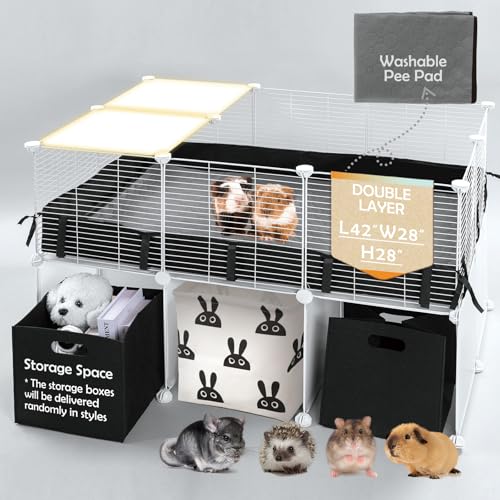
Buy for floor space, not levels. One guinea pig needs about 7.5 square feet of usable floor and a pair needs at least 10.5 square feet, so a C&C (cubes and coroplast) grid setup or a MidWest-style expandable habitat almost always beats a small pet-store cage. Among ready-made picks, the VISCOO 12-panel playpen (48 x 24 inches) and the MEEXPAWS large enclosure (42 x 28 inches) give the most ground-level room. Two-tier and three-story cages help only when they add safe, gentle ramps on top of enough floor.
Why cage size matters
Guinea pigs exercise by running and popcorning at ground level, and they do not climb, so height counts for little. The single biggest mistake owners make is trusting the pet-shop label: many cages sold as guinea pig homes are barely half the recommended 7.5 square foot minimum for one pig. A cramped cage leads to boredom, weight gain, bickering between pigs and stress, and it often gets dirty faster because there is nowhere clean to retreat. Because cavies are highly social and should live in pairs, plan from the start for the 10.5 square foot pair minimum, then size up if you have the room. Space is the cheapest way to keep guinea pigs calm and healthy.
What to look for
Prioritise a large, single open floor over stacked levels. Choose a solid base, never a wire floor, because wire presses on the soft footpads and causes sore hocks and bumblefoot. A deep tray holds several inches of bedding or a fleece liner without spilling it across the room. Look for wide top or front access so you can spot-clean every corner, and leave room for a hay rack, hides, tunnels, and separate food and water stations so each pig has its own space. Expandable designs, whether C&C grids or joinable habitats, let you add floor area later instead of buying a new cage.
How we chose
We compared enclosures on published floor dimensions against the 7.5 and 10.5 square foot standards, then weighed flooring type, base depth, access for cleaning and expandability. This is honest research based on manufacturer specs and widely accepted guinea pig welfare guidelines, not a hands-on trial. Open-plan playpens and C&C grids scored highest because they deliver the most usable floor per dollar, use a solid base, and grow with your herd as needs change.
What to avoid
Skip tall, narrow cages that trade floor space for shelves, and skip any cage with a wire or mesh floor. Avoid steep ramps, since clumsy cavies can fall. Be wary of compact cages marketed for a single pig; they suit a temporary setup at best and still need daily floor time. If a cage lists no floor area or hides it behind an overall height figure, treat that as a clear warning sign and keep looking.


