Quick answer
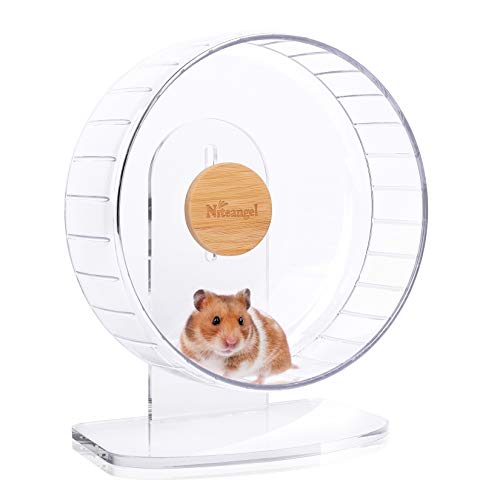
A wheel is not a toy for a hamster; it is essential daily exercise. The two things that matter most are the right size, so your hamster runs with a flat, straight back, and a solid running surface with no wire rungs or crossbars. For most Syrian hamsters that means a wheel around 8 inches or larger, and many are happier at 11 to 12 inches, while dwarf and Roborovski hamsters usually need about 6.5 inches or more. Our top pick is the Niteangel Super-Silent wheel for its quiet, solid, back-friendly design, with the Acsist 8.3-inch wheel as a value choice for smaller hamsters.
Why size and a solid surface matter
When a wheel is too small, the hamster is forced to run with a curved, arched spine. Over time that unnatural posture can lead to back pain and long-term spinal problems, which is why sizing up is safer than sizing down. A good rule is simple: if the back curves, the wheel is too small. A solid running surface is just as important. Wire rungs, mesh, and open crossbars can catch a foot, leg, or tail and cause a sprain or fracture. A closed, solid track lets your hamster run safely for the miles it covers each night. If anything seems wrong with your pet’s back, feet, or movement, ask an exotic vet.
What to look for
Start with a size that fits your species and lets your hamster keep a flat back. Choose a solid or wooden surface rather than wire. Look for quiet bearings, since hamsters are nocturnal and run at night, and a noisy wheel often ends up unused. A stable stand or a secure cage mount keeps the wheel from wobbling or tipping, which matters most for larger, faster Syrians. Easy-to-clean materials help you keep the wheel hygienic between full cage cleans, which protects your hamster’s feet. Finally, check that the mount or stand suits your cage, since a wheel that does not fit safely will not get used.
How we chose
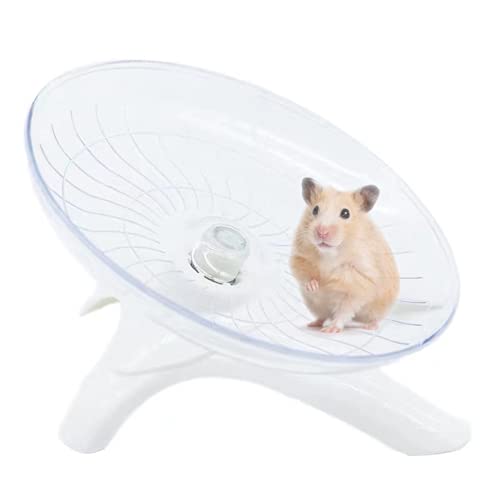
We focused on wheels that get the fundamentals right: generous size for a flat back, a solid non-wire surface, quiet running, and a stable base or mount. We compared listed diameters against species needs, favored trusted brands and consistent owner feedback, and included both upright wheels and a saucer option so you can match your hamster’s preference. We also weighed how easy each wheel is to clean and how securely it stands or mounts, since a wheel that wobbles or stays dirty gets avoided. Every pick emphasizes safe, back-friendly, nightly exercise rather than looks or gimmicks.
What to avoid
Skip the tiny wheels bundled with many starter cages; they are almost always too small and force a curved back. Avoid any wheel with wire rungs, mesh, or gaps that can trap limbs. Do not rely on a saucer as the only option for every hamster, since some run with an awkward posture or slip off. And never pick a wheel on looks alone; size and surface come first.