Quick answer
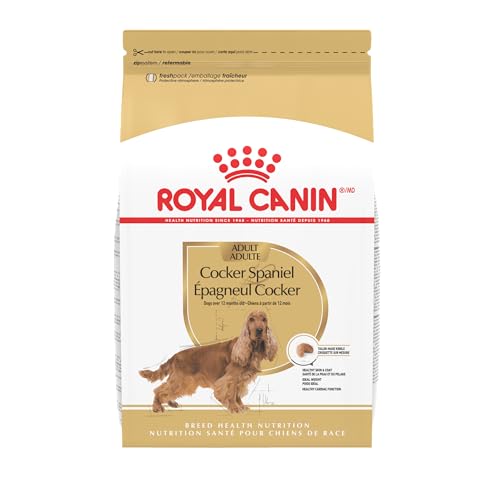
For most adult Cocker Spaniels, our editorial team rates Royal Canin Cocker Spaniel Adult Dry Dog Food as the top overall pick because it is formulated as a complete and balanced adult diet, uses a defined kibble shape that suits this breed’s jaw, and includes omega fatty acids that may help support the long ears and feathered coat Cockers are known for. If your dog has a sensitive stomach, Hill’s Science Diet Sensitive Stomach & Skin fits better. On a tighter budget, Diamond Naturals Adult delivers a named meat first ingredient for less. For puppies, choose Royal Canin Medium Puppy, and if you prefer a grain-inclusive whole-food style recipe, Purina Pro Plan Sensitive Skin & Stomach Salmon & Rice is a strong choice. Always confirm the right pick with your veterinarian for any dog with a medical condition.
What to consider for Dog Food For Cocker Spaniel
Cocker Spaniels are a medium sized breed that loves food, which means weight gain is a very real concern. Many Cockers will happily overeat, so calorie density and accurate portioning matter more than for some other breeds. Their long, low-hanging ears trap moisture and are prone to recurring ear issues, and they are also commonly associated with skin and coat sensitivities, so recipes with omega 3 and omega 6 fatty acids are worth prioritising. The breed can be predisposed to certain conditions, including some that affect the eyes, ears, and occasionally the heart, so steady, complete nutrition and a healthy body weight are practical goals. Their long feathered coat benefits from adequate quality protein and fat. Because food drive is high, measuring meals with a kitchen scale and limiting treats is often more important than the specific brand you pick. For any diagnosed condition, your veterinarian should guide the diet.
What to look for in a dog food
Start with an AAFCO complete and balanced statement for the correct life stage, either “adult maintenance” for grown Cockers or “growth” for puppies. Look for a named meat as the first ingredient, such as chicken, lamb, or salmon, rather than a vague “meat” or unnamed “meat meal.” For a typical adult Cocker, recipes in the range of roughly 22 to 28 percent protein and 12 to 16 percent fat on a dry matter basis are common and sensible for most healthy dogs, though your vet may advise different levels. Because Cockers gain weight easily, watch calorie density, often around 340 to 400 calories per cup, and portion to your dog’s actual body condition. Cockers are medium breed, so standard adult formulas usually suit them better than large or small breed specific lines. Recipes with omega fatty acids and sometimes glucosamine and chondroitin may help support skin, coat, and joints, though these are not guaranteed outcomes.
Find the right food for your dog’s needs
The picks above suit a healthy adult Cocker Spaniel. For a specific life stage or health need, use these focused guides.
- Puppies: see our guide to the best Cocker Spaniel food for puppies.
- Seniors: see our guide to the best Cocker Spaniel food for senior dogs.
Which food type is best?
Dry, wet, fresh, raw and dehydrated foods can all work for a Cocker Spaniel. The right one depends on your budget, your dog’s preferences and any health needs.
- Dry: most economical and convenient, and the crunch helps clean teeth.
- Wet: higher moisture and often more palatable, useful for fussy eaters or as a topper.
- Fresh and gently cooked: minimally processed with recognisable ingredients, at a higher cost.
- Raw and freeze-dried raw: high protein and minimally processed; handle safely and ask your vet first.
Getting the best value
The cheapest bag is not always the best value. A quality food that keeps your Cocker Spaniel lean, with a healthy coat and firm stools, often means fewer vet visits. Feed to a healthy body condition rather than the bag maximum, and choose a recipe built around quality animal protein.
How we chose these picks
- We prioritised foods carrying an AAFCO complete and balanced statement for the correct life stage.
- We favoured recipes that list a named animal protein, such as chicken, lamb, or salmon, as the first ingredient.
- We checked protein, fat, and calorie levels against practical ranges suitable for a weight-prone medium breed.
- We looked for established brands with consistent manufacturing and published nutritional information.
- We reviewed publicly available FDA recall and advisory information for each brand before listing it.
- We considered features relevant to Cockers specifically, such as omega fatty acids for skin, coat, and ear health.
- We compared value across budget, mid range, and premium options so different households have a fit.
- Never ranked a product higher just because it pays a commission.
What to avoid
- Foods that list an unnamed “meat meal” as the only protein source, with no defined animal named.
- Defaulting to grain-free or legume-heavy recipes by habit. The FDA investigation into a potential link between certain diets and canine dilated cardiomyopathy is ongoing, and grain-inclusive recipes are generally the safer default for most dogs unless your veterinarian advises otherwise.
- Feeding an all-life-stages or large-breed puppy formula to the wrong dog. Match the life stage to your Cocker, and use a growth formula for puppies.
- Abrupt diet switches. Transition over 7 to 10 days by gradually mixing in the new food to reduce the risk of stomach upset.
For more breed-specific feeding help, browse our dog guides, our dog food reviews, and our dog nutrition articles.


