Quick answer
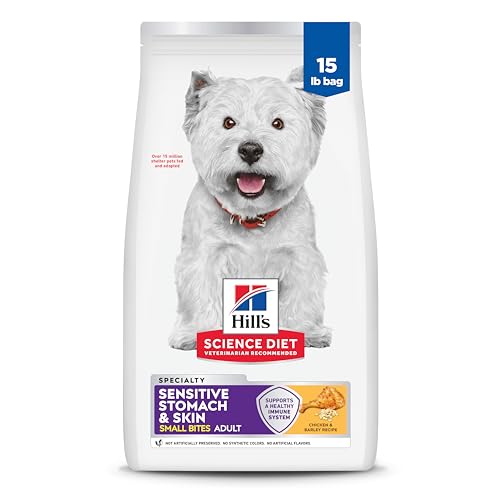
For most adult Bichon Frise dogs, our editorial team leans toward Royal Canin Small Adult Dry Dog Food as the top all rounder, because it is formulated specifically for small breeds, uses small kibble shaped for tiny jaws, and carries an AAFCO complete and balanced statement for adult maintenance. If your Bichon has a touchy stomach, Hill’s Science Diet Small Paws Sensitive Stomach and Skin is a better fit. For a tighter budget, Diamond Naturals Small Breed Adult covers the basics well, and for a puppy choose Royal Canin Small Puppy. We compare using publicly available product information and established nutrition guidance, not personal veterinary endorsement.
What to consider for Dog Food For Bichon Frise
The Bichon Frise is a small companion breed, typically around 10 to 18 pounds, with a few practical feeding realities. Their small mouths and prone to dental crowding mean kibble size matters, so a small breed shaped piece is easier to chew. Bichons are known for a sensitive digestive system and skin, and many owners report soft stools or itchiness when foods change too fast or contain a lot of unfamiliar ingredients. They are also a breed where tear staining is commonly discussed, though no food is a guaranteed fix and you should ask your veterinarian about persistent staining. Because they are small and can gain weight easily, calorie control and accurate portioning matter more than with a large dog. Their plush white coat also benefits from steady omega 3 and omega 6 intake to support normal skin and coat, which most quality small breed recipes already provide.
What to look for in a dog food
Start with an AAFCO complete and balanced statement for the right life stage, adult maintenance for a grown Bichon or growth for a puppy. Look for a named meat as the first ingredient, such as chicken, lamb, or salmon, rather than a vague unnamed meat meal. For a small adult companion dog, a sensible target is roughly 22 to 30 percent protein and around 12 to 18 percent fat on a dry matter basis, with calorie density that lets you feed a satisfying portion without overfeeding. These are general practical ranges, not medical rules, and your veterinarian can tailor them. Choose a recipe labeled for small breeds, since the kibble size and calorie concentration suit a tiny mouth and fast metabolism. Omega 3 and omega 6 fatty acids, often from fish oil or flaxseed, support normal skin and a healthy looking coat, which is helpful for the breed’s white fur.
How we chose these picks
- Confirmed each product is currently sold and widely available on Amazon and major pet retailers.
- Required a clear AAFCO complete and balanced statement for the stated life stage.
- Prioritized recipes with a named meat as the first ingredient over unnamed meat meals.
- Favored small breed formulas with appropriately sized kibble for a Bichon’s small mouth.
- Checked that protein, fat, and calorie levels sat within sensible ranges for a small companion dog.
- Looked for omega fatty acid sources that support normal skin and coat health.
- Cross checked publicly reported FDA recall history and favored brands with transparent sourcing.
- Never ranked a product higher just because it pays a commission.
What to avoid
- An unnamed “meat meal” listed as the only protein source, with no species named.
- Defaulting to grain-free or legume heavy recipes. The FDA investigation into a potential link between certain diets and canine dilated cardiomyopathy is ongoing, and grain-inclusive food is the safer default unless your veterinarian advises otherwise.
- Feeding an all life stages food to a large breed puppy, since the mineral balance can be wrong for big dogs. For a Bichon puppy, a small breed growth formula is the better match.
- Abrupt diet switches. Transition over 7 to 10 days to reduce the risk of stomach upset, which sensitive Bichons are prone to.
For more help choosing, browse our dog guides, our dog food reviews, and our dog nutrition resources.