Quick answer
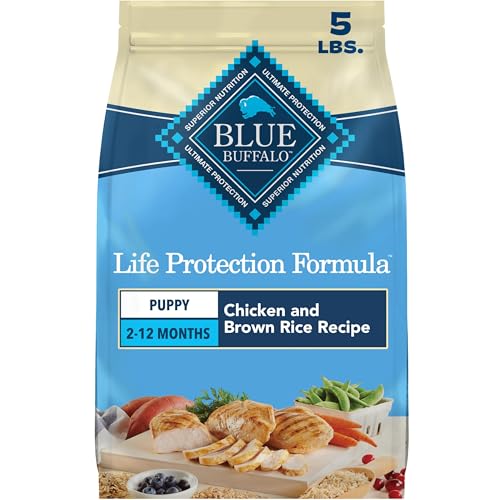
For most small breed puppies, our top pick is Royal Canin Small Breed Puppy Dry Dog Food. It is formulated specifically for small breeds, carries an AAFCO complete and balanced statement for growth, and uses a small kibble shape that little mouths handle easily. If your puppy has a sensitive stomach, Hill’s Science Diet Puppy Small Paws tends to be a gentler, easily digestible option. On a tighter budget, Diamond Naturals Small Breed Puppy delivers a named-meat-first recipe for less. For a chicken-forward, widely available formula, Purina Pro Plan Small Breed Puppy is a strong runner-up, and Blue Buffalo Life Protection Formula Small Breed Puppy suits owners who want a grain-inclusive recipe with added fruits and vegetables.
What to consider for Dog Food For Small Breed Puppy
Small breed puppies, generally dogs expected to mature under about 20 to 25 pounds, have specific needs that differ from large breed pups. They have fast metabolisms and small stomachs, so they need calorie-dense food in small, frequent meals, often three to four times a day when very young, to help reduce the risk of low blood sugar (hypoglycemia), which toy breeds can be prone to. Talk to your veterinarian if your puppy seems weak, wobbly, or lethargic, as this can be a medical emergency.
Kibble size and shape genuinely matter here. A tiny mouth and small teeth struggle with large kibble, which can slow eating or discourage it. Most small breed puppy formulas use a smaller piece for this reason. Small breeds also tend to reach adulthood faster than large breeds, often around 9 to 12 months, so the window for a growth formula is shorter. Your vet can confirm when to transition to adult food based on your individual dog.
What to look for in a dog food
First, look for an AAFCO complete and balanced statement for the right life stage. For a puppy, that means a statement for “growth” or “all life stages,” not “adult maintenance” only. This statement indicates the food is formulated to meet established nutrient profiles.
Second, look for a named meat as the first ingredient, such as chicken, lamb, salmon, or beef, rather than a vague “meat” or “meat meal” with no species named. A named source is more transparent.
Third, consider sensible nutrient levels as a practical guide, not a rigid rule. Many small breed puppy foods land roughly in the range of 26 to 32 percent protein and 14 to 20 percent fat on a dry matter basis, with energy density that supports steady growth. Small breed puppy formulas are often more calorie-dense per cup than large breed versions. Your veterinarian can tailor targets to your specific puppy.
Fourth, match breed size suitability to the label. A small breed puppy formula is designed around the smaller kibble and higher energy density small dogs benefit from. Avoid feeding a small breed puppy a recipe built for large breed growth, and vice versa.
Finally, while joint and omega support (such as DHA from fish oil for development, or omega fatty acids for skin and coat) is a nice addition, DHA in particular is commonly included in puppy formulas to support normal development. Treat any joint or omega benefit as supportive rather than a guaranteed outcome, and ask your vet before adding a separate supplement.
How we chose these picks
- We compared formulas using publicly available manufacturer information, ingredient panels, and guaranteed analysis figures.
- We confirmed each food carries an AAFCO complete and balanced statement appropriate for growth or all life stages.
- We favored recipes that name a specific meat as the first ingredient over vague protein terms.
- We checked that kibble size and formulation are designed for small breeds, not just scaled-down adult food.
- We weighed value across a range of budgets so there is a sensible option at different price points.
- We cross-checked each brand against publicly posted FDA pet food recall information at the time of writing.
- We prioritized widely available, currently sold products owners can actually buy and reorder consistently.
- Never ranked a product higher just because it pays a commission.
What to avoid
- An unnamed “meat meal” or generic “meat” as the only protein source, with no species identified.
- Defaulting to grain-free or legume-heavy (peas, lentils, chickpeas) recipes without a specific reason. The FDA investigation into a potential link between certain grain-free diets and canine dilated cardiomyopathy (DCM) is ongoing and not resolved, so a grain-inclusive food is the safer default unless your veterinarian advises otherwise for your individual dog.
- Feeding an all-life-stages food to a large breed puppy, since large breed pups have very specific calcium and growth requirements. Small breed puppies do not face the same large breed risk, but matching the formula to size still matters.
- Abrupt diet switches. Transition gradually over about 7 to 10 days, mixing increasing amounts of the new food with the old, to help reduce stomach upset.
For more help choosing and feeding, browse our dog guides, our dog food roundups, and our dog nutrition articles.