Quick answer
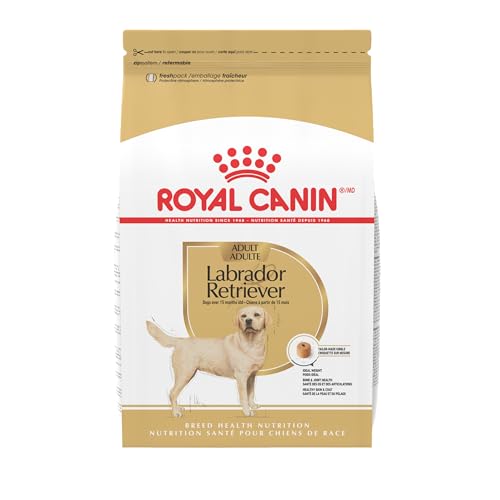
For most adult Labradors, our top pick is Purina Pro Plan Sport All Life Stages High Protein 30/20 when your Lab is active and lean, or the breed-specific Royal Canin Labrador Retriever Adult Dry Dog Food if you want a kibble shaped and portioned for the breed’s appetite and joint needs. The runners-up fit better in specific cases: choose Hill’s Science Diet Sensitive Stomach and Skin if your Lab has digestive or coat issues, Diamond Naturals Large Breed Adult if budget matters most, and Eukanuba Puppy Large Breed if you are raising a Labrador puppy that needs controlled growth. Always match the food to your dog’s life stage and confirm calorie needs with your veterinarian.
What to consider for Dry Dog Food For Labrador
Labradors are one of the breeds most prone to obesity, partly because a documented gene variant in many Labs increases food motivation. That means portion control and calorie density matter more for this breed than almost any other. A food that is easy to overfeed will show up on the waistline fast.
Labs are also a large breed with a known predisposition to hip and elbow dysplasia and osteoarthritis, so controlled growth in puppyhood and joint support in adulthood are worth prioritizing. For Labrador puppies specifically, a large-breed puppy formula with controlled calcium and calories helps bones develop at a safe rate. Adult Labs generally do well on a moderate-fat, complete and balanced food, and many owners find a slightly lower-calorie or weight-management recipe helpful for less active dogs. If your Lab has a sensitive stomach or itchy skin, which the breed can be prone to, a limited or gentle formula may help, though persistent symptoms should be checked by your veterinarian.
What to look for in a dog food
Start with the AAFCO complete and balanced statement on the label, and make sure it matches your dog’s life stage (growth for puppies, maintenance for adults, or all life stages). For a Labrador puppy, look specifically for a statement that includes growth of large size dogs, meaning those 70 pounds or more as an adult.
Look for a named meat as the first ingredient, such as chicken, lamb, salmon, or a named meat meal like chicken meal, rather than a vague “meat” or unnamed by-product. As practical, non-medical ranges, many adult maintenance foods sit around 22 to 30 percent protein and 12 to 18 percent fat, with active Labs tolerating the higher end and couch-companion Labs often doing better at the lower end. Calorie density typically runs about 350 to 450 kcal per cup, which matters because a few extra cups a week add up quickly in this breed.
Because Labs are a large breed, choose formulas labeled for large breed in puppyhood (for controlled growth) and ideally in adulthood too. Joint support ingredients like glucosamine, chondroitin, and omega-3 fatty acids from sources such as fish oil may support joint and coat health, though they are not a treatment for diagnosed joint disease. Talk to your veterinarian before relying on any food or supplement for a medical condition.
How we chose these picks
- We compared widely available, currently sold formulas from established brands with a track record of nutritional research
- We confirmed each pick carries an AAFCO complete and balanced statement for the relevant life stage
- We prioritized named meat first ingredients and sensible protein, fat, and calorie levels for a large, food-motivated breed
- We favored large-breed suitability and the presence of joint or omega support where relevant to Labradors
- We weighed real owner feedback patterns on palatability, stool quality, and consistency, not just marketing claims
- We checked publicly available recall and manufacturing transparency information for each brand
- We noted honest trade-offs, including price, ingredient splits, and who each food does not suit
- Never ranked a product higher just because it pays a commission
What to avoid
- Foods that list an unnamed “meat meal” as the only protein source, with no named animal, since you cannot verify quality or species
- Defaulting to grain-free or legume-heavy recipes without a reason. The FDA investigation into a potential link between certain grain-free and legume-rich diets and canine dilated cardiomyopathy is ongoing and not resolved, so grain-inclusive food is the safer default unless your veterinarian advises otherwise
- Feeding an all-life-stages or adult formula to a large-breed Labrador puppy, because uncontrolled calcium and calories can push growth too fast and stress developing joints
- Abrupt diet switches, which often cause stomach upset. Transition gradually over about 7 to 10 days by mixing increasing amounts of the new food
For more help choosing, see our dog guides, browse our dog food roundups, and read up on feeding choices in our dog nutrition section.